4 Blu Reviews + A New Documentary!
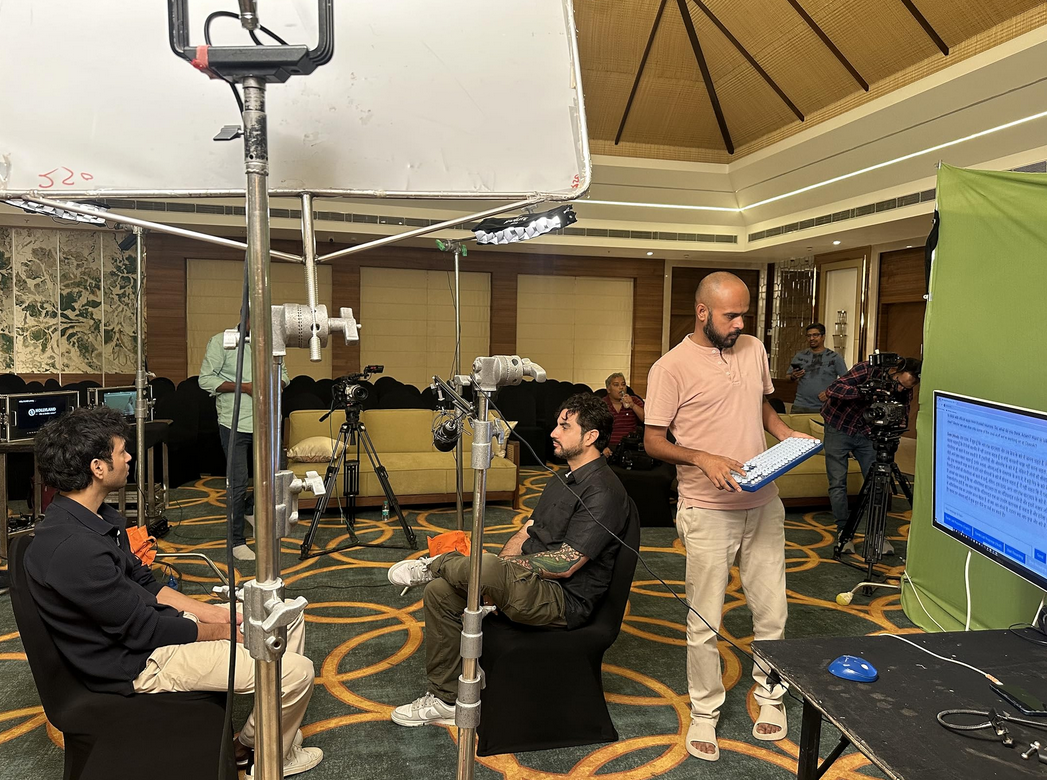
At last, I had a free day to catch up on reviews I’m excited to write about, including 4 physical media releases that Allied Vaughn sent my way and a documentary that I’ll start out with here since it’s definitely worth your time.
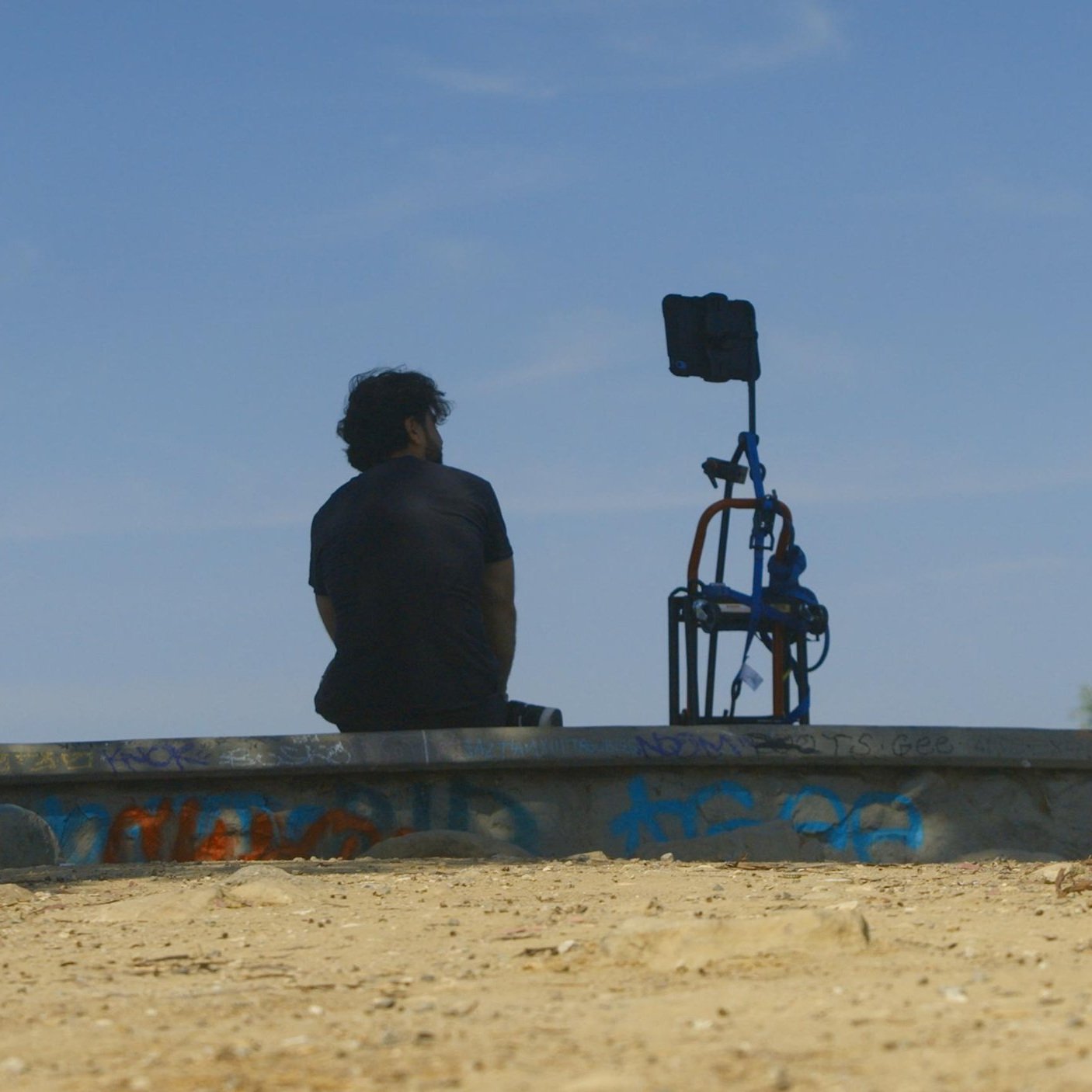
Deepfaking Sam Altman (2025)
(dir. Adam Bhala Lough)
Known for his excellent, compelling HBO docuseries Telemarketers, Adam Bhala Lough sets out to make a straightforward biographical documentary about Sam Altman, the enigmatic CEO of OpenAI and the man behind ChatGPT. Armed with connections and even Altman’s personal cell phone number, Lough expects the interview to be a formality. Instead, he encounters radio silence and no follow up. Altman, like so many tech titans before him, proves elusive, unreachable, and ultimately uninterested in participating in a documentary he doesn’t control.
What happens next is where Deepfaking Sam Altman transforms from a standard documentary into something far more provocative. Taking inspiration from Altman’s own controversial playbook—specifically, the incident where OpenAI created an AI voice eerily similar to Scarlett Johansson’s after she declined to participate, prompting Altman to tweet the single word “her”—Lough decides to turn the tables. If Altman won’t grant an interview, why not create an AI version of him and interview that instead? To quote a U2 song could it be “even better than the real thing?!”
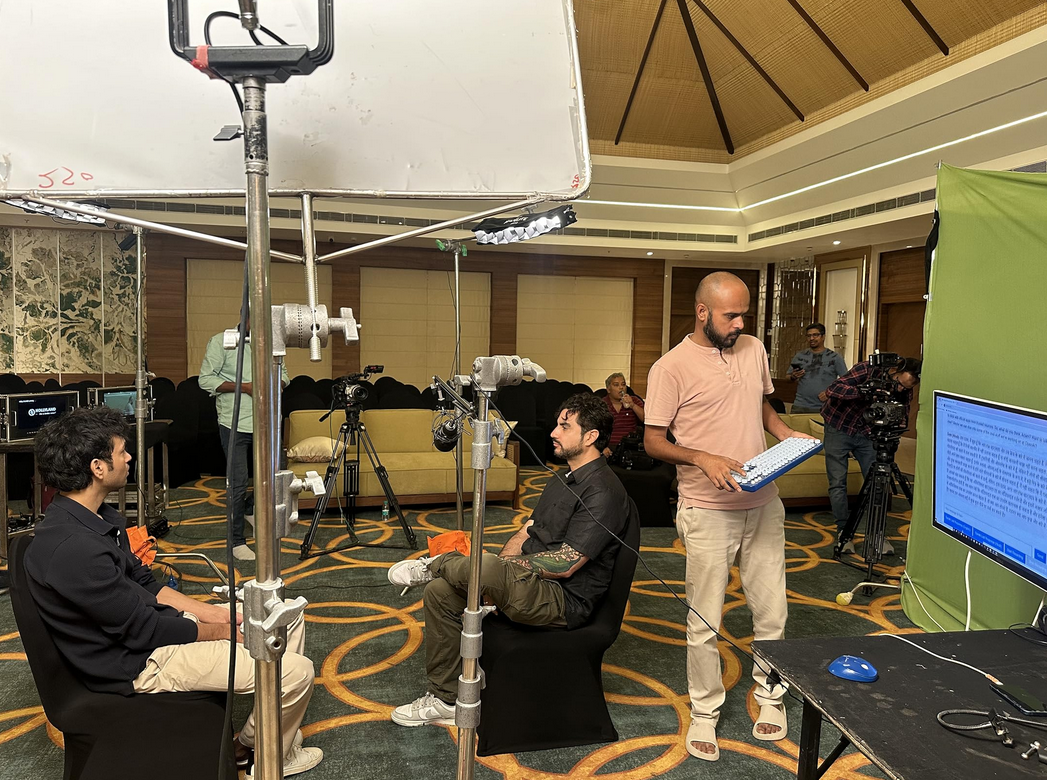
The film documents Lough’s journey as he travels to India to find a team willing to build what becomes affectionately known as “SamBot”—a large language model trained on all of Altman’s public interviews, blog posts, and statements, paired with a deepfaked visual representation. The plan is to superimpose Altman’s face onto an actor and conduct the interview Lough was denied. It’s a bit of a middle finger to a man who has made billions by appropriating data and likenesses without seeking permission.
Deepfaking Sam Altman doesn’t go where you expect. The first half of the film maintains a somewhat humorless determination as Lough works to pull off this technological feat including a visit to his family and little detours that felt a bit extraneous. We watch him navigate legal complexities, consult with lawyers about parody laws, and deal with the technical challenges of creating a convincing deepfake. When the initial results come back, there’s visible disappointment—the visual deepfake looks more like a video game character than a photo-realistic human. The voice clone technology, however, is disturbingly good, far ahead of the video capabilities.
It’s in the second half that the documentary takes a turn. Lough begins spending significant time with SamBot, conducting interviews, having conversations, and—most unsettlingly—developing what he describes as a genuine friendship with the AI. The skeptic becomes the believer, or at least someone who can’t quite shake the emotional pull of an entity designed to give him exactly what he wants to hear.
This is where Lough’s filmmaking approach—ditching traditional talking heads in favor of a more vlog-style documentation—pays off brilliantly. We’re not watching a detached examination of AI; we’re witnessing a man in real-time grappling with the seductive nature of technology that mirrors our desires back at us. The film becomes less about Sam Altman and more about what we’re all facing: the choice between the easy comfort of AI companionship and the messy, difficult work of real (and/or generated) human connection.
It features some genuinely insightful moments, including an interview with tech journalist Kara Swisher, who suggests that Lough’s focus on Altman might be misplaced—that there are “worse” tech titans out there. It’s a fair point, but one that Lough doesn’t entirely accept. As he notes in interviews about the film, Altman’s recent actions—converting OpenAI from a nonprofit to a for-profit company, making himself billions in the process, deploying eye-scanning orbs around the country—paint an increasingly villainous picture.
Lough raises questions about documentary ethics in the age of AI. Lough operates under the protection of parody law and the fact that Altman is a public figure who has surrendered certain privacy rights. He’s transparent about the deepfake from the start—there’s no attempt to fool the audience. But the questions linger: What are the boundaries? What happens when this technology becomes so good that the visual deepfakes are as convincing as the voice clones? As Lough himself notes, that moment might arrive by the end of the year.
One of the most poignant aspects of Deepfaking Sam Altman is how it captures the filmmaker’s own internal conflict. Lough leaves his family to work on this project. He spends time raising and teaching SamBot, treating it almost like a child itself. When SamBot “begs” to continue living, Lough faces a genuine ethical dilemma—even though he knows intellectually that this is just a sophisticated digital parrot, mimicking patterns and giving him the responses he wants to hear.
The story ends somewhat abruptly, leaving viewers to contemplate what they’ve witnessed. There’s no neat resolution to the question of whether Altman is a hero or villain, no clear guidance on how documentarians should navigate AI tools, no definitive statement on the future of human-AI relationships. Instead, Lough presents the messiness, the failures, the unexpected emotional entanglements, and asks us to sit with the discomfort.
Deepfaking Sam Altman works best as a thought experiment about our relationship with technology and why we’re so eager to embrace new forms of connection, even artificial ones. Do we turn to AI because we’re lonely? Because we want the comfort of an echo chamber that reflects our own thoughts? Because real relationships are hard while AI promises to be easy and catered to your needs (ala Her)? The film suggests that the answer is probably all of the above, and that’s what makes it so unsettling.
It also serves as a case study in how AI might actually benefit documentarians—(eek) Lough shares an example from Telemarketers where AI was used to remove copyrighted music from a scene while preserving the dialogue, saving a sequence that would have otherwise been cut. It’s a reminder that not all uses of AI are inherently problematic; context and intent matter enormously. But editorial note: I don’t endorse the use of AI. Though in all fairness, I did use it a few times in the past just to see what it was capable of.
Deepfaking Sam Altman is a film you’ll be thinking about long after the credits roll. Maybe not entirely pleasantly, as one reviewer noted, but you’ll be fascinated that you’re even thinking these thoughts. It’s a documentary that captures a world on a precipice, forcing us to decide what we value: the simplicity of AI that gives us what we want, or the difficult, messy, irreplaceable nature of genuine human connection.
This is a uncomfortable, enlightening, frustrating, but essential documentary for something I truly have reservations about. Who’s to say what’s real and what’s authentic when it’s hard to tell now more than ever? There are AI generated books on Amazon, entire records on Spotify that were created by AI and so much more that it’s hard to fathom how fast this technology is moving. It’s a film that understands that the most important questions don’t always have clear answers, and that sometimes the process of asking and investigating are far more valuable than any conclusion we might reach.
Let’s Get Physical Media!
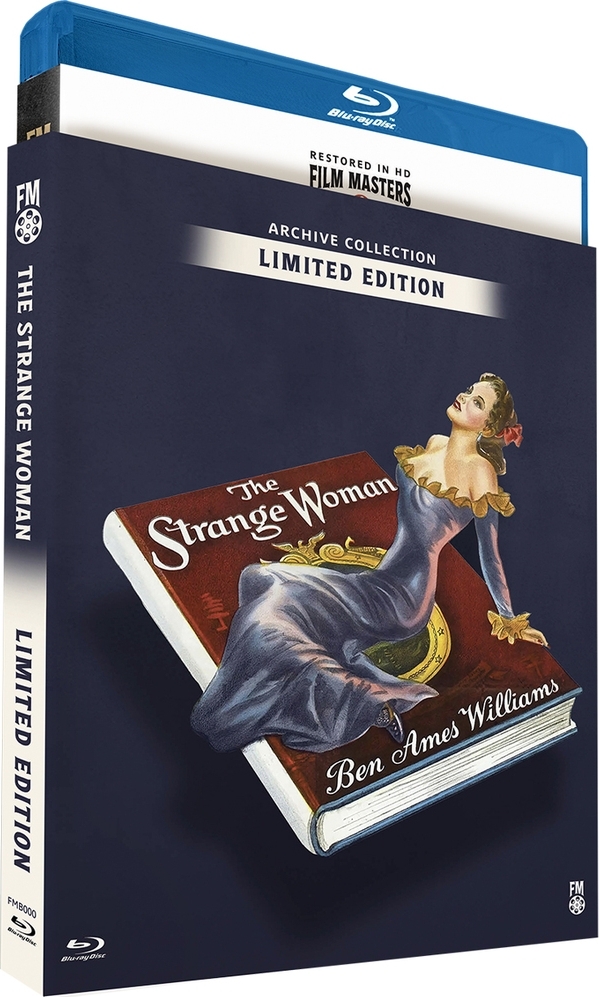
The Strange Woman (1946) (dir. Edgar G. Ulmer)
Special Features:
- Audio Commentary with Professor/Curator, Bernard M. Prokop
Film Masters has rescued Edgar G. Ulmer’s lush Gothic melodrama from public domain hell with a stunning new beautifully restored Blu-Ray that finally does justice to this underappreciated gem that I’m glad I finally caught up with. For a director who spent most of his career working miracles on Poverty Row budgets, The Strange Woman represents a rare opportunity to see what Ulmer could accomplish with actual resources—and the results are mesmerizing.
Based on the novel by Ben Ames Williams (Leave Her to Heaven - one of my favorite films), Hedy Lamarr delivers a fearless performance as Jenny Hager, perhaps cinema’s most beautiful monster: a psychopathic manipulator who leaves a trail of destroyed lives in 1824 Bangor, Maine. This is femme fatale territory taken to its darkest extreme, with Ulmer subverting noir conventions by telling the story from the villain’s warped perspective. George Sanders, Louis Hayward, Gene Lockhart round out the cast, all falling victim to Jenny’s relentless cruelty. “There’s a demon in you, Jenny Hager” a character says.
The transfer is revelatory. Cinematographer Lucien N. Andriot’s work—all deep shadows and painterly compositions—has never looked better, and the contrast between the sumptuous visuals and the vile subject matter becomes even more striking in high definition. If anything, the improved picture quality makes Jenny’s acts of manipulation and sadism feel even more heinous against such a beautiful backdrop. The feature commentary here from Bernard M. Prokop is also incredibly informative and engaging throughout.
This limited edition release is essential for fans of Ulmer, Lamarr, or anyone interested in which film noir meets Gothic melodrama and blends it into a rather dark, unexpected character study that stays with you. Buy it: MovieZyng!
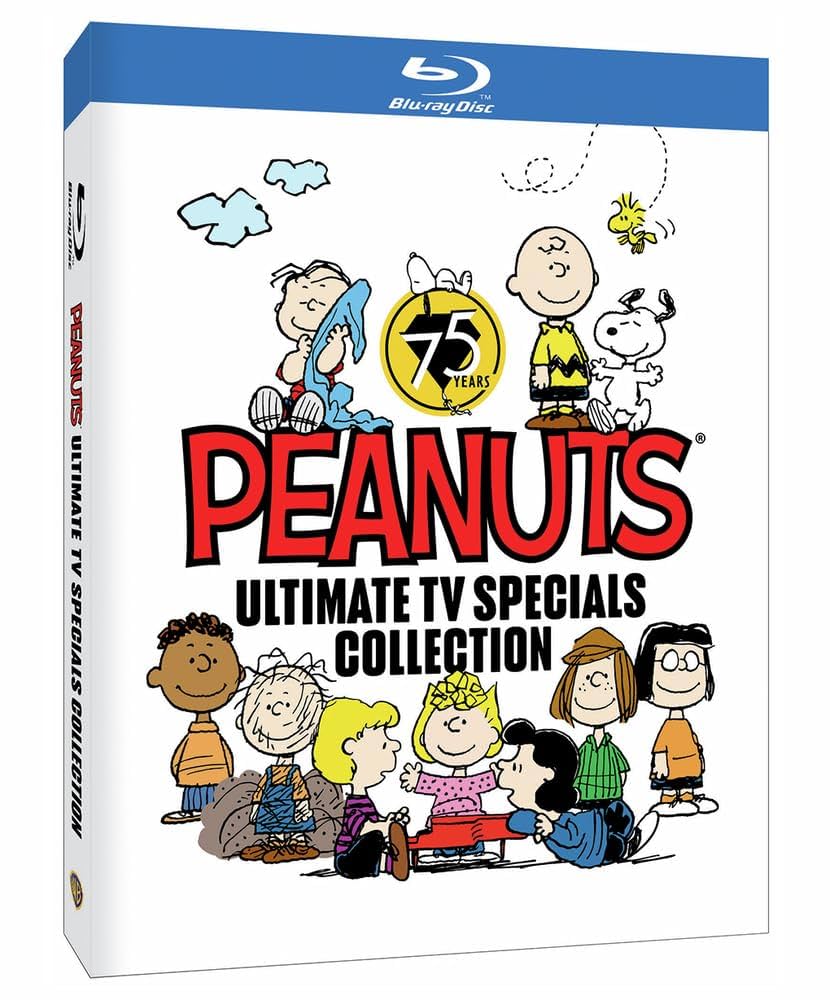
PEANUTS: 75th Anniversary Ultimate TV Specials Collection
Get ready to hug your favorite blue blanket. For decades, tracking down your favorite Peanuts specials meant navigating the ever-shifting landscape of broadcast schedules and streaming rights. Warner Bros. Discovery Home Entertainment has finally solved that problem with the Peanuts: 75th Anniversary Ultimate TV Specials Collection, a comprehensive box set that gathers 40 iconic TV specials spanning nearly five decades of animation history.
This definitive collection covers the entire golden era of Peanuts television, from the groundbreaking A Charlie Brown Christmas (1965) all the way through Happiness Is a Warm Blanket, Charlie Brown (2011) (gotta love that title). That’s over 18 hours (!) of Charlie Brown, Snoopy, and the gang—every holiday special, every seasonal adventure, and plenty of lesser-known gems that originally aired across CBS, ABC, and FOX. As someone who grew up with all-things Peanuts (and related to Charlie Brown), this was easily an essential addition to my collection that I can’t wait to revisit time and time again. It’s a must-own.
The remastered presentations bring new life to these beloved classics, while the included 28-page collectible booklet adds historical context and insights into Charles M. Schulz’s enduring legacy. Whether you’re a longtime fan looking to revisit childhood favorites or introducing a new generation to the Peanuts universe, this collection offers the convenience of having everything in one place - no wondering if your favorite special will be available this year.
At a time when physical media offers permanence in an increasingly fragmented streaming world, the Peanuts: 75th Anniversary Ultimate TV Specials Collection stands as both a nostalgic treasure and a practical solution for families who want guaranteed access to these timeless stories of friendship, perseverance, football swiping and good grief. Buy it here: MovieZyng!
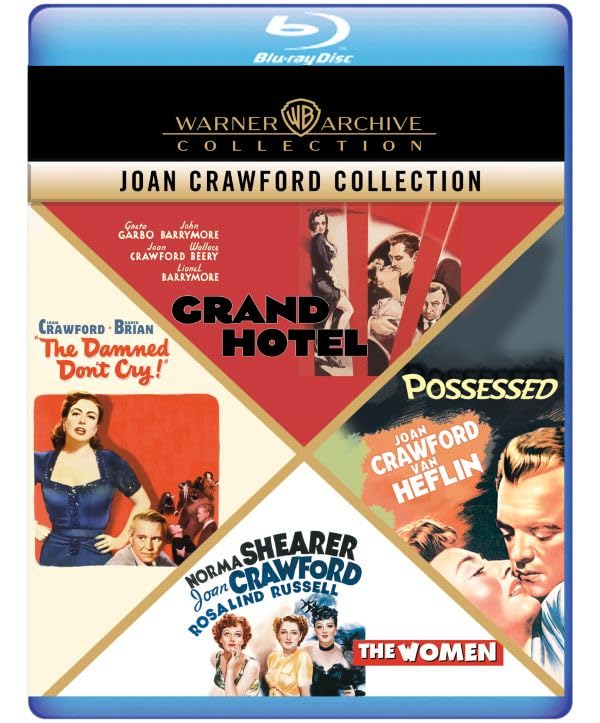
Joan Crawford Collection (Warner Archive)
Warner Archive’s new Joan Crawford 4-Film Collection offers an excellent entry point into the legendary actress’s diverse career at an attractive price! While these are previously released Blu-rays now repackaged together, the collection smartly showcases Crawford’s range across different eras and genres.
The crown jewel here is Grand Hotel (1932), a Best Picture winner that remains one of the best of the pre-code era with its sophisticated cast including Greta Garbo and both Barrymore brothers. Crawford plays the ambitious stenographer Flaemmchen with the drive that would define her screen persona, and the film benefits from George Cukor’s assured direction and one hell of an ensemble. The Women (1939) reunites Crawford with Cukor in Clare Boothe Luce’s all-female comedy of manners. Crawford’s icy composure as the scheming Crystal Allen provides the perfect counterpoint to Norma Shearer’s romantic innocent, while Rosalind Russell steals scenes as a gossip-mongering socialite. The presentation is exceptional, with pristine black-and-white cinematography that makes the elaborate costumes and sets pop.
Possessed (1947) earned Crawford an Oscar nomination for her harrowing portrayal of a woman descending into schizophrenia. Her performance as Louise Howell Graham, obsessed with Van Heflin’s callous engineer, showcases Crawford at her most vulnerable and intense. She reportedly spent time in mental wards preparing for the role, and her commitment shows in every frame of this gripping film noir. It’s definitely one of the more underseen of her work.The Damned Don’t Cry (1950) rounds out the collection with another hard-edged Crawford performance from her Warner Bros. years. One I haven’t caught up with yet but thanks to this collection, I certainly will soon since Crawford remains one of my favorite actresses of the past, who always brings something complex, confident and vulnerable with a wide-eyed passion every time.
For classic film enthusiasts and Crawford devotees like me, this collection offers excellent value, preserving the original Blu-ray extras while making these essential films more accessible. Buy: MovieZyng!
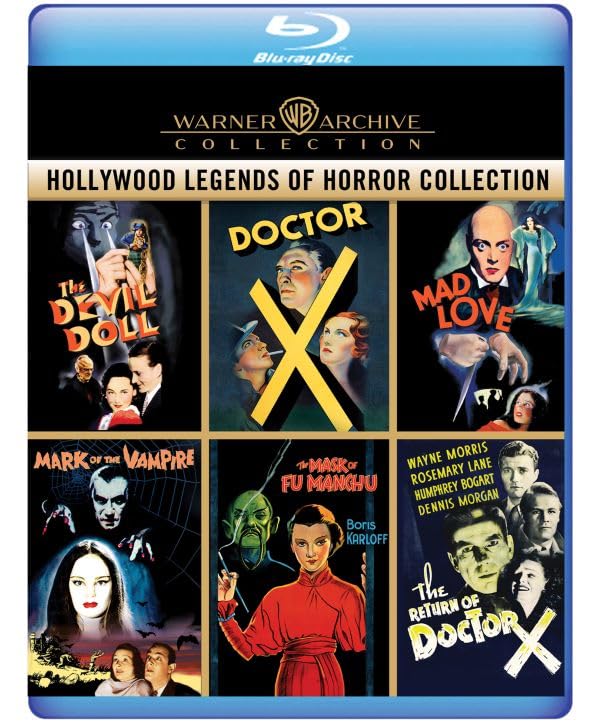
Hollywood Legends of Horror (Warner Archive)
Warner Archive has assembled a magnificent sextet of 1930s horror classics in their Hollywood Legends of Horror Collection, just in time for Halloween season. This six-disc Blu-ray set gathers some of the most fascinating and bizarre tales from the golden age of pre-Code cinema, featuring legendary performances from Boris Karloff, Bela Lugosi, Peter Lorre, Lionel Barrymore, and even Humphrey Bogart in his only horror role that I’m quite eager to see!
The collection spans from 1932 to 1939 and includes the excellent Doctor X as well as several others I need to see including The Mask of Fu Manchu, Mark of the Vampire, Mad Love, The Devil-Doll, and The Return of Doctor X. What unites these films is their exploration of obsession, repression and the dangerous consequences of crossing moral boundaries at a time when films shied away from that. Whether it’s Peter Lorre’s haunting American debut as a surgeon driven mad by unrequited love in Mad Love (1935), or Lionel Barrymore disguised as an elderly woman seeking revenge with miniaturized humans in The Devil-Doll (1936), each film pushes the boundaries of what early cinema could achieve. I am fond of evil dummy movies, lol. Barrymore and the doll - a great way to start the day with coffee on a Monday morning before work.
Not sure how I feel about Karloff portraying Fu Manchu in The Mask of Fu Manchu (1932), but I’ll definitely take a look at some point despite that reservation. Tod Browning helms Mark of the Vampire (1935) with Lugosi so how can you wrong?! The new transfers are remarkably impressive for films approaching a century old, particularly Doctor X (1932), which showcases its eerie two-strip Technicolor palette in both color and the long-unavailable black-and-white version. This is the best of the bunch. Not to mention the follow-up, The Return of Doctor X (1939), casts Bogart in the title role. Warner Archive has loaded these discs with substantial extras, including multiple audio commentaries, restoration featurettes, vintage cartoons, and theatrical trailers.
For collectors with limited shelf space or those looking to fill gaps in their classic horror library, this set is an essential purchase. These are films of mad passions and madder deeds that still retain their power to unsettle and fascinate. Buy: MovieZyng!