Dr. Strangelove or: How I Learned to Stop Worrying and Love the Bomb (1964) (dir. Stanley Kubrick)
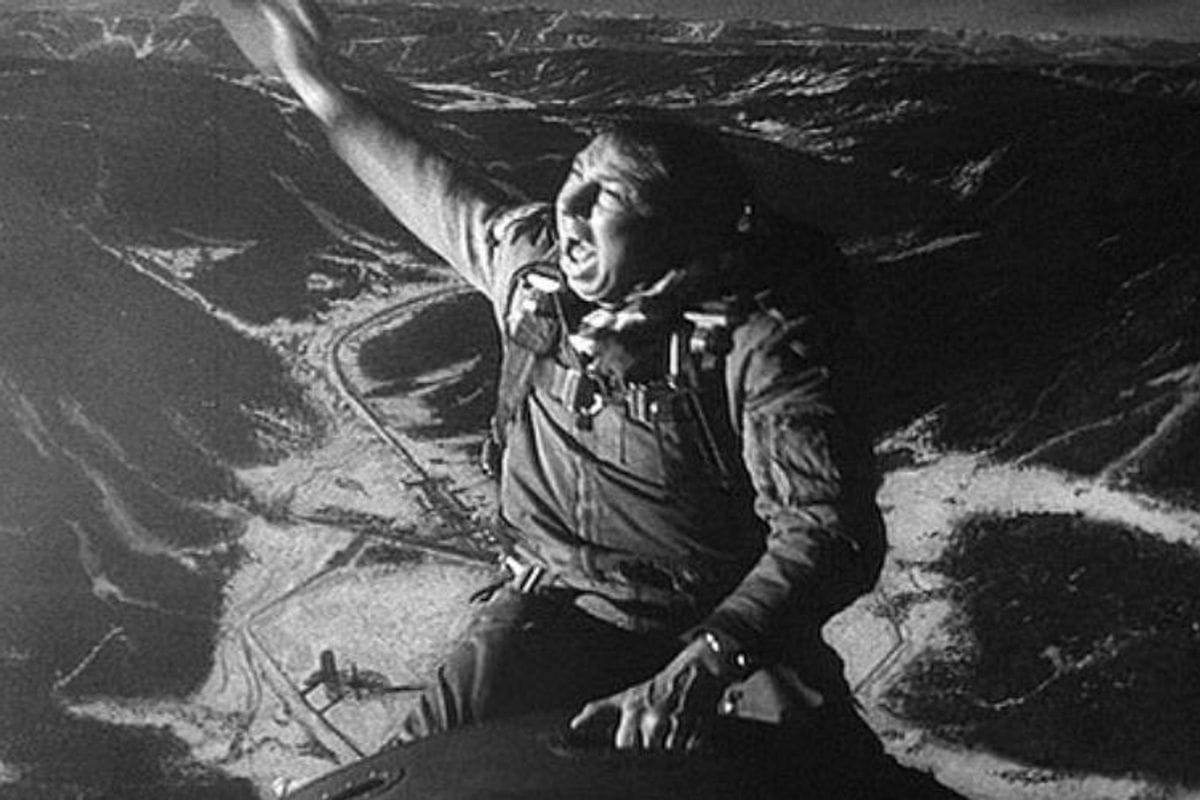
Sixty years later, the mix of terrifying violence and reckless incompetence still resonates, even if the Cold War is over. We can still see King Kong’s approach reflected in a range of issues. Today, it suggests the eagerness with which we have thrown ourselves into global warming on a great belching cloud of carbon dioxide. Or our blithe refusal to embrace even moderate public health measures in our current Covid-19 surge.
Kubrick in 1964 warned that American hyper-patriotism coupled with fascistic conspiracy theories and the human propensity for bumbling could result in disaster. The nuclear explosion he foresaw didn’t quite happen (at least not yet.) There are now also many other additional options for chaos and misery. We may now be learning to love greenhouse gases, or Covid, or fascist takeovers, rather than (or in addition to) the bomb. Jack D. Ripper is still smoking that same cigar, and Dr. Strangelove is still smiling - Noah Berlatsky
I would never proclaim to say that I’m politically ignorant. I just chose to be a bit oblivious and focus my energies elsewhere, particularly in the arts. Now I wonder about that choice over the past ten years or so. I should be keeping up better with the news. I should be reading more. Here I am, sitting down to write about one of the all-time great American comedies ever made and all I can think about it are the real-life horrors taking place in this country right now which could lead end actual lives, not characters on a movie screen playing pretend. It’s hard to focus on something “fun” when evil is prevailing. I’m worried and thinking about the bomb.
There’s also a level of absurdity to everything both in the film and in reality that I can’t shake. Nervous laughter accompanied by anger and confusion as to how this is taking place in my lifetime. I can’t help but think of two works of fiction that have somewhat foreshadowed these cold-blooded end times. One I discovered as a teen, the other much later in life. The first is the Jack Stanton character in Stephen King’s The Dead Zone and the second, well, all of Stanley Kubrick’s Dr. Strangelove.
I will likely cover The Dead Zone (both the Cronenberg film and the source material) in the future, I’ll do my best to stay focused on the latter. Though it’s eerie to see parallels that King portrayed in the real estate mogul turned political candidate named Jack Stanton whose rise to power lead to him setting off nukes and the start of World War III. The optimist in me wants to believe we won’t get to that point but it’s only been six weeks and well, I find new reasons to feel shock, dismay and disdain for the “person” in charge of our country currently. More on that later. First, the movie. A brilliant one.
Dr. Strangelove is a film about the failure of rational thinking. It’s about control running amok, egos being inflated and tested and ultimately, the effects of male impotence. The unstable General Jack D. Ripper, convinced that Communists are contaminating Americans' "precious bodily fluids" through water fluoridation, uses a loophole in military protocol to order a nuclear first strike against the Soviet Union. What follows is a desperate scramble by political and military leaders to recall the bombers, complicated by the revelation that the Soviets have built a "Doomsday Machine" that will automatically trigger global nuclear annihilation if they are attacked. It’s kind of funny to think back to the effect that a film like WarGames had on me when I was slowly becoming obsessed with computers thanks to my dad. Dr. Strangelove came first, in taking on the blueprint concept of tech hubris and paranoia colliding together. What if a computer was capable of starting nuclear war? Well, watching AI evolve as of late, that’s not far-fetched either.
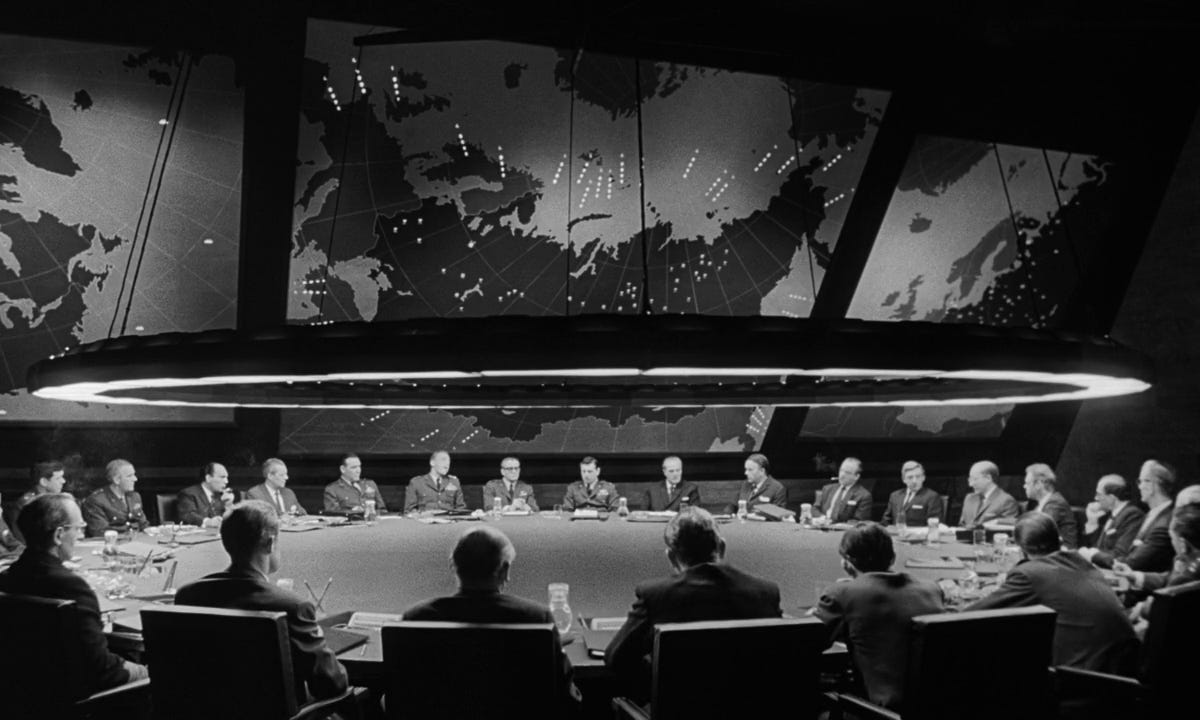
Let’s face it, human beings are capable of the worst things imaginable especially when they are put in a position of power. Kubrick uses both anxiety and dick-measuring to expose the fundamental paradox at the heart of nuclear deterrence strategy: the notion that peace can be maintained through the constant threat of mutual destruction. The film's war room scenes (don’t fight in there of course), featuring Peter Sellers as the ineffectual President Merkin Muffley trying to prevent catastrophe, highlights the aforementioned absurdity of military and political leaders calmly discussing the deaths of millions in abstract, bureaucratic terms. When General Buck Turgidson (George C. Scott) cheerfully estimates American casualties at "no more than 10 to 20 million killed, tops," his cavalier attitude reveals how the logic of deterrence has normalized the unthinkable.
Unthinkable is the default word that comes to mind 60 years after the release of this remarkable pitch-black indictment. The film's critique extends beyond just the military establishment to encompass the broader culture of paranoid anti-communism that characterized the Cold War era. General Ripper's conspiracy theories about fluoridation and "precious bodily fluids" mirror the kind of delusional thinking that fueled McCarthyism and the Red Scare.
His obsession with purity and contamination reflects deeper cultural anxieties about Communist infiltration and corruption of the American way of life. (That sounds familiar right now too). The film suggests that a paranoid worldview dominated by fear of “the other,” rather than protecting America, actually makes catastrophe and impulsive action more likely by encouraging dangerous, emotional overreaction to perceived threats. Perhaps there is a feeling of doom and gloom in general and the only way to contain it is through control of who comes in and out of the country, or in the case of this film, who drops the first bomb? And why even sit down to devise and create a machine that allows for essentially, the end of the world?
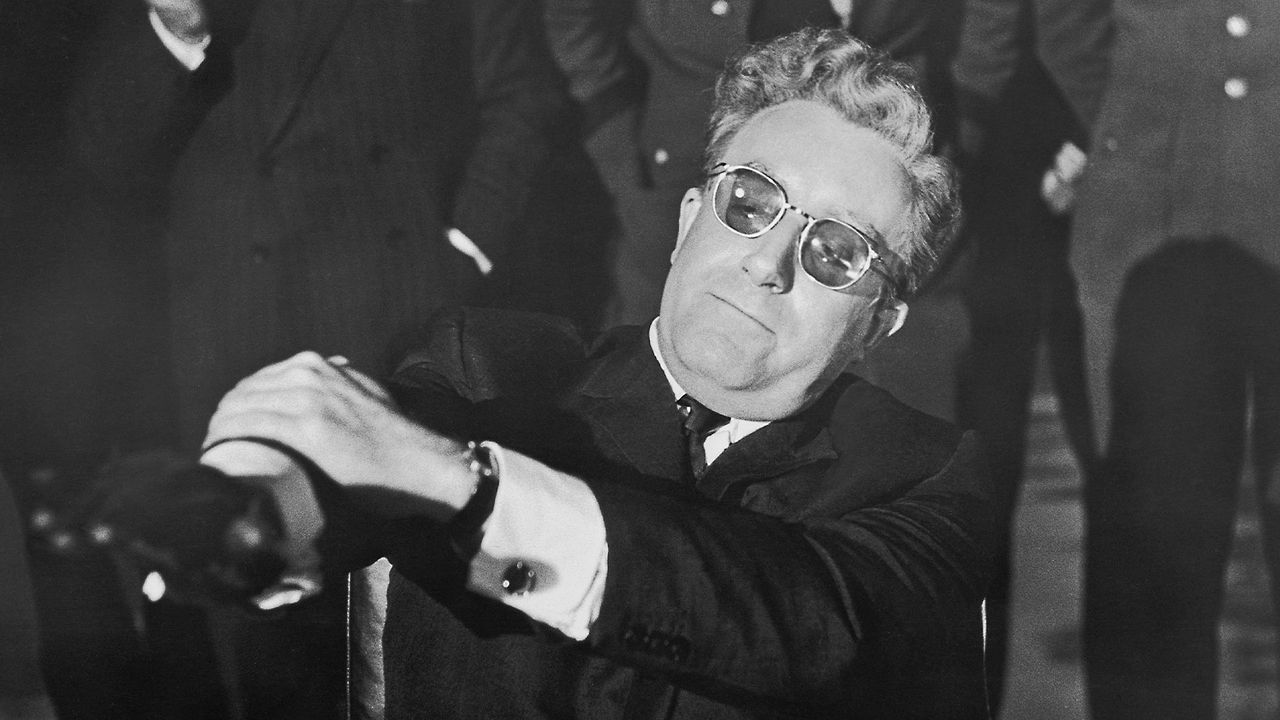
A decade after the release of “Strangelove,” the Soviet Union began work on the Perimeter system—a network of sensors and computers that could allow junior military officials to launch missiles without oversight from the Soviet leadership. Perhaps nobody at the Kremlin had seen the film. Completed in 1985, the system was known as the Dead Hand. Once it was activated, Perimeter would order the launch of long-range missiles at the United States if it detected nuclear detonations on Soviet soil and Soviet leaders couldn’t be reached. Like the Doomsday Machine in “Strangelove,” Perimeter was kept secret from the United States; its existence was not revealed until years after the Cold War ended.
In retrospect, Kubrick’s black comedy provided a far more accurate description of the dangers inherent in nuclear command-and-control systems than the ones that the American people got from the White House, the Pentagon, and the mainstream media.
“This is absolute madness, Ambassador,” President Merkin Muffley says in the film, after being told about the Soviets’ automated retaliatory system. “Why should you build such a thing?” Fifty years later, that question remains unanswered, and “Strangelove” seems all the more brilliant, bleak, and terrifyingly on the mark - Eric Schlosser
Speaking of absolute madness, can we talk about the brilliance of Peter Sellers in this? The character of Dr. Strangelove himself represents another target of the film's satirical attack: the military-industrial complex's embrace of former Nazi scientists and technocrats. As a wheelchair-bound ex-Nazi whose right arm occasionally gives an involuntary "Heil Hitler" salute, Strangelove embodies the moral compromises made in the name of military superiority. His enthusiastic plans for preserving a select portion of humanity in mine shafts, complete with a 10:1 ratio of fertile women to men, reveal how quickly thoughts of species survival can devolve into fantasies of authoritarian control. The fragility of the male ego sure is delicate. Instead of going to therapy, men would rather lead this country to self-destruction and societal annihilation. Oh and hide out in a bunker with their billions.
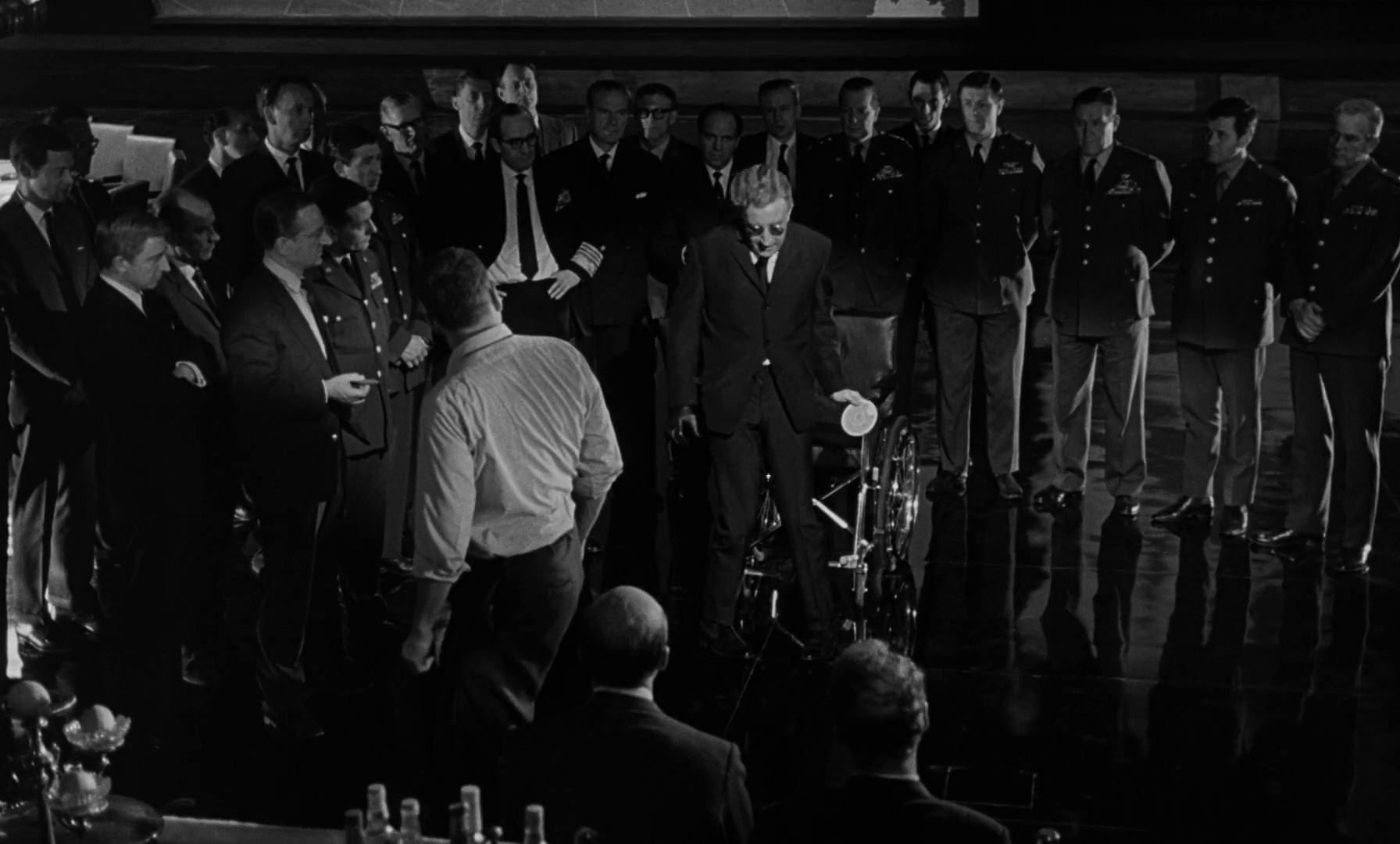
The film's visual style reinforces its satirical message. The War Room set, with its massive circular table and illuminated strategic map, emphasizes the theatrical absurdity of nuclear strategy discussions. The documentary-style footage of B-52 bombers contrasts with the increasingly farcical scenes in the War Room, suggesting a disconnect between the mechanical reality of nuclear warfare and the human attempts to control it. The famous ending sequence, showing nuclear explosions set to the ironically cheerful "We'll Meet Again," perfectly captures the film's blend of apocalyptic inevitability and dark humor. That’s about the right thing to experience right now. Don’t forget to laugh perhaps at the fact that the human race may be on its way out.
Dr. Strangelove's political commentary extends beyond its immediate Cold War context to raise broader questions about human nature and technological power. The film suggests that our capacity for rational thought and careful planning is ultimately undermined by more primitive impulses — sexual frustration, intrusive thinking, aggressive territoriality. The recurring phallic imagery throughout the film, from the opening aerial refueling sequence to Major King Kong's topside ride on the bomb, links military aggression to libido in a way that anticipates feminist critiques of militarism. One has to wonder if our current commander-in-chief is not only idiotic, inhuman and careless, perhaps his decisions are fueled by a lack of “fulfillment” in a variety of ways. But you better do what he says or else!
The treatment of military protocol and chain of command is particularly pointed and likely reflective of the times we still live in today. The very systems designed to prevent unauthorized nuclear launches - like "Plan R" which gives base commanders authority to launch nuclear weapons if Washington is incapacitated - actually make it possible for a single unstable individual to trigger global catastrophe. The film thus exposes how attempts to create communicative systems often introduce vulnerabilities, especially when those systems must account for human fallibility and ignorance.
Kubrick's satire is made more powerful by its basis in reality. Many of the film's seemingly outlandish elements were drawn from actual military policies and proposals of the era. The idea of a "Doomsday Machine" was based on real theoretical work by nuclear strategists, while the ability of base commanders to launch nuclear weapons under certain circumstances reflected actual Air Force procedures.
This grounding in reality makes the film's absurdist elements all the more disturbing, hitting close to home. There’s also a reason that George C. Scott is consistently absurd and over-the-top, Kubrick basically chose to include his more manic takes than the ones he did later that were more reserved. I believe Scott was not thrilled at this choice initially, but it’s certainly another masterstroke on Kubrick’s part. Again, prescient and perceptive in capturing the blind insanity of men sitting in a room, making decisions that are not unlike the one we recently saw in the film Oppenheimer where a political leader decides not to bomb a particular country because him and his wife “vacation there.”
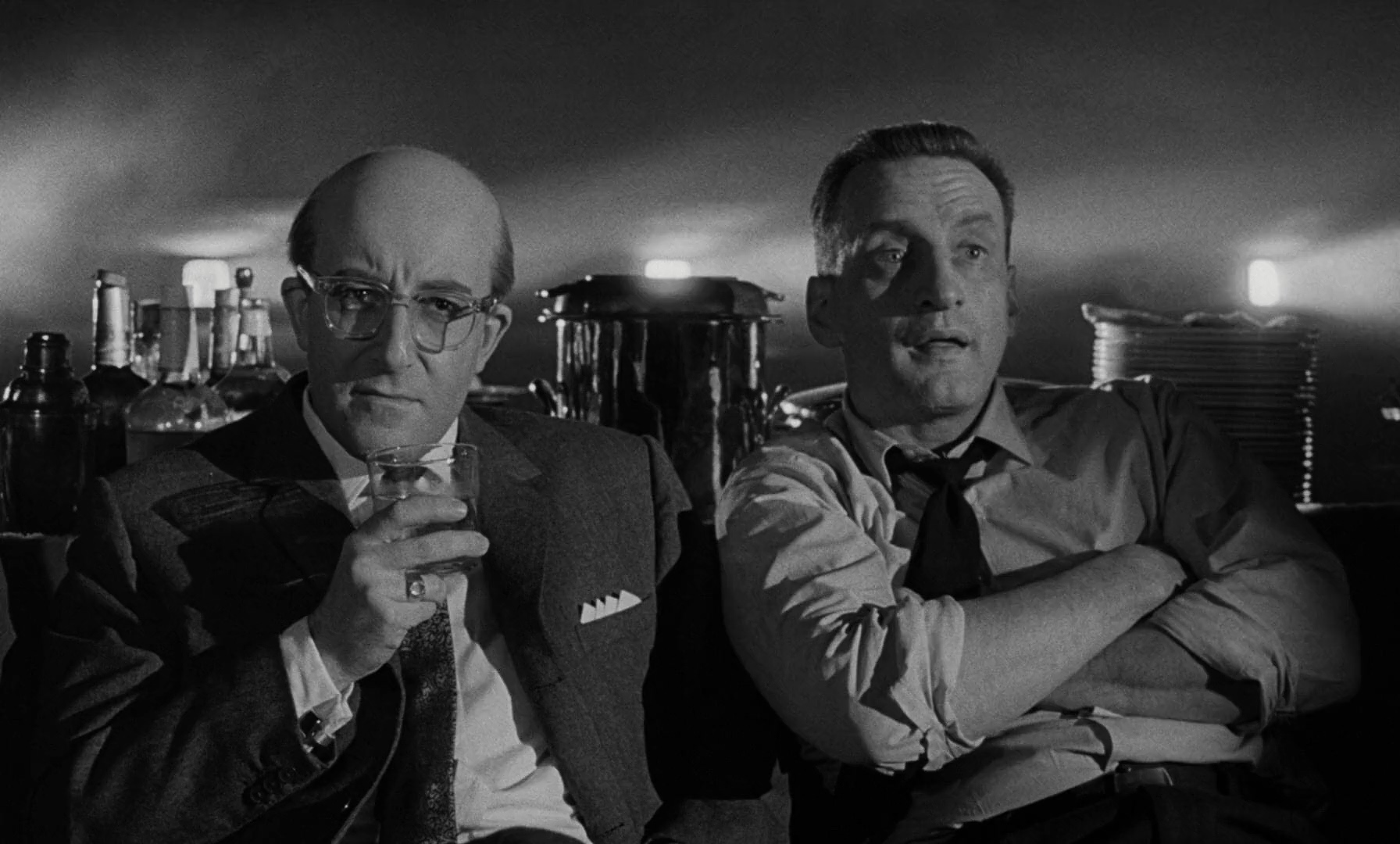
Dr. Strangelove's political message is ultimately about the limits of human rationality in dealing with the technologies and drive towards mass destruction. The film suggests that our attempts to create rational systems for managing nuclear weapons are fundamentally undermined by human irrationality - whether in the form of individual mental instability, institutional group-think, or broader cultural exclusivity. Make America the ultimate power - the capitalist doomsday machine to take complete control and be sure make the first move. The fact that the film ends with global annihilation indicates Kubrick's pessimistic view of humanity's ability to safely manage its most destructive impulses.
His critique of military bureaucracy, technological hubris, and political leadership remains relevant in an era of new global threats. The basic paradox it identifies - that our elaborate systems for preventing catastrophe might actually make it more likely - applies equally well to contemporary issues like climate change or artificial intelligence. The film's dark humor serves not just as entertainment but as a way of processing anxiety about existential threats that might otherwise seem too overwhelming to contemplate.
That’s right about where I’m at, with this particular moment in time. Existential threats that undermine basic human compassion does not compute for me. To take away rights or dominate those who struggle enough as it is, indicates to me something far more severe than a lack of empathy, it’s psychopathy on a mass scale. To quote a character from the film, Trump is “obviously a psychotic.” He’s even said “my button is bigger than yours.” Again, this is essentially all just a dick-measuring contest only one in which many innocent people end up depleted, destroyed, left in the dust or deported.
Dr. Strangelove's enduring power comes from its ability to make us laugh at the horrors of reality that are, in actuality, terrifying, much as they are currently. By using satire to expose the absurdities of nuclear deterrence strategy and Cold War thinking, Kubrick created a film that serves both as a historical document of Cold War anxieties and as a timeless warning about the dangers of combining human fallibility with mental weapons of mass destruction. The film suggests that our only hope for survival might be to recognize the absurdity of our situation - to learn, as the subtitle suggests, to "stop worrying and love the bomb." You can’t stop what’s coming. Or can we?
Which brings me to the current feelings I am facing today in addition to praising one of the greatest films I’ve ever seen. It took me a while to realize that simply because my first viewing when I was younger, my mind wasn’t ready for much outside of seeing the guy from The Pink Panther in different role(s). Now it’s clear that like a lot of Kubrick films, he was onto something. Sometimes you do have to wonder if certain creative artists find some kind of glitch in the Matrix through meditation, dreams or simply just sitting in front of a typewriter. They tap into an idea that is akin to a psychic premonition. Kubrick seemed to do that time and time again with his work.
Patriarchal civilization is destined by its foundation on sublimated anxieties towards an ultimate fate of fascism, autocracy and accumulation of riches. Crush those who get in the way. There is this possibility that an end goal exists within the current administration that isn’t about making America simply just “white” again. It is about loving the bomb. Which is why I can’t help but wonder what Putin and Trump are having conversations about. The things that aren’t making the media, being said behind closed doors. Hmmm.
Then again, on the simplest of levels, it could simply be about accumulating as much wealth as possible simply by bringing on board the richest (and shittiest and the most selfish) men into the current administration. But there’s a sinking feeling that it’s reductive at this point. I almost believe in the Wag The Dog scenario that a lot of what’s taking place is a smokescreen from something larger at play. It’s also all coming at us fast, through various forms of media and at an alarming rate. I know the people making these decisions are racist, misogynist, sexist, xenophobic and sociopathic but I’ve been wrestling with the possibility that there’s more to the story we don’t know about. Yes, something worse and right now, things are as bad as it gets.
“If Trump ever succeeds in directing federal courts and law enforcement at his enemies, in combination with a mass trolling campaign, then the blending of the autocratic and democratic worlds will be complete.” Anne Applebaum wrote this statement in her remarkable book, Autocracy, Inc. In that book, you learn a bit about other countries who seek to preserve wealth, power and control, similar to the merging of conglomerates under a capitalist regime. She expounds on how the strongmen who lead countries like Russia, Iran, North Korea, Cuba and others, seem hyper-focused on challenging and dominating those who don’t play by their rules (or simply don’t share the same income or demographics as they do). In fact, they consider those who are different than them an “enemy” that needs to be properly put in their place.
It’s a book that shook me but also served as a bit of a wake-up call in understanding that this is not an isolated incident. Now we live in a reality that is ugly to wake up to. The wrong people are in power and there is only so much blocking that judges can achieve to delay the inevitable. This isn’t a movie or some distant dystopia, this is the here and now. But another thing that stood out from that book was the fact that “autocrats have an enormous incentive to spread hopelessness and cynicism, not only in their own countries but around the world.”
Trump wants us to collectively feel that democracy is doomed. That way you’ll just shrug your shoulders and mindlessly accept whatever he offers. He’s clearly a compulsive liar which all dictators also weave into every little soundbite (or tweet) that they can get out there. He’s creating his own virus and the germs are spreading. It’s not necessarily about the lies either, it’s about perpetuating fear. Which is precisely what he’s pulling off.
It’s at this point in time I can easily say that I don’t have any answers. As much as this is about Dr. Strangelove and what I love about the film, it’s hard not to reflect on the sheer chaos I see simply in just the headlines currently. Very smart political analysts and journalists have the education and patience to keep up with every little detail and nuance, but my energy is being maintained for my career and creativity. If I were to switch gears and focus on nothing but politics, I’d be more exhausted than I already am. That’s not to say I’m choosing ignorance or embracing futility, it’s more of a message to the future me to at least be more aware and have conversations even if I am not sure I am qualified to expand further than I have here.
Movies allow us to get a closer look into the complexities of layers of the human psyche. The audience plays the role of analyst, therapist, listener and observer. Is it any wonder that I went from being an English writing major (with film critic aspirations) to psychology (let’s try therapy) and then finally, information science? Granted the latter only leads you to become a librarian but there is an art to research and helping others find the correct information, even if it’s just a book that will hopefully enlighten them and expand their horizons. A book like Autocracy, Inc. Yet I knew where this essay would be headed from the moment I sat down to revisit another Kubrick film — it would lead me to reflect on the horrors I am seeing and the damage being done to where it’s hard to process this new reality.

Human relations that would normally provide the closest emotional and physical bonds are the usual arenas for controlling narcissism and spreading its pain. Parents, children and lovers are the narcissist’s first targets. But as Harold Lasswell noted in his seminal work, some fields –such as the military, business and especially politics–offer especially wide and thus useful arenas for sustaining coping mechanisms–providing that the person rapidly rises up the chain of command and thus can wield and feel power. To rest in a subordinate position denies precisely the arena of manipulation that public narcissists requires and thrives on.
I can only guess as to what experiences forged Donald Trump’s narcissism. Perhaps, as various accounts including his own suggest, it was his controlling and sometimes violent father. But whatever its sources, Trump presents a textbook case of NPD. Indeed, his actions, statements and tweets on and since January 20, 2017 indicate that that his narcissism is reaching unprecedented heights. After all, he is no longer limited to the arenas of business or acting. Now, as president, he can seek adulation from nothing less than the “American people.” When Trump promises to “make America great again,” he signals that this project is fatefully bound up over with making him feel great. The world must be made to conform, the facts constructed by the new leader-savior. - Daniel Blumburg
All I can think and say and reiterate in conclusion is once again, “something’s not right here.” AI, climate change, the drastic changes to federal funding and foreign policy to where all I see is more anger and alienation being perpetuated over time. Good people losing jobs or being displaced — there’s just so much to wrap your head around that you do have to take notes even if you’re watching the latest episode of John Oliver’s Last Week Tonight.
The real doomsday machine… is man. The man with vanity, hubris with a penchant for fearmongering. We all know it. And even those in power can certainly be educated on things like climate change but they themselves are not going to make the time or effort to invest in this planet’s future. It’s too late so it’s every “white man” for himself. Protect thyself and all others - prepare to laugh in the face of the mushroom cloud, more or less. You didn’t deserve healthcare in the first place so best take it away now, right?!
To focus on that side of selfish thinking is defeatism on my part. In a few years, maybe I can look back at this essay and go, “remember when things were that horrifying, glad that’s over,” but I’m also not going to be naive and think that’ll be the case. As a film revolving around nuclear armament and subsequent war, Dr. Strangelove portrays the growing skepticism surrounding America's nuclear armament motives and accompanying morals or lack there of. These are immoral, unethical, unempathic times. Not much has changed. I truly don’t know if I can stop worrying and love the bomb. It’s weird how sad it feels but one has to hope that in a few years, this could be over. Whomever is next up in the oval office has a huge mess to clean up and this is only the beginning. Which is why I’m leaning more towards doom and gloom myself.
I couldn’t just write words about Dr. Strangelove itself. And this is certainly my approach to writing in general so no surprise. It’s hard to ignore the horror. Especially if Trump continues to hurt millions of people who need all the strength, support and care possible now more than ever. I guess if we are faced with the apocalypse or the threat of nuclear war anytime soon, my hope is that we’ll all break into song, with a smile accompanied with tears, singing “We’ll Meet Again.” Don’t know where, don’t know when.