"Live to Tell" - Madonna
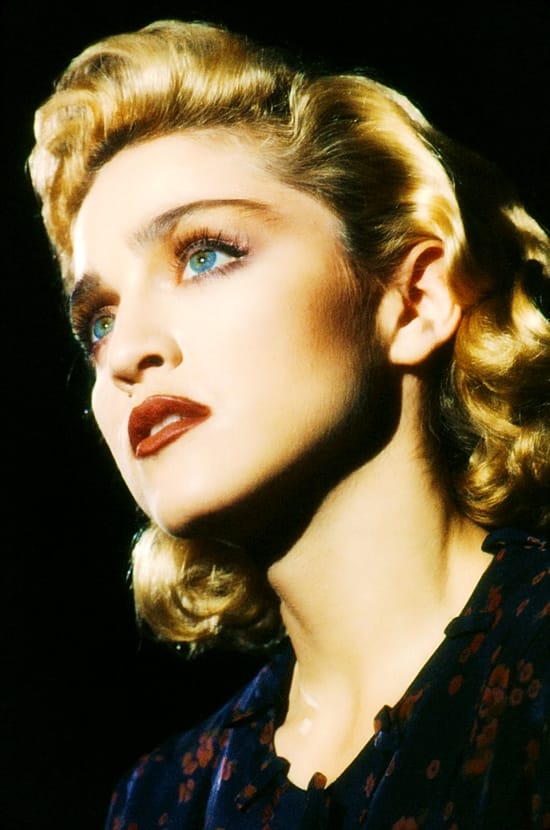
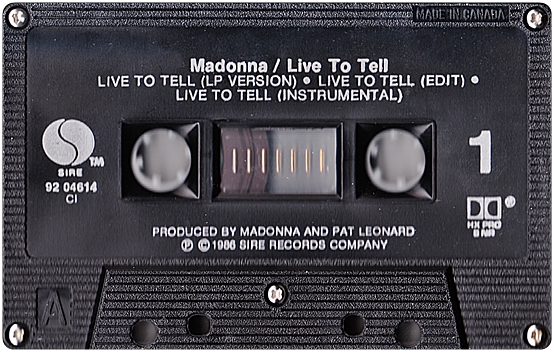
I make zero qualms with being a Madonna fan. I like or love nearly every one of her records up until about 2003 with American Life. If there was a bit of a “jump the shark” moment for me to where I started to tune out, it was definitely when she released a rather bland take on Don McClean’s “American Pie,” and really haven’t kept up with anything new since the early 2000s. Still, she had such an amazing run during the 80s and 90s despite many bumps in the road when it came to trying to cement a film career in the midst of many great pop singles.
My favorite song of hers is from a film that has one of my all-time favorite scenes involving a confrontation that takes place in a kitchen. Few songs capture Madonna’s capacity for both emotional vulnerability and sonic grandeur quite like "Live to Tell” from the film, At Close Range. Released in March 1986, this particular ballad marked a pivotal moment in the career of the artist who would become known as the Queen of Pop, representing not just a departure from her earlier dance-oriented material but an artistic evolution that would establish her as a songwriter and vocalist capable of conveying deep emotional complexity.
The lyrics that emerged from this creative burst were deliberately ambiguous yet emotionally resonant. Lines like "I have a tale to tell / Sometimes it gets so hard to hide it well" and "A man can tell a thousand lies / I've learned my lesson well / Hope I live to tell the secret I have learned" spoke to universal themes of hidden pain, difficult truths, and the burden of carrying secrets. The song's narrative voice was that of someone who had witnessed or experienced something profound and potentially traumatic, someone wrestling with whether to reveal or conceal a truth that "burns inside."
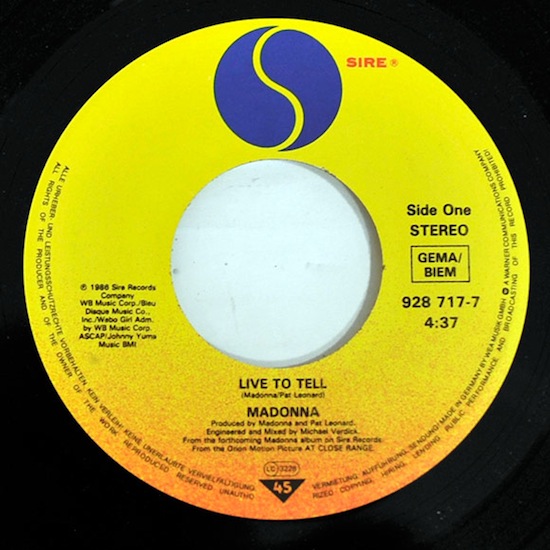
Ambiguity was intentional; Madonna later explained that the song could be interpreted as being about her childhood, her tumultuous relationship with her parents, something from an F. Scott Fitzgerald novel, or any number of other sources. The vagueness allowed listeners to project their own experiences onto the song, making it intensely personal for anyone who had ever carried a difficult secret. I always hear it as a song about surviving and then being able to share your story about the trauma that was experienced. Something that’s always been hard to talk about but now, you can finally find solace by telling whomever you’re close with whatever happened in the past.
After writing the lyrics, Madonna recorded a quick demo of the song and played it for both James Foley and Sean Penn. Both men were reportedly enthusiastic about the track, recognizing its potential to enhance the emotional impact of At Close Range. However, there were initially some concerns about who would perform the song. Since the lyrics were written from what seemed to be a male perspective, and given the film's context, there was discussion about finding a male vocalist to record the final version.
It was Patrick Leonard who insisted that Madonna herself should sing "Live to Tell." He was captivated by the vulnerability and rawness of her demo recording, qualities that he felt would be lost if the song were handed over to another performer. In a decision that would prove crucial to the song's ultimate impact, Leonard convinced Madonna to use the vocals from her original demo rather than recording new ones. This choice preserved the spontaneous, emotionally immediate quality of her initial performance, giving the final recording an authenticity that might have been lost in a more polished studio session. Sometimes musicians should actually consider trying to adopt the Clint Eastwood approach - one-take and move on.
Patrick Leonard recalled the subsequent series of events that led to the song’s completion in The Billboard Book of Number One Hits by Random House:
“Madonna said ‘This song would be great for Sean’s new movie.’ She wrote the lyrics–she just wrote them on the spot, which is what we always do. I don’t think we’ve ever taken more than three hours to complete a song from start to finish. She sang it on the demo only once and left with the cassette. That day I went to work with Michael Jackson on some transcriptions for material he was writing for the Bad album. The phone rang at Michael’s and it was Sean. He said ‘I’m over at the director’s house and Madonna just brought the song over. We love it and we’d like to talk to you about it.’ … We re-cut the song, but we used the same vocal. She only sang it once for the demo and that was the vocal we used because it was so innocent and so shy. She had a legal pad in her hand and you can hear the paper. It’s as raw as raw can be and that’s part of what gave it all its charm.”
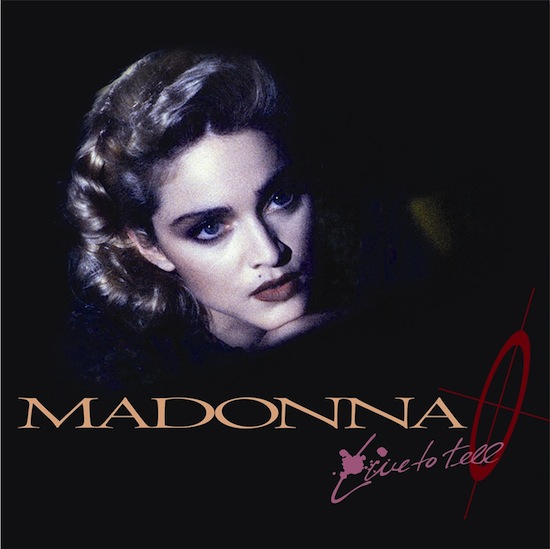
"Live to Tell" represented a significant departure from Madonna's previous work. Where songs like "Like a Virgin" and "Material Girl" had showcased her higher vocal register and dance-pop sensibilities, "Live to Tell" found her singing in a much lower, more intimate range. The song was written in the key of F major and set in common time with a moderate tempo of 112 beats per minute. Madonna's vocal range on the track spanned almost one octave, from F3 to D4, with her "throaty" delivery adding to the song's emotional weight. This was the first time she sang in a lower register than expected.
The structure was carefully crafted to build emotional intensity. It opened with what critics described as "big drums," "gasping keyboards," and "blippy little oscillations" that immediately established an otherworldly atmosphere. Madonna's entrance was understated but compelling: "I have a tale to tell / Sometimes it gets so hard to hide it well." As she began to sing, she "temporarily slipped outside" the song's tonal center, creating a sense of musical uncertainty that mirrored the emotional uncertainty of the lyrics.
The highlight is the chorus, which provided the song's emotional climax: "A man can tell a thousand lies / I've learned my lesson well / Hope I live to tell the secret I have learned." The bridge section, where Madonna sang, "If I ran away, I'd never have the strength to go very far / How could they hear the beating of my heart," was particularly powerful, with only synthesized waves remaining as she "gently reintroduced herself to the melody."
The decision to release "Live to Tell" as a single was a strategic and bold move. In the United States, the song was released on March 26, 1986, several weeks before At Close Range hit theaters in April and nearly three months before Madonna's True Blue album was released in June. This meant that when "Live to Tell" was climbing the charts, it wasn't available on any album – fans had to purchase the single to own the song. This scarcity may have contributed to the song's success, as it became a must-have item for Madonna fans and pop music enthusiasts.
The song debuted at number 49 on the Billboard Hot 100 in April 1986, which Billboard reported as an "outstanding" debut. The following week, it entered the Hot Adult Contemporary chart at number 28. By May 10, Billboard announced that "Live to Tell" was the single with the most airplay among reporting radio stations, appearing on 229 out of 230 surveyed stations. This level of radio saturation was remarkable for any artist but particularly significant for Madonna, who was still establishing herself as more than just a dance-pop novelty act.
On June 7, 1986, "Live to Tell" reached the summit of the Billboard Hot 100, becoming Madonna's third number-one single in the United States. The song spent one week at the top of the chart, but its impact extended far beyond that brief reign. Perhaps more significantly, "Live to Tell" became Madonna's first number-one hit on the Adult Contemporary chart, where it remained at the top for three weeks.
This crossover success was crucial for Madonna's career, as it demonstrated her ability to appeal to a broader, more mature audience beyond her core base of young dance-pop fans. The song's success on the Adult Contemporary chart was significant because it showed that Madonna could compete with established balladeers and be taken seriously as a vocalist and songwriter. It almost serves as a prelude of things to come for future tracks including one that I adored for the film A League of Their Own, “This Used To Be My Playground.”
The critical reception of "Live to Tell" was overwhelmingly positive, with many reviewers recognizing it as a significant artistic breakthrough for Madonna. AllMusic's Stephen Thomas Erlewine called it a "tremendous ballad that rewrites the rules of adult contemporary crossover." At the same time, his colleague Stewart Mason noted that it was "unlike anything [Madonna] had recorded up to that point." The song was praised for its emotional depth, sophisticated production, and Madonna's mature vocal performance. Critics who had previously dismissed Madonna as a lightweight dance-pop artist were forced to reconsider their assessments in light of this ballad.
Many reviewers specifically praised Madonna's vocal performance on "Live to Tell." The New York Times' Stephen Holden wrote that the song "proves that vocally Madonna isn't limited to catchy novelties and disco tunes – she can carry off a weightier ballad." Cash Box magazine called it a "restrained yet emotionally powerful ballad." At the same time, Spin's Erika Wexler described it as "dense with dramatic mystery" and highlighted how Madonna "very theatrically conveys a dreamy fatalism." The consensus among critics was that "Live to Tell" represented a new level of artistic maturity for Madonna, demonstrating her ability to handle complex emotional material with sophistication and nuance.
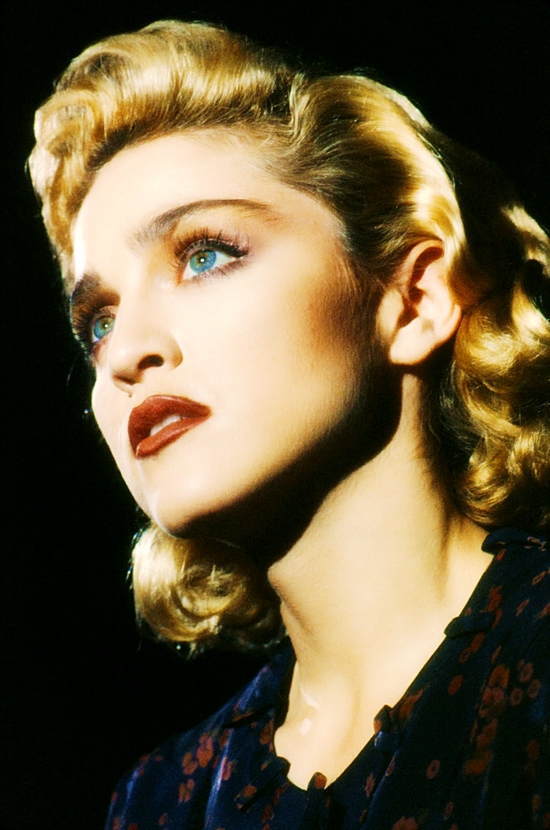
A rather unglamorized video for "Live to Tell," directed by James Foley, played a crucial role in the song's success and Madonna's image transformation. The video represented a dramatic departure from her previous visual presentations, showcasing a more subdued and elegant Madonna inspired by Golden Age Hollywood actresses such as Grace Kelly, Brigitte Bardot, and Marilyn Monroe.
Gone were the excessive jewelry, urban street style, and provocative dancing that had characterized her earlier videos. Instead, Madonna appeared in a demure floral dress, accompanied by tasteful makeup and a conservative hairstyle, which emphasized her face and emotional expression rather than her body or sexuality. It was all about what she could convey in close up.
This concept was innovative for its time, intercutting footage of Madonna singing against a black backdrop with scenes from At Close Range. This approach created a narrative dialogue between the song and the film, with Madonna serving as a Greek chorus commenting on the tragic events unfolding in Sean Penn's character's story. The video's minimalist aesthetic and emphasis on mood over spectacle aligned perfectly with the song's introspective tone, creating a cohesive artistic statement that enhanced both the music and the film.
Performance footage of Madonna in the video was particularly striking for its restraint. Unlike her previous videos, which had all featured some form of dancing, "Live to Tell" showcased Madonna as a stationary narrator, allowing her facial expressions and vocal performance to carry the emotional weight. This decision was both artistically effective and strategically smart, as it forced viewers to focus on Madonna as a serious artist rather than just an entertainer. The long, continuous shots in the video were unusual for the MTV era, where rapid editing was the norm, but they served to underscore the song's contemplative mood.
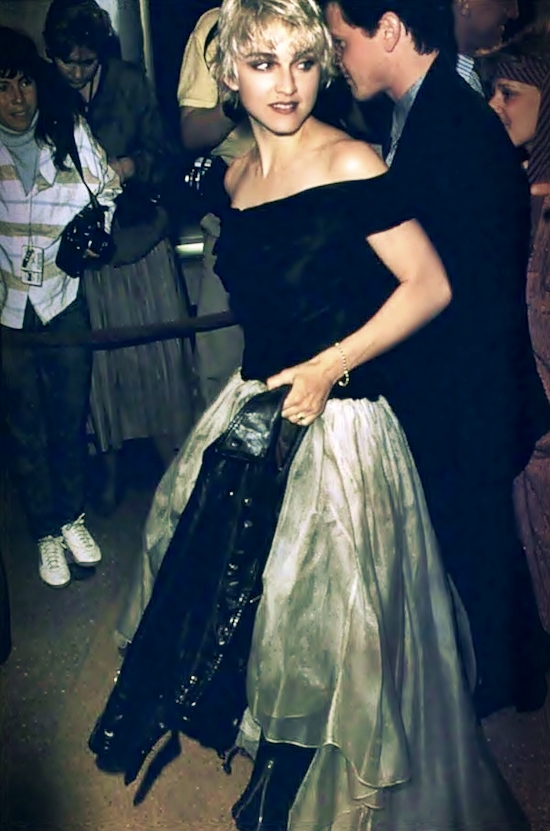
"Live to Tell" had profound implications for Madonna's career trajectory. It established her credibility as a songwriter and vocalist, demonstrating that she could craft music with emotional depth and artistic merit that transcended the dance floor. The song's success on the Adult Contemporary chart opened up new audience segments for Madonna, allowing her to appeal to listeners who might have previously dismissed her as too frivolous or youth-oriented. This expanded appeal would prove crucial for her long-term career sustainability, as it gave her the flexibility to experiment with different musical styles and themes without losing her core audience.
The song's connection to At Close Range also highlighted the growing relationship between pop music and cinema in the 1980s. While movie soundtrack songs had been popular since the 1960s, "Live to Tell" represented a new level of artistic integration between music and film. Rather than simply being a promotional tool for the movie, the song enhanced and commented on the film's themes, creating a symbiotic relationship that benefited both mediums. In fact, it’s the very first credit we see during the closing credits of the film, rather than the usual cast credits and/or directed by credit.
Recording techniques used in "Live to Tell" also deserve recognition for their innovative and effective approach. The decision to use Madonna's original demo vocals rather than recording new ones was unusual for a major label release, but it preserved an emotional authenticity that might have been lost in a more polished studio environment. This approach influenced other artists and producers to prioritize the value of spontaneity and emotional immediacy over technical perfection, contributing to a broader shift in the values of pop music production.
Her decision to suggest the track for At Close Range after it was rejected by Paramount showed her ability to see opportunities where others saw obstacles. Her willingness to write lyrics spontaneously and trust her creative instincts demonstrated the kind of artistic confidence that would characterize her entire career. The fact that she initially considered giving the song to another performer but ultimately kept it for herself showed her growing understanding of her own artistic strengths and market position.
Looking back at "Live to Tell," the song stands as a pivotal moment in both Madonna's career and 1980s pop music more broadly. But it’s also a song that consistently moves me to tears, likely due to my association with the last scene of the film in which the final words spoken are, “he’s my father.” I know it’s hard to convey into words without experiencing At Close Range as a whole, but that final moment is among the best acting Sean Penn has ever done and the fact that he can make me cry when I watch that moment is a testament to his strengths.
Then the second after the movie ends, the song kicks in at full blast and there is no getting around the chills I get. The music demonstrated that the decade's technological innovations in production could be used to create art of genuine emotional depth. It showed that a pop star known primarily for dance music could successfully transition to more serious material without losing commercial appeal. And it established Madonna as an artist capable of growth, reinvention, artistic risk-taking – qualities that would define her career for decades to come.
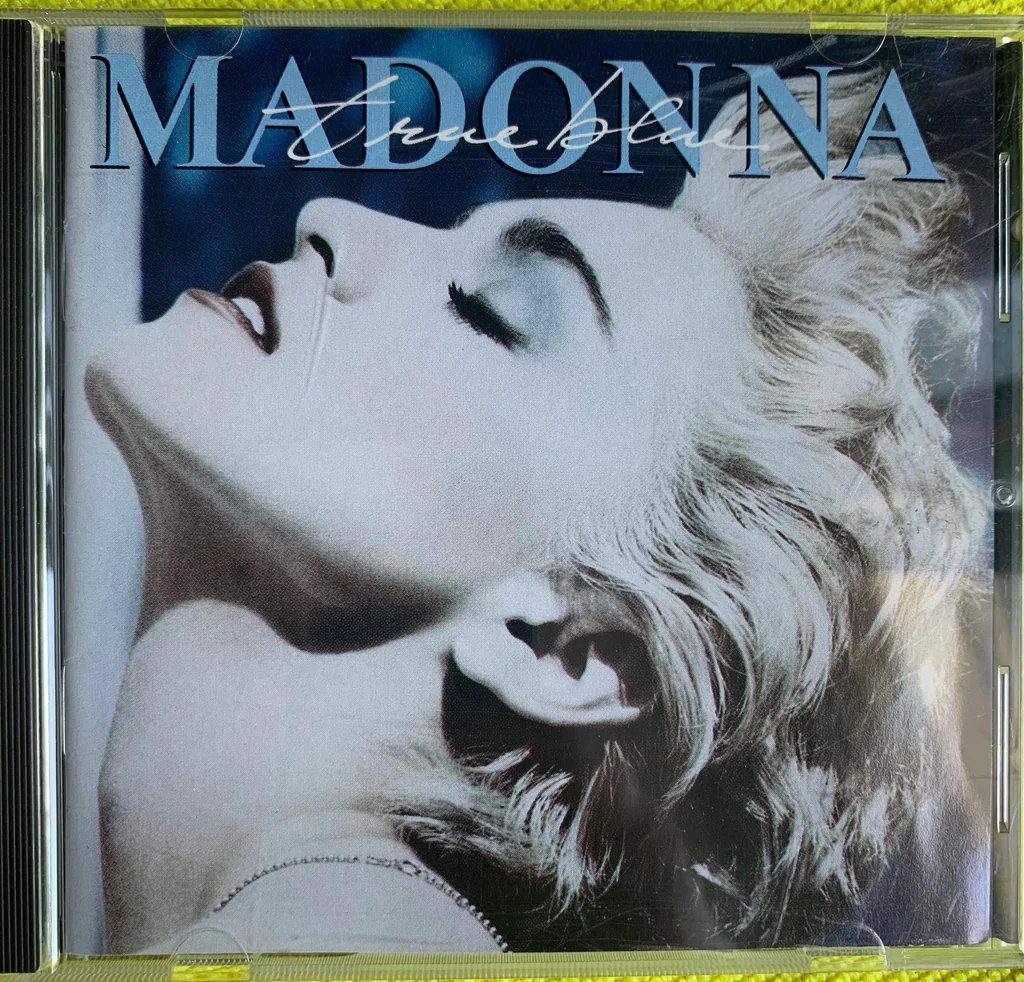
In the context of Madonna's overall career, "Live to Tell" represents a crucial turning point – the moment when she transformed from a promising pop star into a serious artist capable of sustained creative growth. The song's success gave her the credibility and confidence to continue pushing boundaries and exploring new artistic territories, setting the stage for the even more ambitious work that would follow on albums like Like a Prayer and the underrated Bedtime Stories. The majority of my favorite Madonna songs all happen to be ballads too.
Without the artistic breakthrough represented by "Live to Tell," Madonna's career might have followed a very different trajectory. The story of "Live to Tell" is ultimately a story about the mysterious nature of creativity itself. From Patrick Leonard's rejected film score to Madonna's spontaneous lyric-writing session to the decision to use demo vocals on the final recording, every step of the process involved elements of chance, intuition, and artistic evolution without losing sight of the emotional resonance.
The result was a song that captured something identifiable about the power of resilience, the weight of secrets, the pain of hidden truths, and the hope that someday we might find the courage to tell our stories despite the trauma we’ve experienced. In creating "Live to Tell," Madonna and Leonard didn't just craft a hit song for the general public; they made a beautiful mood piece that continues to strike a chord with listeners decades after its release, proving that the best music can indeed reach something universal and timeless within the ever-changing pop rock landscape of personal, creative expression.
Even though I’ve heard it a thousand times, I can say that it can and always will move me in ways that few other songs by the material girl has ever achieved in the past. One could say it’s mainly because of my association with the film it comes from, but that’s not a bad thing by any stretch. If you ever watch At Close Range again, maybe it has a lot to do with the final three words spoken in the film and I’m glad that despite almost dying myself, I can live to experience both film and music as transcendent as this.