It's Never Over, Jeff Buckley (2025) (dir. Amy Berg)
I know I write a lot about how art either changed or saved my life, but more often than not, it has led to the beginning of lifelong friendships or relationships that truly have meant a lot to me especially at the time they began. Jeff Buckley may have very well been responsible for my first serious relationship that started right as I entered my second decade of existence.
We bonded over our love of his music and even had the pleasure of speaking to Jeff Buckley’s mother one night at Uncommon Ground here in Chicago, Illinois. Not to mention the fact that shortly after we broke up, I managed to play the Annual Jeff Buckley Tribute concert in 2005 and had never been so nervous playing in front of a crowd of die-hard Buckley fans like myself.
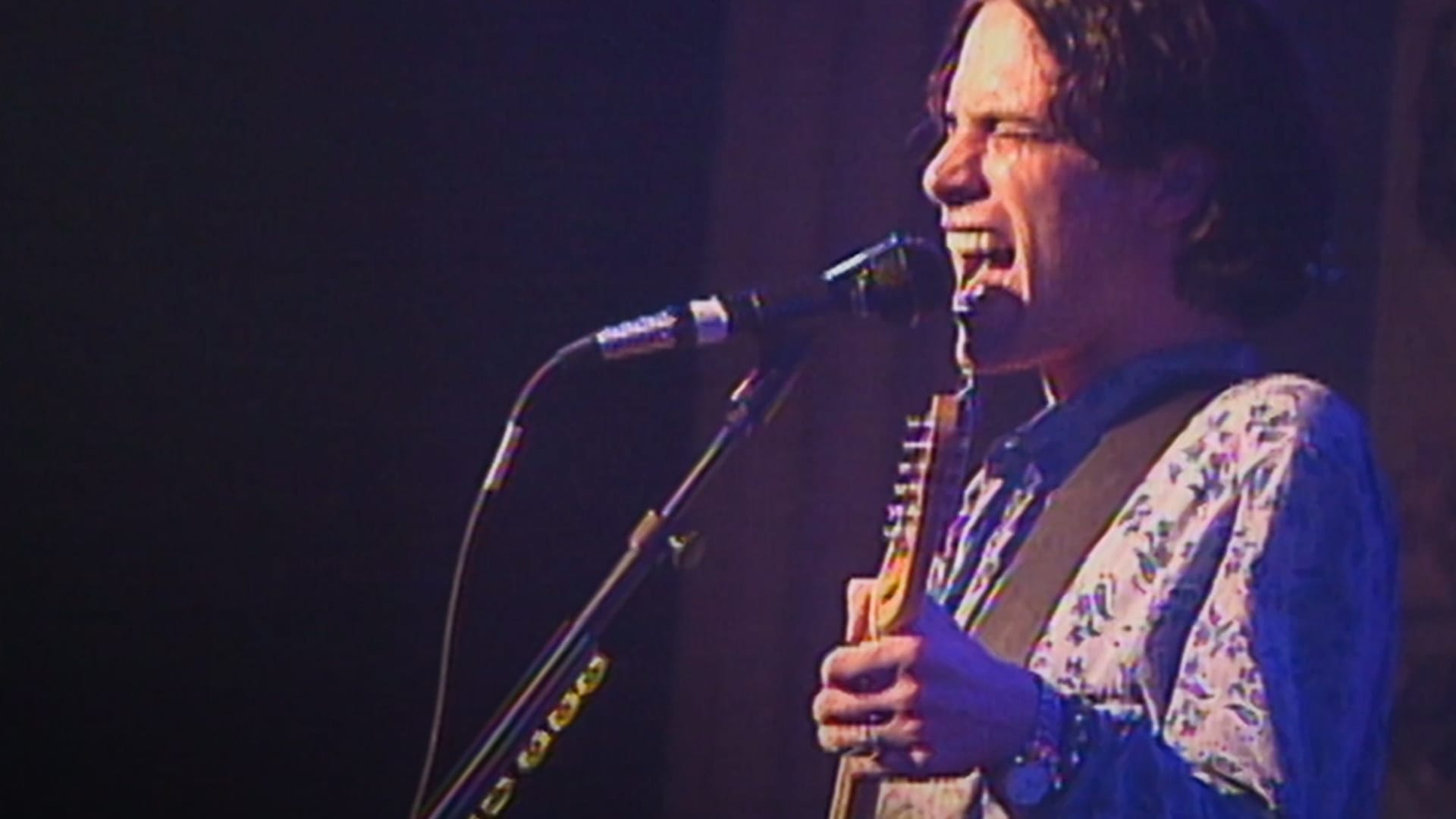
I’m coming at this review from a very personal place. Not because Jeff Buckley was my favorite singer of all time, but because I essentially aspired to be as fearless as he was performing solo electric guitar on stage. I was nowhere near as talented but few could ever be. All you need to listen to is a collection of live performances of his to see what he was capable of. Thankfully, this film allows not only for that but so much insight and reflection from those who were close to him that this is the ultimate music documentary and a sincere love letter from a fan, for the fans.
Amy Berg's remarkable film, It's Never Over, Jeff Buckley arrives at a time when music documentaries have become increasingly formulaic, often relying on the same tired template of talking heads interspersed with archival footage to tell stories we think we already know. But Berg, the Oscar-nominated filmmaker behind West of Memphis and Janis: Little Girl Blue has crafted something more emotionally resonant than the typical rock doc. Perhaps it’s because Jeff himself was emotionally resonant as a songwriter, performer and as a person to many.

What makes Berg's approach so compelling is her refusal to mythologize Buckley at the expense of unabashed humanity. Through extensive interviews with those who knew him best, particularly his mother Mary Guibert and former partner Rebecca Moore we see a complex portrait of an artist wrestling with the burden of extraordinary gifts. Guibert, whose presence throughout the film provides both emotional anchor and narrative spine, reveals a son who was simultaneously confident in his abilities and tormented by self-doubt, a young man who could command a room with his voice but struggled with the expectations that came with such power.
The film's greatest strength lies in its wealth of archival material, much of it never before seen, digitized through the financial support of executive producer Brad Pitt, himself a longtime Buckley devotee. We see him at Sin-é, the small New York coffee house where he first began to develop his unique sound, performing covers that ranged from Nina Simone to Édith Piaf to the Pakistani Qawwali master Nusrat Fateh Ali Khan. In one particularly magical moment, we witness Buckley meeting his idol Khan and launching into a note-perfect rendition of the master's singing style, earning a delighted smile that speaks to the universal language of musical genius recognizing itself.
Berg's decision to structure the film chronologically allows us to witness Buckley's artistic evolution in real time. We see the raw talent of his early performances gradually refined into the sophisticated artistry that would define one of the great works of art ever made: Grace. The behind-the-scenes footage from the album's recording sessions is nothing short of revelatory, capturing an artist at the peak of his creative powers, channeling influences from across the musical spectrum into something entirely his own. When we watch him perform "Mojo Pin" for one of the first times, introducing it as an original composition, the audience's rapt attention mirrors our own. This is the moment when Jeff Buckley the cover artist transforms into Jeff Buckley the songwriter, and Berg captures it with the reverence it deserves.
The documentary doesn't shy away from the darker aspects of Buckley's story, particularly his complicated relationship with his father, Tim Buckley, the folk-rock icon who died of a heroin overdose at 28, just weeks after a brief attempt at connecting with the son he had abandoned. This relationship, or lack thereof, haunted Jeff throughout his life, creating a tension between his desire to honor his inherited gifts and his need to establish his own identity. Berg handles this delicate subject matter with sensitivity, allowing the pain to speak for itself without exploiting it for dramatic effect.
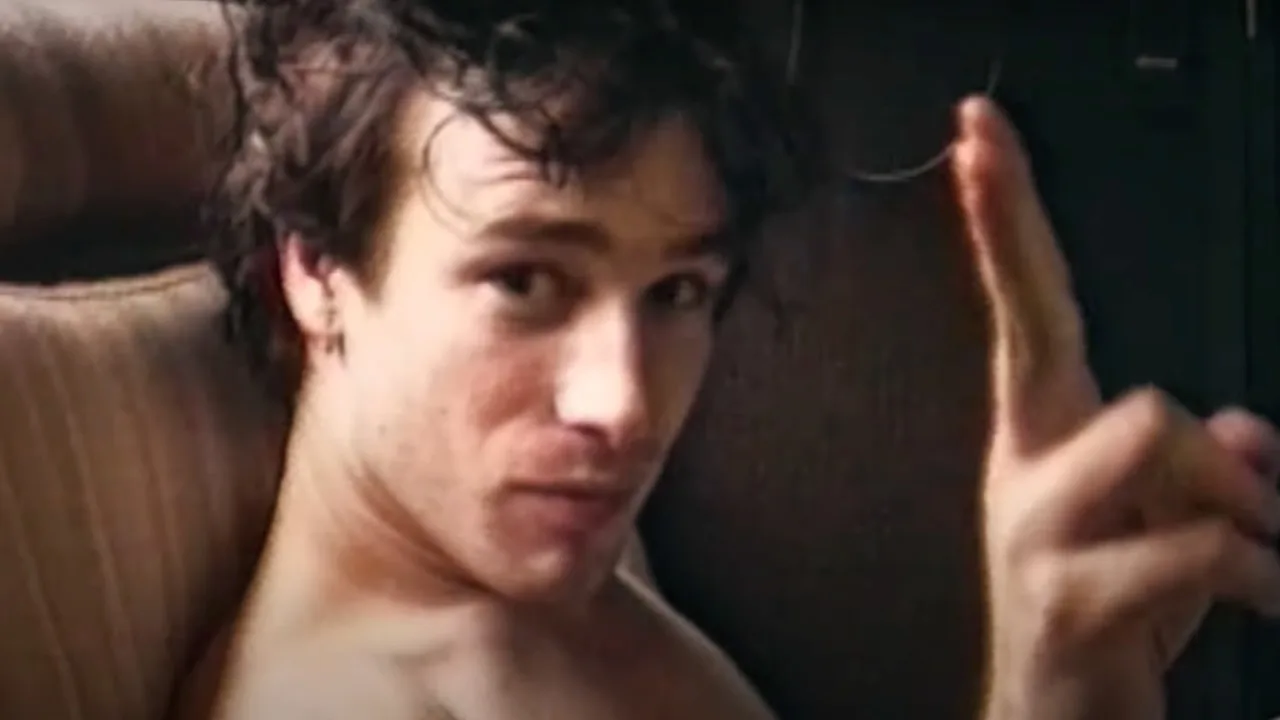
The film's middle section, which chronicles Buckley's rise to fame following the release of Grace, reveals the toll that success can take on such a sensitive, vulnerable person. Through the accounts of his bandmates Mick Grøndahl and Matt Johnson, we see an artist struggling to balance his creative ambitions with commercial expectations. The extensive touring schedule that followed the album's release, while cementing his reputation as a transcendent live performer, also wreaked havoc on his personal relationships and mental health. Berg doesn't present this as a simple cautionary tale about the music industry but rather as the complex reality of an artist trying to navigate a world that wasn't quite ready for what he had to offer.
The documentary's treatment of Buckley's romantic relationships provides some of its most poignant moments. Through interviews with Moore and Wasser, we see a man capable of deep love but also prone to the restlessness that seemed to define every aspect of his life. These women speak of him with a mixture of affection and understanding, recognizing both his capacity for tenderness and his need for artistic freedom. Their accounts reveal an artist who was simultaneously present and elusive, someone who could give everything of himself in performance but struggled with the demands of sustained intimacy.
Berg's handling of Buckley's death is particularly masterful. Rather than dwelling on the tragic circumstances of his drowning in the Wolf River in Memphis, she focuses on the mystery that surrounded his final weeks. The film acknowledges the darkness that seemed to be closing in, the phone calls to everyone he knew, the previous psychological struggles. But it refuses to offer easy explanations or sensationalized theories.
We really don’t know what happened, we likely never will. It’s best to leave it at that rather than come up with a definitive answer. Instead, it presents his death as it was: a sudden, inexplicable end to a life that had burned with uncommon intensity and romanticism that may have been too overwhelming at times. Even with having a gift of creating/sharing music, there is still much to process and come to terms with. The past is here. The future isn’t far away.
The documentary's final act, which explores Buckley's posthumous rise to iconic status, raises fascinating questions about fame, legacy, and the way we mythologize artists who die young. His cover of Leonard Cohen's "Hallelujah," which would eventually top the charts more than a decade after his death, serves as a perfect metaphor for his entire career: a song that found its audience only after its interpreter was gone, a voice that achieved immortality through absence.
What emerges from Berg's careful construction is a portrait of an artist who existed in a constant state of becoming, always reaching for something just beyond his grasp. The extensive footage of his live performances reveals a performer who seemed to channel something larger than himself, whose voice could transform a simple cover into a transcendent experience.
The film's title, taken from Buckley's song "Lover I Should've Come Over" proves prophetic in ways that extend beyond the obvious. His influence continues to ripple through the musical landscape, inspiring artists who weren't even born when he died. Berg's documentary serves as both introduction for newcomers and deeper exploration for longtime fans, striking that delicate balance that the best music documentaries achieve.
The editing, which seamlessly weaves together decades of footage, creates a sense of intimacy that makes us feel like we're discovering these moments alongside the filmmaker. Berg's direction is unobtrusive but assured, allowing the story to unfold naturally while maintaining the emotional momentum that carries us through Buckley's brief but extraordinary journey.
Perhaps most importantly, It's Never Over, Jeff Buckley succeeds in answering the question that has lingered since his death: what made Jeff Buckley special? What made him my personal favorite voice that I had ever heard? For me, it’s because he captured every single emotion imaginable sometimes within one song and made it sound as if it were too real to contain within the composition itself. It felt like love was manifesting right before my senses, which often brought me to tears, as this documentary often did.
It was his absolute commitment to the transformative power of music, his belief that a song could be a vehicle for something approaching the divine. He once said he wrote songs for “the people who are driving alone in the car, crying to themselves,” and that was certainly me. In an age of manufactured pop stars and algorithmic playlists, Buckley represented something increasingly rare: an artist who viewed music not as a career but as a spiritual calling.
The documentary also serves as a reminder of what we lost when Buckley died. The footage from his final years shows an artist who was just beginning to mature, who was finding new ways to channel his influences into original compositions. The second album he was working on at the time of his death, glimpses of which we hear in the film, suggested an artist ready to push even further into uncharted territory. His death didn't just end a life; it cut short an artistic journey that might have redefined what popular music could be.
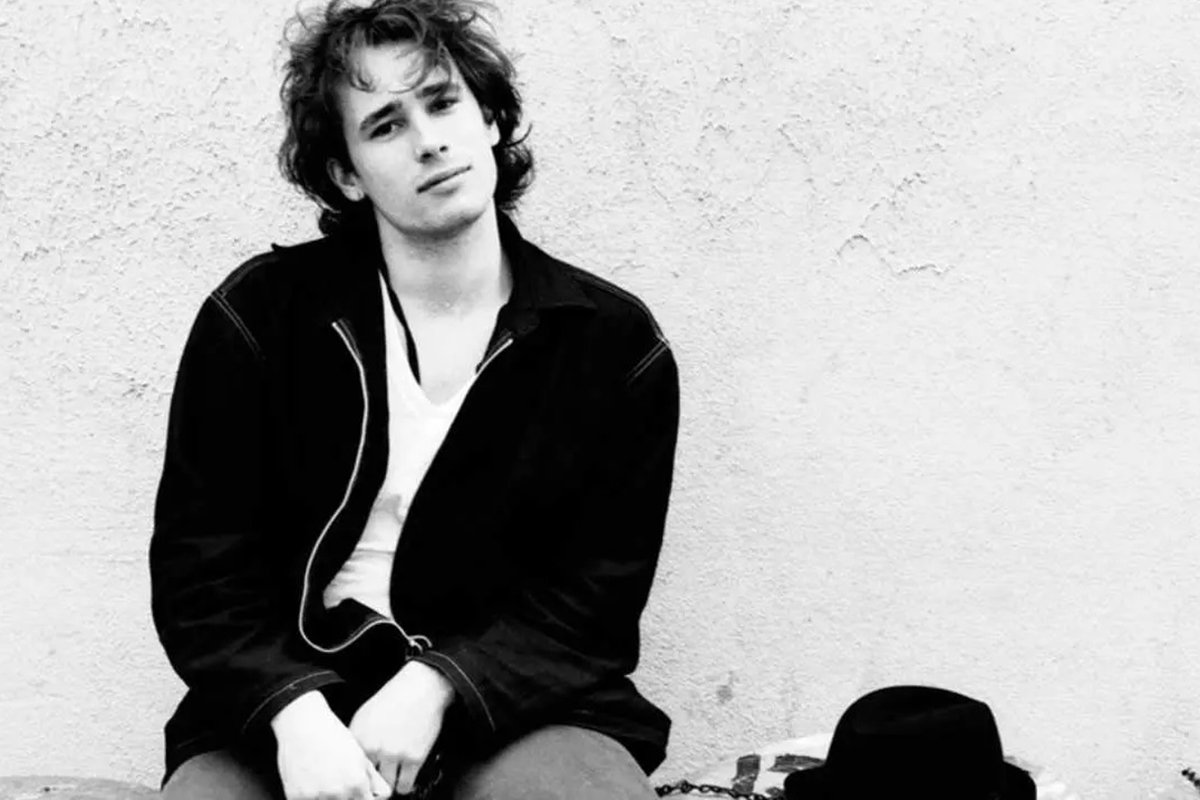
Berg's film ultimately argues that Jeff Buckley's legacy isn't just about the music he left behind but about the possibilities he represented. In a world that often seems to reward conformity over creativity, Buckley stood as proof that there was still room for the genuinely transcendent.
It's Never Over, Jeff Buckley is more than just a music documentary; it's a love letter to the transformative power of art and a meditation on the price of genius. It’s also one of my favorite films about what music does to both the listener and its creator. It ultimately creates a marriage that is hard to divorce from even after they’re gone. Some people are never forgotten because many songs are available at any time for me to listen to. That’s a beautiful thing despite the fact that unlike other personal heroes I’ve met like Jeff Tweedy or Paul Thomas Anderson, I never got to thank him for adding so much to my life.
Berg has created a film that honors its subject without canonizing him, that celebrates his gifts while acknowledging his struggles. For those who knew Buckley's music, it provides profound appreciation and a deeper understanding. For those discovering him for the first time, it offers the perfect introduction to one of the most singular voices in popular music history.
The film's greatest achievement is that it makes us feel the loss of Jeff Buckley not as ancient history but as a wound that's still fresh. When we hear his voice soaring through Grace or see him lost in the ecstasy of performance, we're reminded of what the world lost when he died at thirty. But we're also reminded of what we gained: a body of work that continues to inspire and transform, a voice that achieved the immortality that eluded the man who possessed it. It’s always here with us, and thanks to Amy Berg's beautiful documentary, we can go back time and time again and experience the power, the wonder of his talent. Our love of music, of the arts, of people like Jeff Buckley, is truly, never over.