One Battle After Another (2025) (dir. Paul Thomas Anderson)
Listen to a bonus conversation with Bill & Patrick about the film here:
https://directorsclub.substack.com/p/oboa
In the midst of a very difficult summer involving an aging parent, something unexpected happened a week after she was placed into assisted living. My favorite songwriter put out a triple record, and my favorite director is putting out his latest movie on the same day. The universe wants me to feel less unsteady, scared and uncertain. It also goes to show that both music and film continue to be there for me at a time when I need them the most.
My favorite director, Paul Thomas Anderson, has never played it safe. I applauded like a goofball when the frogs fell in Magnolia. From the sprawling ensembles to intimate character studies, he always pushes boundaries, challenging audiences and defying categorization. With One Battle After Another, his latest and most expansive work, Anderson delivers his politically charged film—a nearly three-hour odyssey blending stoner comedy, political thriller, father/daughter drama, and chase film spectacle. Whereas I felt Licorice Pizza was one of his weakest films to date, his latest is definitely one of his best.
If Inherent Vice was a dense detective story, One Battle After Another mines new territory that speaks to the times we live in. Loosely based on Thomas Pynchon’s “Vineland,” the film updates the 1980s setting to contemporary America, creating a fever dream of dazed paranoia, revolutionary fervor, and paternal desperation that feels both timely and timeless.
The result defies easy categorization—part Big Lebowski, part Battle of Algiers, part family road movie in the vein of T2—it still manages to form a singular vision of America while never neglecting character dynamics particularly the one involving a father and daughter, mentor and revolutionary.
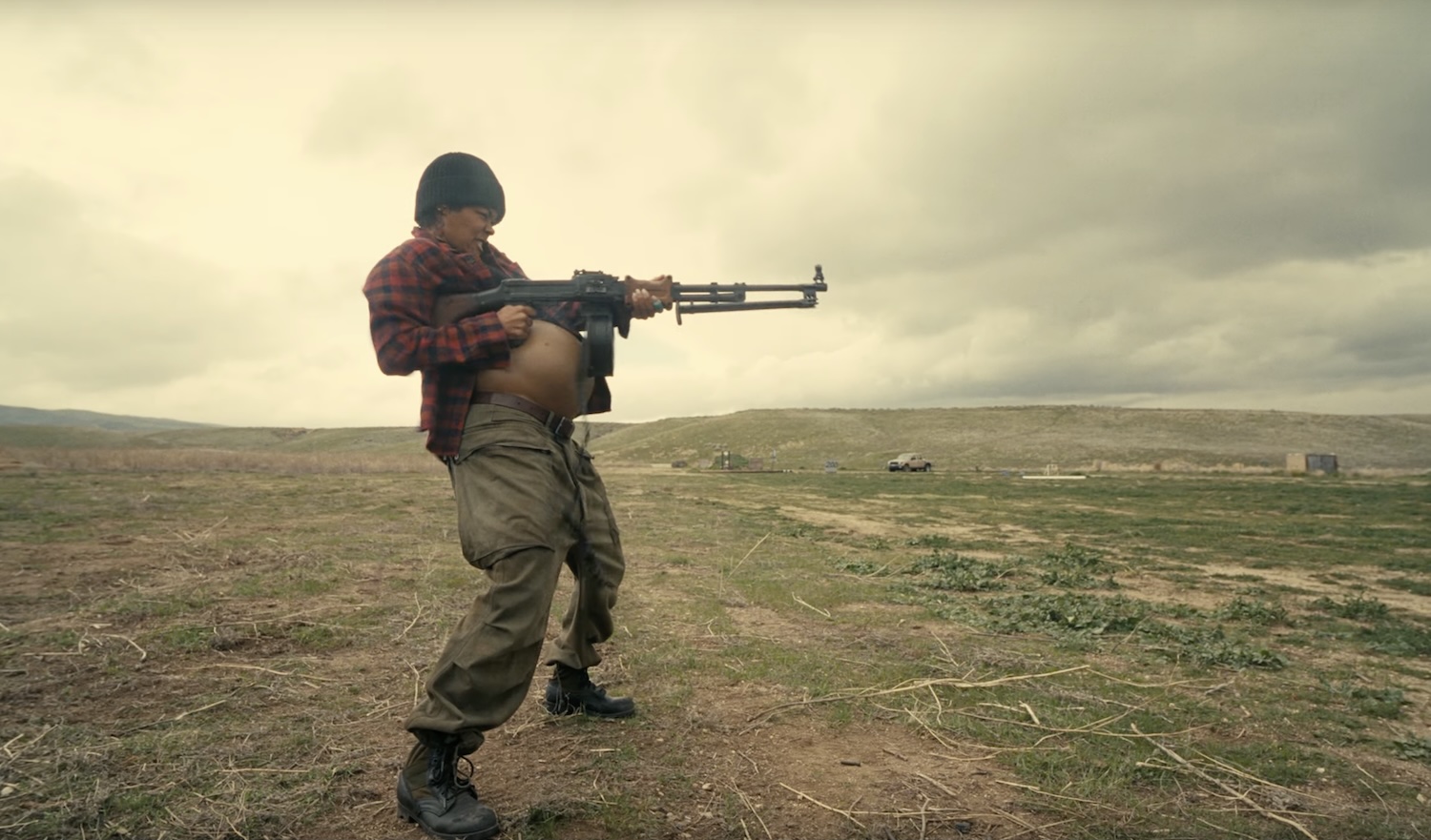
At Otay Mesa Detention Center in San Diego, we meet Perfidia Beverly Hills (Teyana Taylor), a revolutionary force striding confidently across an overpass. Below, an immigration detention center awaits, as Perfidia, her lover Bob Ferguson (Leonardo DiCaprio), and their group The French 75 prepare to stage a liberation.
“Make it big, make it bright. Inspire me,” Perfidia tells Bob. Taylor’s delivery captures her magnetic performance; the fact that she doesn’t stay for the entire film goes to show how she is missed. She doesn’t just play a revolutionary; she embodies it—dangerous, sexual, unpredictable, and compelling. Known for her music career, Taylor proves herself a formidable screen presence, commanding every scene and making her absence in later sections palpable.
The opening act establishes The French 75, activists liberating persecuted immigrants from “right-wing concentration camps.” Anderson crafts a near-future America where ICE operates unchecked and secret white supremacist groups like the Christmas Adventurers Club (a pure Pynchion creation) hold power. (The casting of those old white men is a masterstroke. If only Martin Donovan had made another cameo like he did in Inherent Vice though).
The chemistry between Perfidia and Bob is charged with both tension and passion, blending bomb-making with lovemaking. When Perfidia first meets Colonel Steven J. Lockjaw (Sean Penn), she holds him at gunpoint, commanding him to “Get it up”—not his hands. These tense scenes define the complex power dynamics that drive the narrative. Sex, drugs, and revolution!
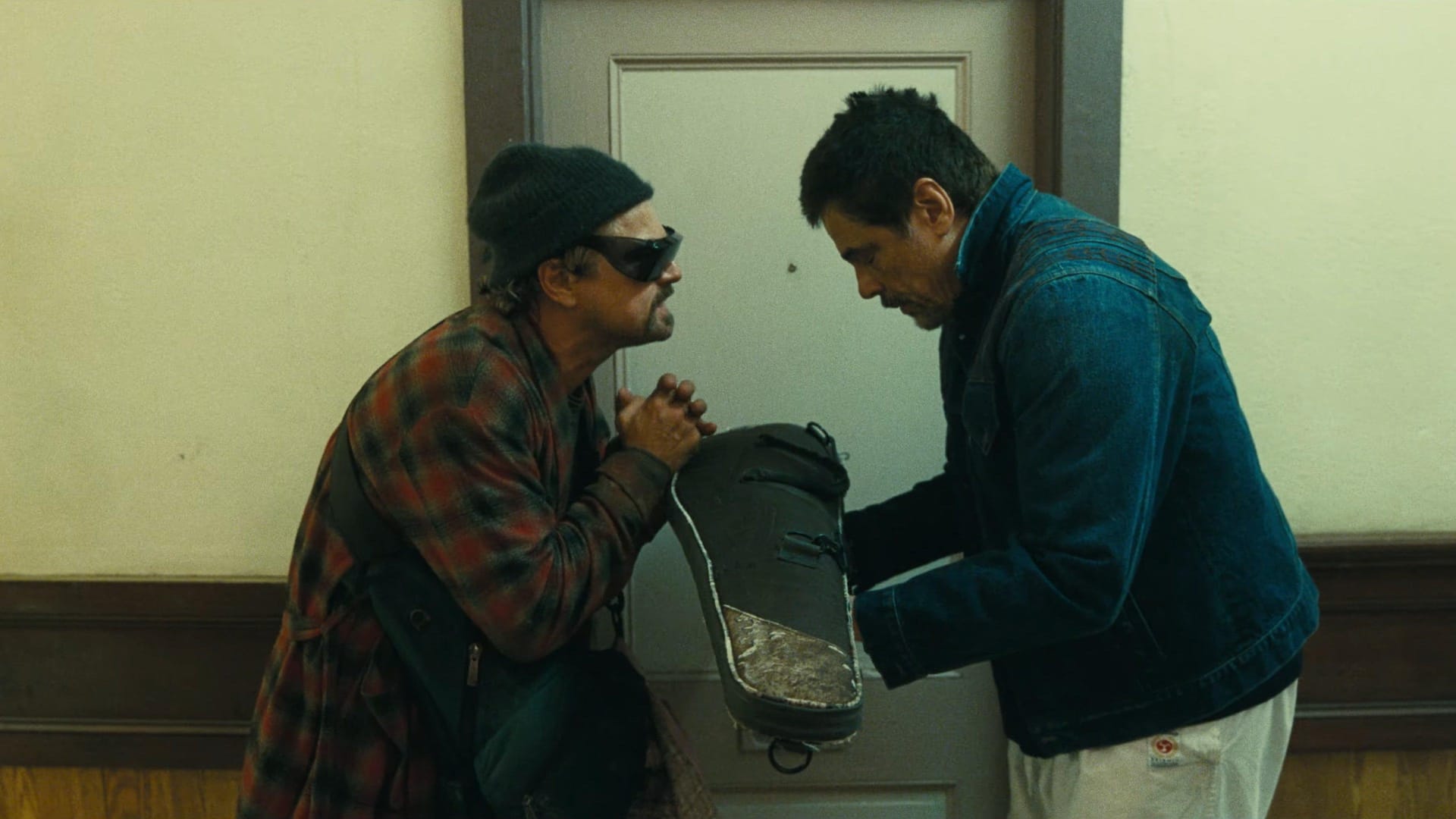
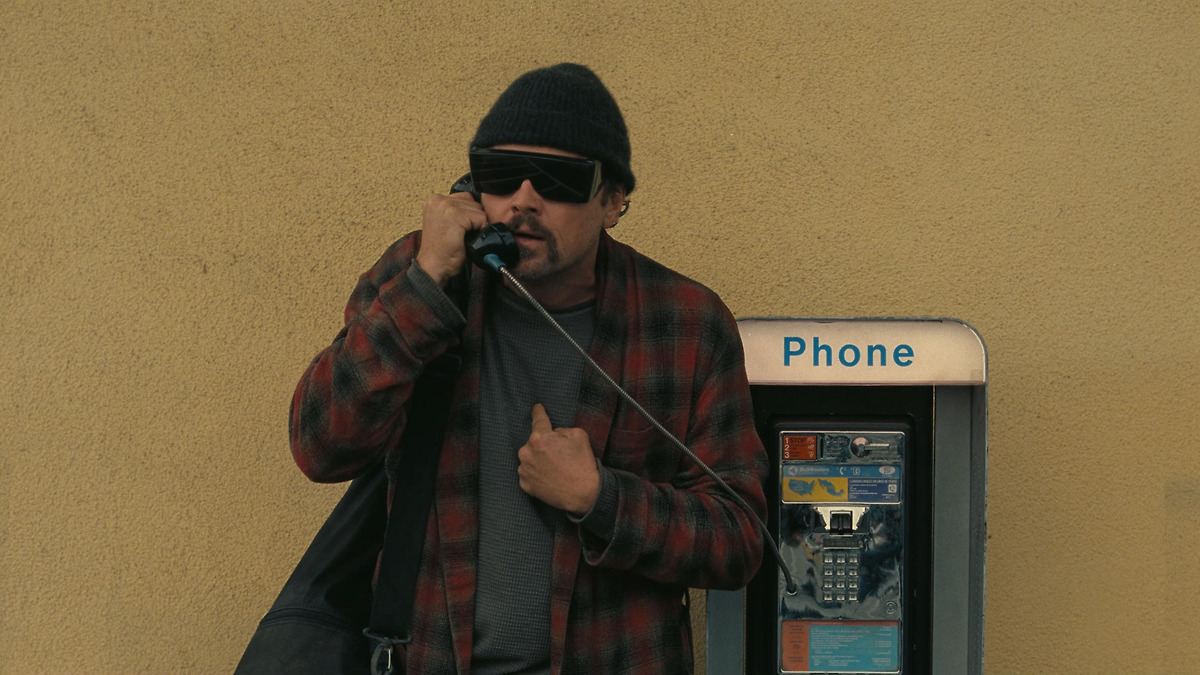
The film then jumps sixteen years ahead, finding Bob off grid with his daughter Willa (Chase Infiniti) in Baktan Cross. Once a revolutionary, Bob is now a stoner, quoting The Battle of Algiers and forgetting his past. DiCaprio shines, channeling Jeff Bridges’ The Dude with unhinged paternal anxiety and a quest to get his phone charged that is one of the highlights of the entire adventure.
DiCaprio’s Bob Ferguson is controlled chaos, a man trying to forget his past but forced to confront it. Known for his intense commitment, DiCaprio embraces the physical comedy—being tasered, gassed, and taking falls—while maintaining Bob’s desperation and love for his daughter.
Chase Infiniti, in a striking debut, impresses with a performance that balances teenage rebellion with courage. The bond between Bob and Willa becomes the emotional core of the film. Willa embodies her mother’s strength and her father’s vulnerability, and Infiniti handles these contradictions with nuance.
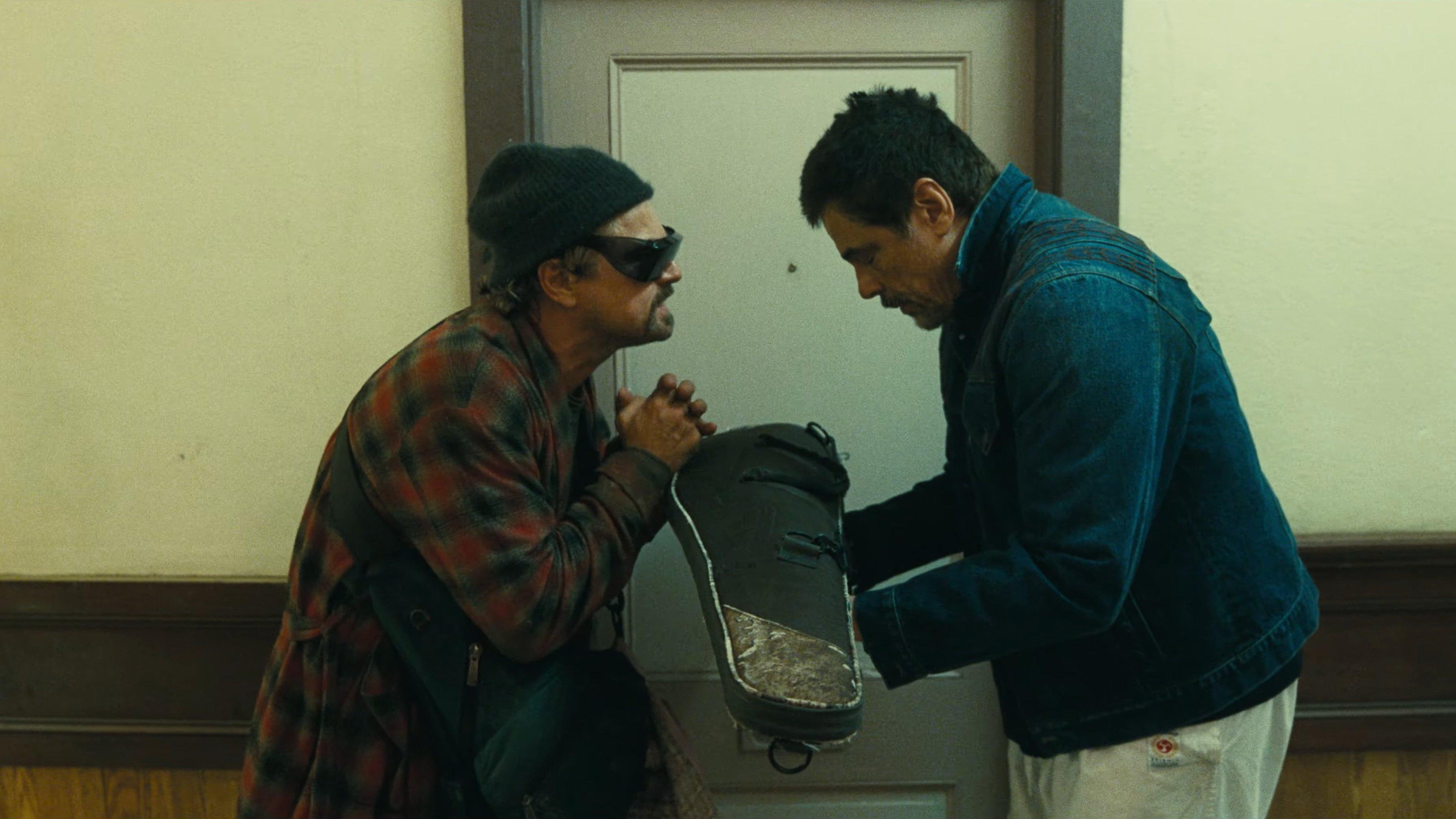
The scenes between father and daughter, especially exploring Willa’s desire for independence symbolized by wanting a phone, are some of the film’s most touching. Infiniti’s chemistry with DiCaprio feels authentic, grounding the film in their bond.
Sean Penn’s Colonel Steven J. Lockjaw showcases Anderson at his most provocative. Penn delivers his finest performance in years, crafting a villain who is both cartoonish and terrifyingly real. Lockjaw has “shades of RFK especially with his gravelly voice, but twisted and dangerous,” and Penn embraces the character’s ambitions and obsessions.
Penn’s performance balances satire and menace. Lockjaw represents a familiar American political archetype—the authoritarian strongman with barely concealed racism—but Penn keeps him from being a caricature. Something unsettling emerges from Lockjaw’s stillness, projecting danger without raising his voice. When he erupts, the impact is devastating due to its restraint.
Anderson’s technical mastery dominates One Battle After Another. The film treats locations like supporting characters. Shot on 35mm Vista Vision, Anderson and cinematographer Michael Bauman creates visually stunning results. The film stock’s texture and Bauman’s landscape work transform the American Southwest into a living character. The final act, set in hills outside Los Angeles, turns geography into kinetic energy, with the camera making the landscape beautiful yet menacing. It’s a chase set piece right out of Duel, while also being wholly unique.
Jonny Greenwood’s score—his sixth Anderson collaboration—blends piano and percussion to propel the narrative in a way that left me overwhelmed. While Greenwood’s music always anchors Anderson’s films, here it becomes character-like, commenting on and driving the action. The score’s classical and electronic fusion mirrors the film’s genre-blending.
The Christmas Adventurers Club appear as suburban dads from a holiday potluck but beneath lies a dangerous echo chamber of racist ideology, delivering cutting commentary. Anderson’s portrayal—with their coded language and casual talk of ethnic cleansing—hits close to real-world politics, making them both hilarious and chilling.
One Battle After Another arrives when American political discourse is fractured, and Anderson picks a side. His depiction of immigration detention centers, white supremacist groups, and government overreach feels pulled from today’s news. By updating Pynchon’s 1980s setting to the present, Anderson makes these themes urgent and inescapable.
Anderson’s social commentary goes beyond simple partisan messaging in a favor of one side vs. another. The French 75, though heroes, carry moral baggage. Perfidia’s questionable methods and her entanglement with Lockjaw complicate power dynamics. Bob’s shift from revolutionary to dropout questions if radical politics can sustain—and at what cost. Surprisingly, there aren’t many long scenes of monologues, it’s full steam ahead, driven with momentum and intensity.
One Battle After Another refuses to be confined to a single genre and that’s what I love the most about this director. Embracing chaos with a sense of controlled purpose and intent, the year’s best film reflects an unraveling America through a father’s love for his daughter and a revolutionary’s search for meaning.
Bob Ferguson’s journey from explosives expert to stoner to desperate father is Anderson’s complete statement on modern America—a country lost but with potential for redemption. There’s still a little bit of fight in all of us, even those who feel lost, drowning in a need to escape.
Living in this country feels like we’re fighting one battle after another. Every single day there’s a reason to be upset, worried and horrified. But humanity can be found if you’re not consumed by narcissism. PTA made a crackerjack of a movie at a time of extreme anxiety, huge changes in my life and made it in a way that only he could achieve. With a script full of hilarious lines, “noise trigger” is going to stay with me to where I’ll be making a shirt.
When given a true purpose in life, much like in Bob’s case, ensuring the safety of his only child, there is freedom in moving forward and overcoming the obstacles of a broken world. There is hope, even during hopeless times. I was moved to tears by the final moments of this incredible film, the song choice at the end and the simple fact that I watched this movie at a time when I needed it most.