Only The Lonely (and/or Help the Aged)
Writing has always been my go-to method for dealing with difficult emotions and troubling thoughts. Usually, this Substack would be far more consistent than it has been. Still, I have some valid excuses: working a bit more on other projects, moving into a wonderful new home, and attempting to get more organized. However, there’s something that I know needs to be addressed, but I’m hesitant to share in great detail (unless you’re a close friend, in which case you already know by now).
I know the family member I'm speaking of will never find this website, read what I’m writing, or even process it rationally. I can tie this back to the film to not make this entirely about “me” and what I’m experiencing. Although just watching this movie, you’ll glean what’s going on. If you’ve seen the movie I’m focusing on, know that it’s hitting home more than ever now that I live with my fiancée.
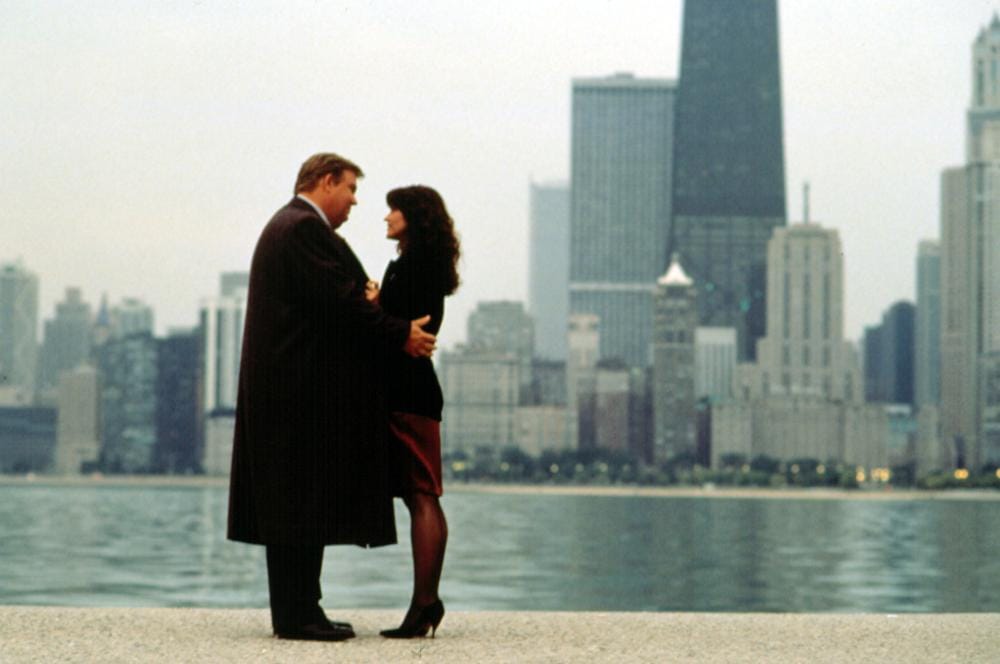
Actually, two movies come to mind regarding what I’m going through that couldn’t be more radically different, though they share a common theme. If you’ve seen either, then you’ll know the family member in question I’m alluding to. When I was younger, I was a fan of the sweet romantic dramedy / mother-son story called Only the Lonely with John Candy.
The other title is more recent, and it’s not one I entirely get on board with due to its messy, episodic narrative. I’m referring to Ari Aster’s Beau is Afraid. Instead of focusing so much on the latter, due to the fact that it gets on my nerves a little (except the After Hours-esque anarchic tone of the first hour), I think it might be fun to talk about a movie that is also definitely imperfect, but the cast saves it. Besides, I have been viewing this film from a different perspective lately. I relate to it now more than ever, for better or worse.
There’s no getting around the fact that Only the Lonely is pretty close to being a remake of the 1955 Oscar-winning film Marty. Perhaps it can be considered more of an homage, but still, the stories are very similar when it comes to arrested development. Chris Columbus wrote and directed Only the Lonely. And it came out in 1991, the year after the insanely successful Home Alone.
It presents itself as a gentle romantic comedy about a middle-aged bachelor finding love, but beneath its warm surface lies a penetrating examination of narcissistic parenting, unhealthy attachment, and the psychological chains that bind family members together in potentially destructive patterns. I wish this had been a hit; we might have seen a lot more dramatic work from an all-time favorite comedic performer. Of course, I’m talking about the late, great John Candy.
Through the relationship between Danny Muldoon (Candy), a 38-year-old Chicago police officer, and his controlling mother, Rose (Maureen O’Hara), the film explores how codependent relationships can often masquerade as love while actually stunting emotional growth, perpetuating loneliness, and preventing the formation of healthy interpersonal relationships. What makes Columbus's treatment particularly sophisticated is how he avoids portraying either character as purely a victim or a villain, instead revealing a complicated dynamic within this web of mutual need, manipulation, and genuine affection that can become increasingly toxic over time.
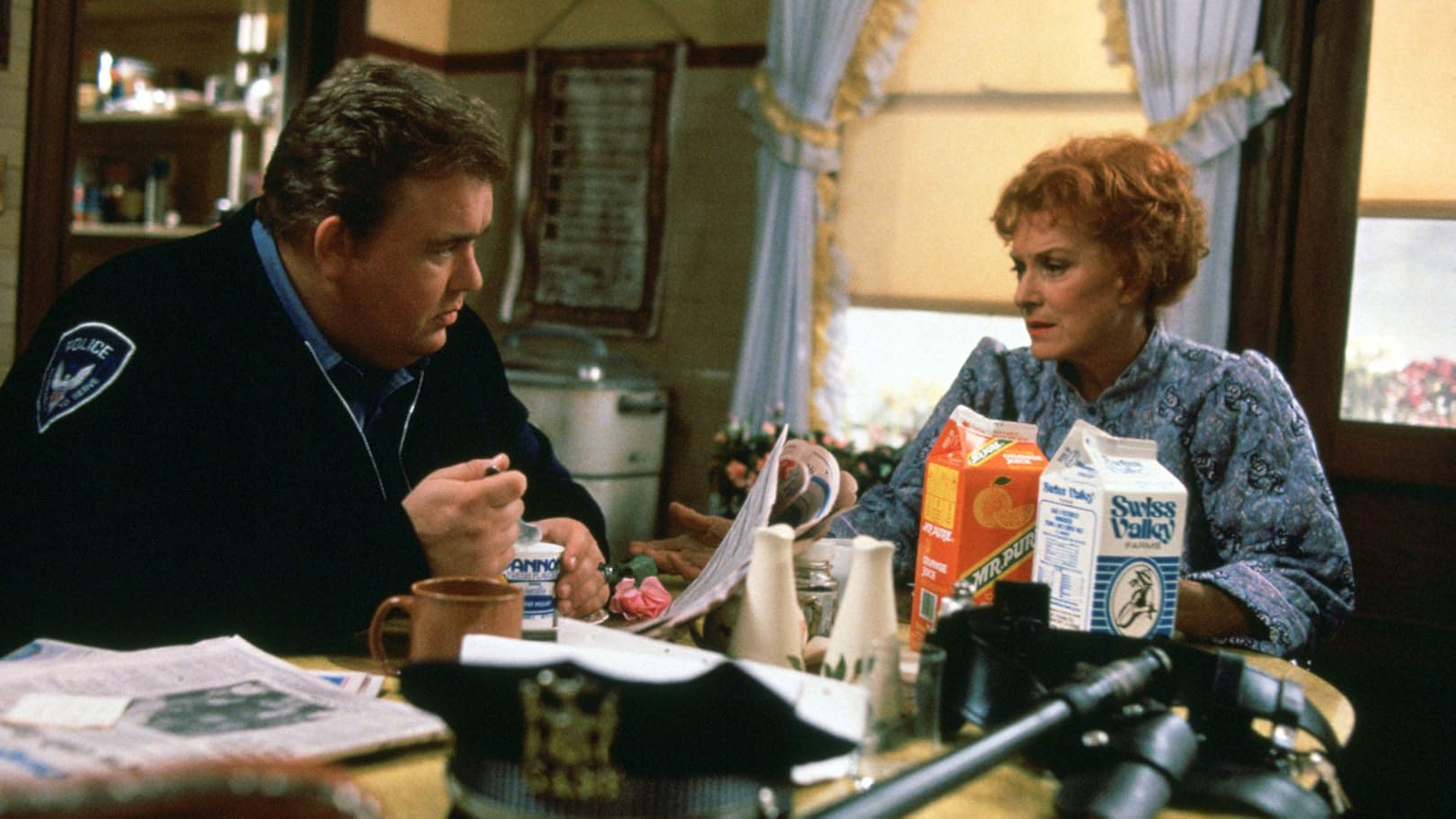
Danny ventures out to fetch Danishes, a newspaper, and lottery tickets while Rose waits at home, and this seemingly innocent ritual reveals a fundamental imbalance in their relationship. Rose has positioned herself as the center of Danny's universe, the person for whom all activities revolve, while Danny has accepted the role of caretaker and provider. This arrangement appears comfortable, even loving, but Columbus subtly demonstrates how it serves to keep both characters trapped in patterns that prevent growth and authentic connection with others.
The codependent relationship between mother and son is characterized by what psychologists might recognize as enmeshment, where individual boundaries become so blurred that neither person can function independently. Rose has never learned to exist without Danny's constant attention and care, while Danny has never developed the emotional tools necessary to establish his own identity separate from his role as his mother's protector and companion. He’s even lost faith in the ability to find romance.
When his brother Patrick suggests that Danny "deserves better," Danny's immediate response—"I don't want better"—reveals how thoroughly he has internalized his position within this dysfunctional attachment. He has convinced himself that his current situation represents contentment rather than stagnation, a common defense mechanism among those trapped in codependent relationships.
Rose's character embodies the classic traits of the codependent enabler who maintains control through emotional manipulation and guilt. Her casual racism, her sharp tongue, and her dismissive attitude toward others serve multiple functions within the codependent framework. By positioning herself as the truth-teller who sees through everyone else's pretenses, she maintains her role as Danny's primary advisor and confidant.
Her bigotry and criticism toward Theresa, whom she dismisses with ethnic slurs, is not merely personal prejudice but a strategic weapon designed to undermine any relationship that might threaten her position as the most critical woman in Danny's life. When she tells Danny about the lonely old women who spend their days standing in lines because "there's no one else in the world they can talk to," she is simultaneously projecting her own deepest fear and issuing a veiled threat about what will happen to her if he abandons her. Rose likely has seen any woman in Danny’s life as a threat, which can often occur when a husband/father is deceased. The son ultimately becomes the sole source of support and solace.
The film's most psychologically astute moments come through Danny's recurring fantasies about the terrible fates that might befall his mother if he dares to prioritize his own needs (though they are also darkly comedic). These nightmare sequences, in which Rose meets various gruesome ends while Danny is out on dates or attending to his own life, represent the internalized guilt and catastrophic thinking that characterize codependent relationships.
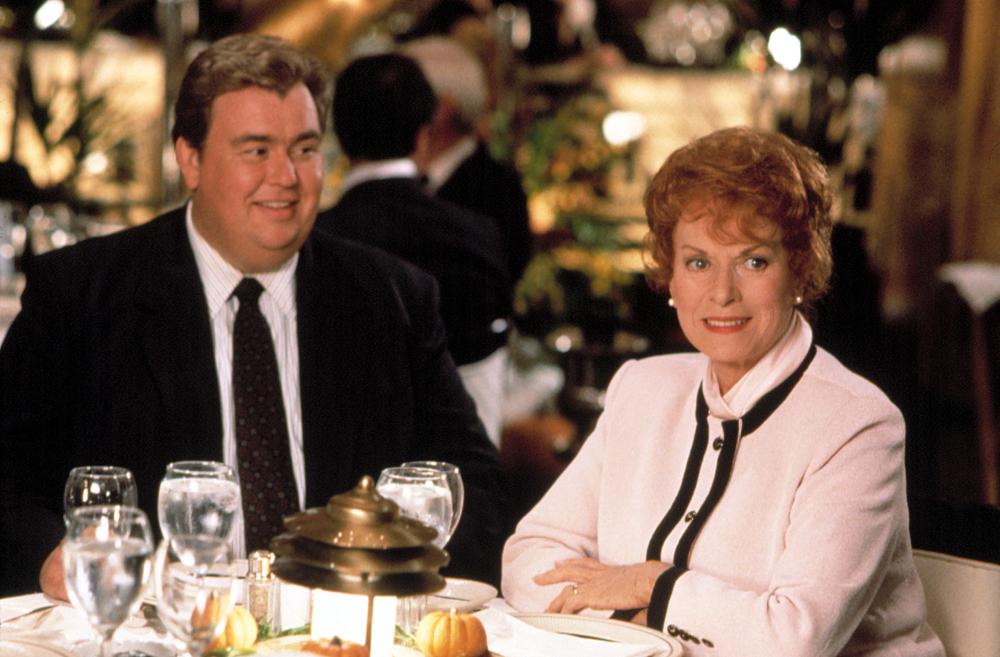
Danny has been conditioned to believe that his mother's well-being—indeed, her very survival—depends entirely on his constant vigilance and sacrifice. These fantasies reveal how co-dependence operates through fear and magical thinking, where the dependent person becomes convinced that their loved one cannot survive without their constant care and attention.
What makes these fantasy sequences particularly compelling is how they illustrate the way codependent individuals often experience typical, healthy desires for independence as acts of potential violence against their loved ones. Danny cannot simply go on a date; in his mind, doing so becomes tantamount to abandoning his mother to death or disaster.
The introduction of Theresa (played by the always delightful Ally Sheedy) into this closed system creates the crisis that drives the film's narrative. Still, more importantly, it exposes the true nature of the codependent relationship between mother and son.
Theresa represents everything that threatens a codependent system: she is an outside influence who offers Danny genuine intimacy, emotional growth, and the possibility of establishing his own independent life. Rose's immediate hostility toward Theresa is not simply a matter of maternal protectiveness or personal dislike; it is a desperate response from someone whose entire identity and sense of security depend on maintaining exclusive emotional control over another person.
The film demonstrates how unhealthy attachment within the mother/son dynamic creates a zero-sum emotional economy where love for one person is perceived as a direct threat to love for another. Rose cannot conceive of sharing Danny's affection because she has structured their relationship around the premise that she is his primary and most important emotional connection.
When Danny begins to invest time and energy in his relationship with potential mate Theresa, Rose experiences this not as her son's natural development towards growth and companionship but as a form of abandonment and betrayal. She has an unwavering fear of being alone, and the idea of losing her son causes her to lash out. Her escalating attempts to sabotage the relationship—from subtle undermining to outright confrontation—represent the lengths to which a self-absorbed mother will go to maintain their position within their dysfunctional version of reality.
Theresa's role in the film extends beyond that of romantic interest; she serves as a mirror that reflects the unhealthy nature of Danny's relationship with his mother. Theresa’s question—"Are we ever going to be alone?"—cuts to the heart of the codependent dynamic, highlighting how Rose's constant presence and influence prevent Danny from forming genuine intimacy with anyone else.
Theresa's eventual decision to end their engagement is not simply about Danny's failure to defend her against his mother's racism; it is about her recognition that she cannot compete with a codependent relationship that has had decades to establish its patterns and defenses.
Theresa finds herself in an impossible position, trying to love someone who has never learned to establish appropriate boundaries with his family of origin. She’s basically going to have to handle both her partner and his mother, which doesn’t sit too well with her, and rightfully so. Her frustration and eventual (albeit temporary) departure illustrate how toxic interactions, and a lack of boundaries can create ripple effects that damage other relationships and prevent the formation of healthy romantic partnerships.
Yes, this was captured far better in something like Marty but here it’s filtered through tonal shifts that may or may not sit well with the viewer. When Danny finally confronts his mother about her behavior and declares his intention to marry Theresa, Rose's response is not immediate acceptance but rather an escalation of her manipulative tactics. She enlists Patrick in her campaign to convince Danny that marriage would be a mistake, and she begins planning a move to Florida that would require Danny to abandon his life in Chicago to care for her. These maneuvers represent a mentally unstable person's desperate attempts to maintain control when their position is threatened.
The film's climactic confrontation between Danny and Rose reveals the deep-seated resentments and unspoken truths that accumulate within codependent relationships. When Danny finally explodes with anger and tells his mother about a childhood memory of her cruelty, he is not simply expressing anger about a single incident; he is releasing decades of suppressed frustration about being trapped in a relationship that has prevented him from developing his own identity and pursuing his own happiness.
This moment of truth-telling is essential for breaking codependent patterns, as it requires both parties to acknowledge how their relationship has become destructive. But this doesn’t necessarily mean things will change, though the film’s sunnier, happier ending seems to indicate otherwise. This is a Hollywood movie, after all. In Ari Aster’s world, Danny’s only release would come from death.
Rose's eventual acceptance of Danny's need for independence represents the film's most optimistic view of how codependent relationships might be transformed. Her decision to encourage Danny to pursue Theresa and to face her own move to Florida alone suggests that codependent individuals can learn to find security and identity outside of their enmeshed relationships. However, the film is realistic about how difficult this transformation is; Rose's change of heart comes only after she has exhausted her other options and faced the prospect of losing Danny entirely.
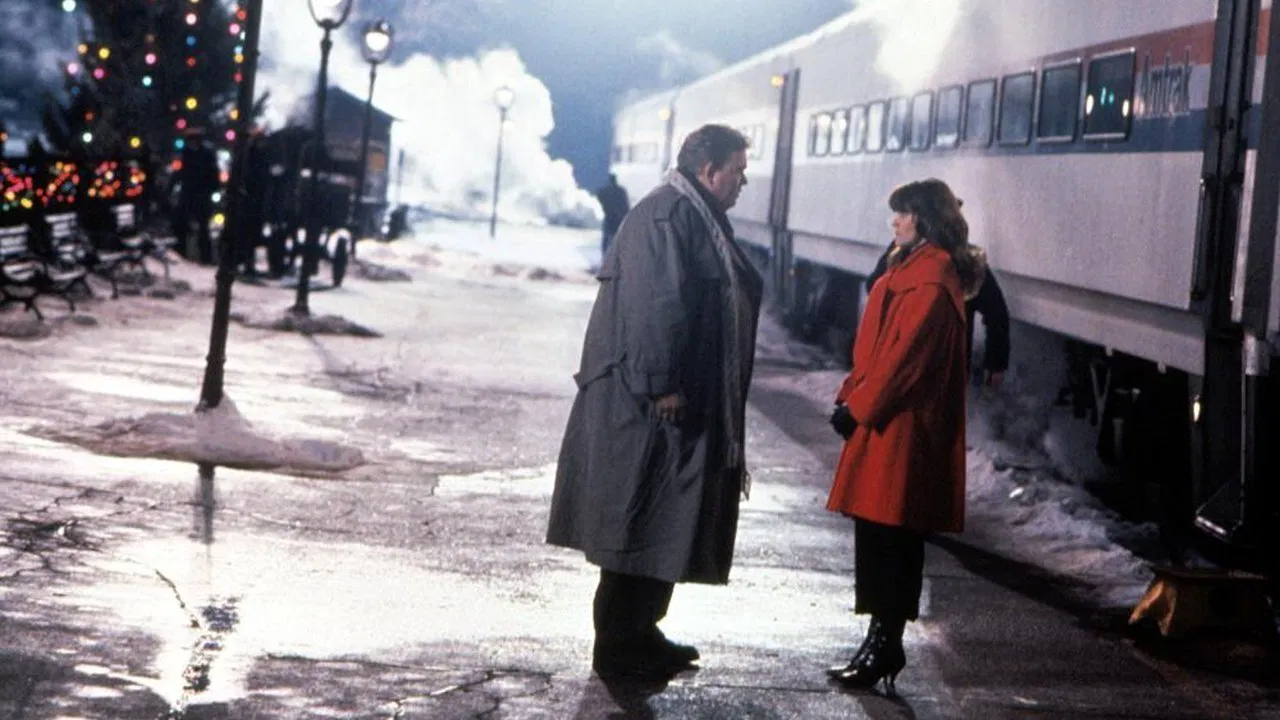
The movie's resolution, while satisfying from a romantic comedy standpoint, also serves as a meditation on the possibility of healing codependent relationships though this rarely happens. Danny's race to catch Theresa's train is not simply a romantic gesture; it represents his first truly independent action, his first choice to prioritize his own needs and desires over his mother's demands. The fact that he must use his connections as a police officer to track down Theresa's train adds a layer of irony, suggesting that even his gesture of independence relies on the very identity and relationships that have kept him trapped.

The film's exploration of a parental relationship gone awry is also poignant because it acknowledges the genuine love and care that often coexist with these destructive tendencies. It explores an inevitable tension between familial loyalty and self-actualization, though not in the most profound way. Everything here is on the surface, which is fine for the story Columbus wants to tell. Again, if you want the much darker take on this, feel free to indulge in Beau is Afraid.
Danny's devotion to his mother is not simply the result of manipulation or guilt; it stems from a sincere desire to ensure her well-being, that she doesn’t end up depressed or physically hurt. Similarly, Rose's possessiveness toward Danny is rooted in a genuine fear of abandonment and loneliness. This complexity makes the damage being done more challenging to recognize and address because the destructive patterns are intertwined with authentic emotional bonds.
By maintaining the film's tone as a romantic comedy, he allows audiences to recognize the codependent patterns without feeling lectured or manipulated. However, it does feel like tonal whiplash, especially when it comes to the John Hughes-like dream sequences in which Danny imagines the worst happening to his mother. This approach makes the psychological insights more palatable while still allowing them to resonate with viewers who may recognize similar patterns in their own lives.
Danny's physical appearance is acknowledged but never mocked, and Theresa's attraction to him is presented as genuine and uncomplicated. They make sense together despite being opposites at first glance. But there is still hesitancy on Danny’s part. Danny's surprise at Theresa's interest in him reflects the low self-esteem that often accompanies codependent patterns.
Despite flaws and a heavy dose of schmaltz, the film ultimately suggests that breaking free from codependent relationships requires not only individual courage but also a willingness to risk the loss of familiar, if dysfunctional, sources of security and identity. Danny's journey toward being a fully fleshed adult man is not simply about choosing romantic love over family obligation; it is about learning to establish healthy boundaries, tolerate his mother's distress without taking responsibility for it, and pursue his own happiness without being paralyzed by guilt.
The psychological insights embedded within a seemingly straightforward romantic comedy make Only the Lonely a thoughtful exploration of family dysfunction and the hopeful possibility of healing. Then again, this is hitting me at a time in my life when I’m experiencing precisely what takes place within this story. Others may not see this hitting home the way I am. By presenting dysfunction through the lens of humor and romance, Columbus creates a work that illuminates these destructive patterns without overwhelming audiences with clinical terminology or heavy-handed moralizing. I’d say a lot is spelled out for sure, again this is not an art film.
Only the Lonely surprisingly stands as a testament to the possibility that even the most entrenched codependent relationships can be transformed when individuals find the strength to choose growth over comfort, independence over enmeshment, and authentic love over the familiar patterns of manipulation and control.
Through its nuanced portrayal of the Muldoon family's dynamics, the film offers both a mirror for audiences to examine their own relationships and a hopeful vision of what becomes possible when love is freed from the constraints of co-dependence and allowed to flourish in healthier, more sustainable forms.
This is not a great screenplay that I would go on record defending. It’s just the right place, right time, and same experience movie for me personally that I felt compelled to revisit and write about to process a rather tumultuous time in my life - one involving the best thing that’s ever happened to me and the other, well, let’s just say a complicated relationship that goes all the way back to a rather tumultuous childhood. Both within my current situation and this particular film, I do think about unconditional love, especially for a family member. Where do you draw the line, and how are boundaries maintained over time, especially when someone lacks boundaries or social graces.
Clearly, there are a lot of factors at play with why people act impulsively, selfishly, or attempt to undermine and control others, as in the case of Rose here in the film. I’m not out to judge her, neither is Danny, but it’s hard not to get upset or frustrated when you realize someone is attempting to control you. I’m also trying to think about self-care and how best to deal with what’s taking place.
Only The Lonely is a compassionate, warm-hearted, sweet version of something that can often be quite troubling. Perhaps again, a lot of why I enjoy this film has to do with John Candy and Ally Sheedy - they sell this story and make it go down easy. Sometimes, movies like this can reflect reality in a way that makes more sense than reality itself.
Though this piece didn’t cover the song in great detail, now that Pulp has a new record out, I thought it was appropriate to end with some lyrics and a video from their excellent song, “Help the Aged.”
Help the aged
'Cause one day you'll be older too
You might need someone who can pull you through
And if you look very hard
Behind those lines upon their face
You may see where you are headed
And it's such a lonely place