Synecdoche, New York (2008) (dir. Charlie Kaufman)
Living The Death Dream or:
The End Is Built Into The Beginning
At the time of its release, it made sense that my two favorite Chicago film critics, had completely different reactions to what has become my 2nd favorite movie ever made. Roger Ebert, who I agreed with, said Synecdoche New York was the best film of the decade. Nick Digilio, who I disagreed with, put Synecdoche New York on his worst films of the year list. With a movie like this, it’s inevitable I will come across many perspectives especially those of a divisive nature. Suffice to say, what Ebert had to say about Synecdoche remains one of my biggest inspirations.
Honestly, when I walked out of the Evanston Century CineArts Theater that day alongside friend and film critic Collin Souter, I turned to him and said, “I don’t know what to make of that. I need to see it again.” The second viewing I experienced so much more that it really is a movie you should wait to see at least twice before making a final assessment or sit down to write about. Still, I have always felt like Synecdoche is more than just a movie, it is channeling the wild web of emotions that come with breathing air. Bursts of laughter, terror, desire, anxiety… all coming alive as our minds catch on fire.
“In my opinion, cinema is the closest humans can get to communicating; not just in a rational way, but in a (for a lack of a better word) spiritual way. Every movie is born out of a series of experiences. Depending on the individual, those experiences can become songs, paintings or plays. However, the filmmaker chose to turn them into a movie. In a way, every movie is “based on a true story,” no matter how fantastical.” - Juan Orellana
Not to mention the fact that what occurs in this film has happened to me. Misplaced affection, an unwieldy need to express myself in a way that connects with and makes sense to others, cleaning to regain a sense of control, visiting doctors for answers regarding my weird ailments or symptoms. Also falling in love with someone, fiercely convinced that I don’t deserve to experience their affection in return.
I also get a little angry sometimes watching movies because I add an extra layer of guilt on top to say, “You should be out living life instead of watching an artist share their life with you.” You have no stories to tell outside of analyzing your love for other people’s narratives. Going to work is one thing: it allows me to put food the table so I can live comfortably. But experiencing the pleasure of doing things I enjoy: I decide that the outside world is suffering and I am a selfish prick for indulging in the arts. What happened to the child in me that could spend hours on end watching cartoons or playing games without a care in the world?
I come to the conclusion that all human beings are selfish and at least I’m not out hurting others. Therapists will tell me, “watching films, playing music, writing healthy forms of escape.” Everything in moderation. Even in the world of a film like this, where nothing is moderate. This is dense, maximalist, existential, bombast filled with heart and dark humor, bursting unexpectedly into wild gratitude for simply being alive. Happy Birth Day. Happy Death Day.
The Endless Rehearsal or:
The Act Of Creating In Order To Stay In Tune With The Truth
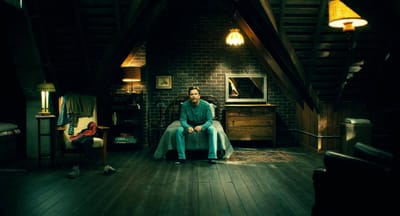
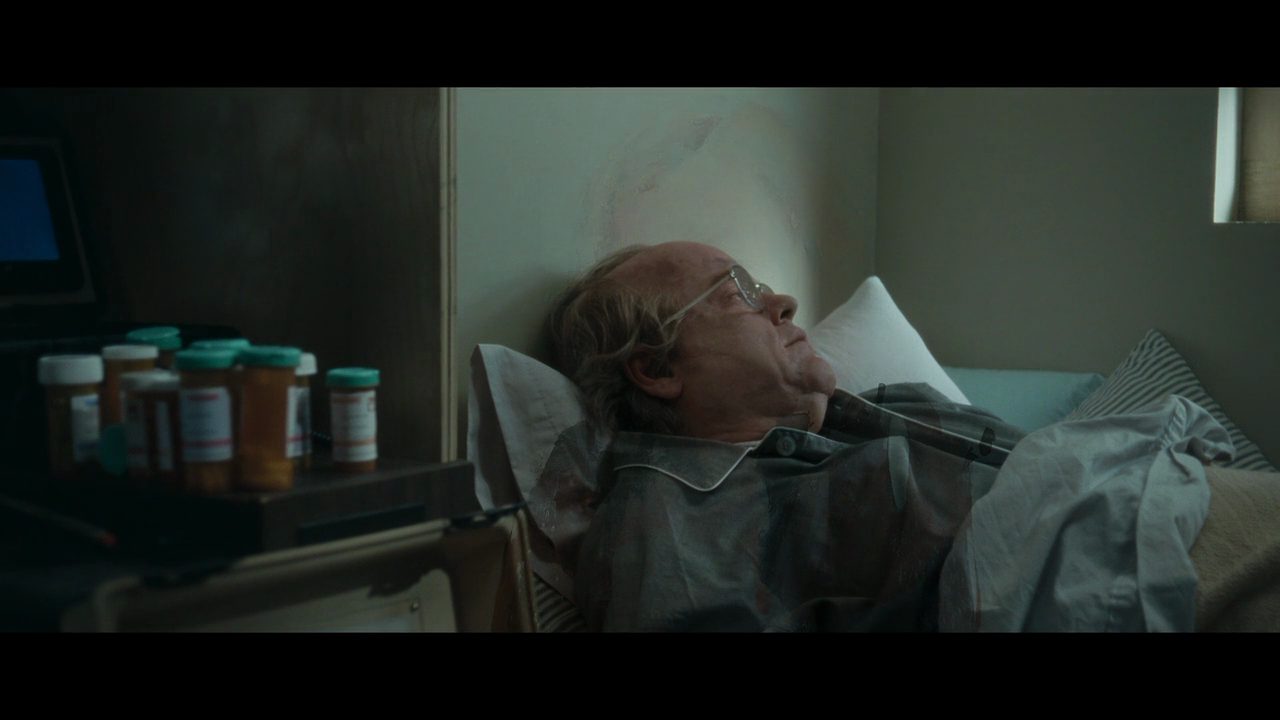
Synecdoche, New York establishes death as an omnipresent force in Caden's life. It is in the forefront from the very beginning. He can’t get out of bed at first. Reluctantly he does. The film begins with Caden waking to a radio program discussing autumn as "the beginning of the end" in literature, immediately setting a tone of mortality. This is quickly followed by Caden reading obituaries, watching cartoons about death with his daughter, and experiencing a series of alarming medical symptoms. Death permeates the film's atmosphere, serving as both Caden's greatest fear and his creative obsession. Adele wants to live. She feels suffocated by Caden’s depression. She also doesn’t want their daughter to absorb his energy.
The film's title itself contains a clue to the death drive that lives inside. Beyond the wordplay on Schenectady (the New York town where Caden lives), "synecdoche" is a literary device where a part represents the whole or vice versa. This concept becomes central to understanding the film's approach to mortality: each individual life, including Caden's, is simultaneously insignificant in the grand scheme of existence yet contains within it the entirety of human emotions.
As the minister in Caden's play eloquently states in one of the film's most powerful monologues: "Most of your time is spent being dead or not yet born. But while alive, you wait in vain, wasting years for a phone call or a letter or a look from someone or something to make it all right." I often wonder if the reader reading this sometimes will sit back and think, “who gives a fuck.” Which is fair. But the other side of me also wants to believe, “if I give a fuck and can summarize my thoughts that are engaging or interesting, perhaps this has meaning after all.”
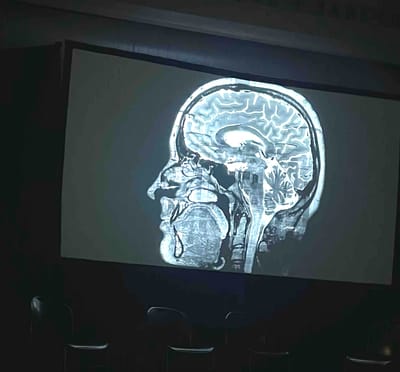
Caden's surname, Cotard, references Cotard's syndrome, a rare psychiatric disorder in which a person believes they are already dead or dying. This condition metaphorically describes Caden's relationship with life—he is physically present but emotionally and spiritually disconnected, a walking ghost haunting his own existence. His mysterious ailments, which multiply as the film progresses, never culminate in an actual diagnosis or death, suggesting that his true illness is existential rather than physical. As Roger Ebert noted, "Caden is not dying, except in the sense that we all are."
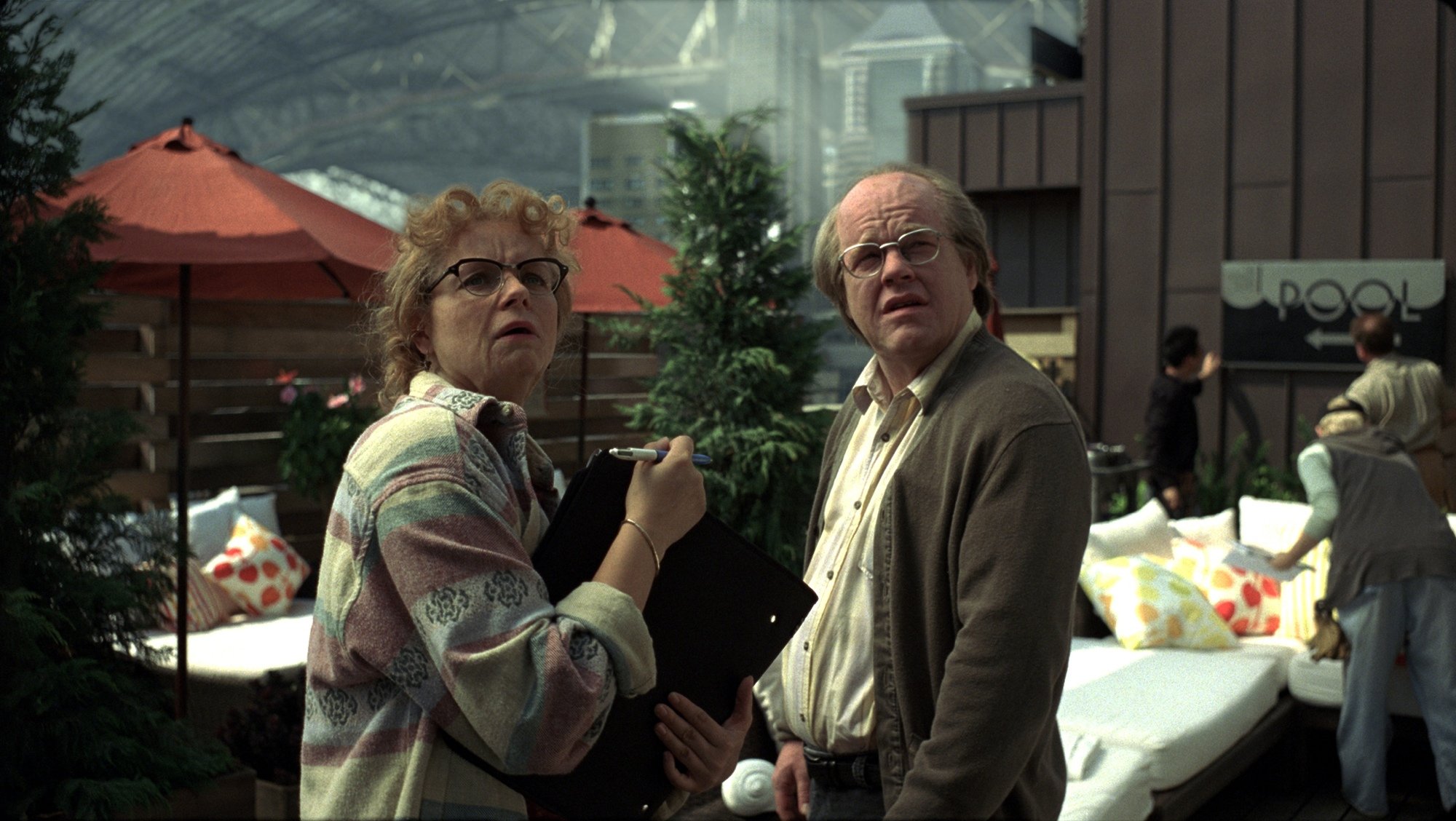
The burning house that Hazel (a luminous Samantha Morton) purchases early in the film serves as perhaps the most striking visual metaphor for mortality in "Synecdoche." Despite the obvious danger, Hazel chooses to live in a home that is perpetually on fire. When she expresses concern about dying in the house, the real estate agent responds, "It's a big decision, how one chooses to die." This exchange encapsulates one of the film's central themes: we all live in burning houses—bodies and minds that are slowly failing—and the question is not whether we will die, but how we choose to live with that knowledge. We are rehearsing for the inevitable ending. What to do in the meantime besides eat, sleep, drink and be merry?
“Synecdoche, New York can be interpreted as a commentary on the life of a tormented artist and how excessive self-indulgence can yield self-destructive results. All through the film, Caden is worried of the physical decay that his body seems to undergo. It only serves as twisted irony that Caden still manages to outlive his loved ones in the end. But even being alive proves to be a Herculean task with his artistic obsession consuming him entirely, driving him to a rather bleak existence. As a movie about tortured geniuses, Synecdoche New York explores this obsession even with Sammy's character who even goes to the extent of killing himself.” - Shaurya Thapa
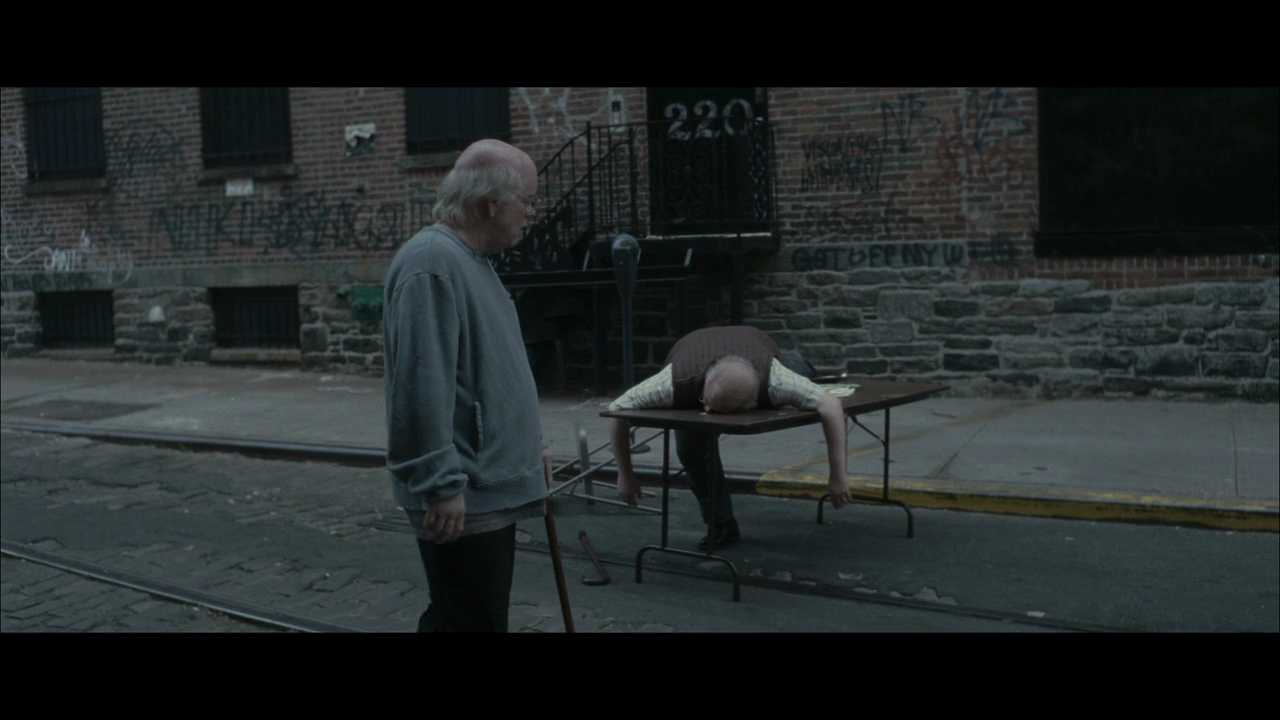
As the film progresses and decades pass within its narrative, Caden's preoccupation with death intensifies. His massive theatrical production becomes increasingly focused on mortality and truth, with actors portraying the deaths of characters and even re-staging their own funerals. In one particularly poignant scene, Sammy (Tom Noonan), the actor playing Caden, commits suicide by jumping off a building after declaring, "Watch my heart break. Watch me jump. None of us have much time." His death forces Caden to confront not just his mortality but the emptiness of his non-existence. In fact, what if Caden did actually jump and wasn’t rescued in an alternate time and space? This would lean more into Mulholland Drive territory then, since what we’re seeing is a messy life flashing before our eyes. Perhaps a reenactment or an idealized version of what Caden would’ve liked to have done with his time instead of dying.
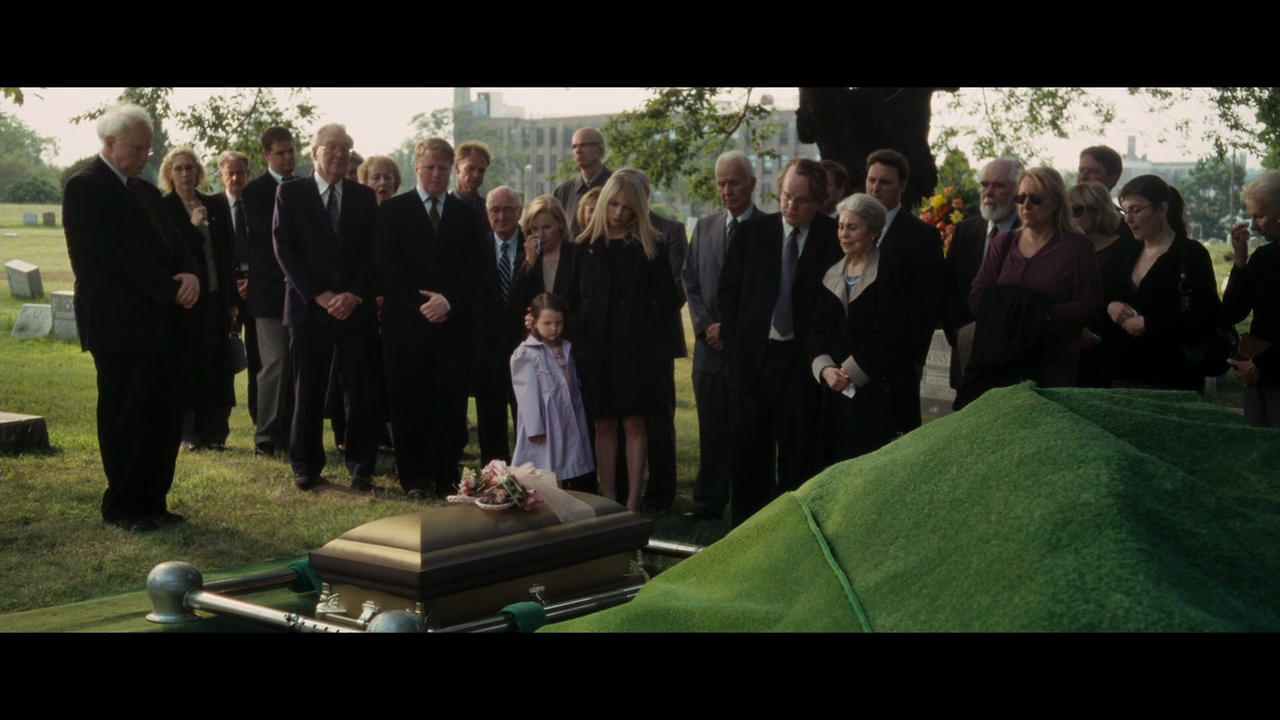
By the film's conclusion, when Millicent (Dianne Wiest) whispers "die" into Caden's earpiece and the screen fades to white, death is revealed not as something to be feared but as the natural conclusion to the absurd theater of life. As Hazel remarks shortly before her own death, "The end is built into the beginning." Kaufman suggests that acknowledging our mortality is not morbid but necessary for authentic living.
Everything Is More Complicated Than You Think
“Knowing that you don't know is the first and most essential step to knowing, you know?”
Why does Caden make everything so complicated? Because it’s what he does. Perhaps that’s what Kaufman does too. Synecdoche, New York presents a subjective experience of time that mirrors the way we perceive our lives. The film begins with a seemingly normal chronology, but as Caden's mental state deteriorates, time becomes increasingly elastic and unreliable. Days blend into weeks, weeks into years, and years into decades with little warning or transition. This temporal distortion reflects both the subjective nature of lived experience and the way memory compresses and expands time according to emotional significance.
Early in the film, Caden experiences a disorienting time slip when he believes only a week has passed since Adele left for Berlin, while Hazel informs him it has been a year. This moment signals to viewers that time in the film cannot be trusted. As Caden's theatrical project grows more elaborate, these temporal anomalies multiply. The warehouse becomes a container for multiple timelines simultaneously, with scenes from different periods of Caden's life playing out concurrently on different parts of the set.
The treatment of time speaks to the human tendency to lose perspective on our own lives. We intellectually understand that time is limited, yet we often live as though we have an infinite supply. As Adele (Catherine Keener) chastises Caden, "You act as if you have forever to figure it out." This disconnect between our intellectual understanding of death and our emotional experience of life reinforces the tension that drives Caden's increasingly desperate creative efforts. The terror of living sits alongside a state of inevitability. There’s no way to know what’s going to happen, good or bad. Even through preparation or staging.
A 25-year-old woman was killed after being struck by a vehicle while walking on the sidewalk on Chicago's West Side. She was just walking. Anything can happen at any given time. That same woman, could’ve lived to the age of 85 or longer. Sometimes we wonder about the random chaos that erupts before us simply by looking at the news. While at the same time, are we distracting ourselves from the good that often exists right before our eyes? People are alive. But we ask why some have to die so young? While others live into a prolonged state of dementia.
Kaufman visualizes a paradoxical temporal distortion through aging makeup and set design. Caden himself is a man, a woman, heterosexual, homosexual. Characters age decades in what feels like moments of screen time, while the warehouse set grows increasingly elaborate and labyrinthine. The city Caden constructs within the warehouse becomes a physical manifestation of memory—a space where past, present, and imagined futures coexist. This spatial representation of time allows Kaufman to explore how we construct narratives about our lives that compress decades of experience into coherent stories.
By the film's end, when Millicent delivers her final monologue to Caden through an earpiece, she articulates this temporal paradox: "What was once before you, an exciting and mysterious future, is now behind you. Lived, understood, disappointing." The tragedy of human existence, Kaufman suggests, is that we can only understand our lives in retrospect, when it's too late to change them.
It’s hard not to think of Philip Seymour Hoffman in this role differently after his passing. I watch this now and tear up a few times, including the darkly hilarious (and a personal favorite scene) where he recounts precisely how his father died. Which is relayed to him on a telephone call right in the middle of having sex. Sex, the ultimate pleasure, is immediately met with the anxiety of death. Kaufman manages to find some bizarre blend of hilarity and horror within seconds here. “It was the longest death bed speech they had ever heard.” Alongside Caden’s final moments of Hazel, it’s some of the best acting Hoffman has ever done due to its subtlety and nuance. I don’t cry at the passing of most celebrities but Hoffman was one for me, only because of how much his work has meant to me over time.
“The only thing ordinary about this extraordinary actor was how he died,” New York film critic David Edelstein wrote of Philip Seymour Hoffman after his heartbreaking death from an apparent drug overdose at the age of 46.
And so too, the only ordinary thing about Caden Cotard, the perpetually ailing theatre director who creates an entire world on a soundstage that Hoffman achingly embodies in Synecdoche, New York, is that eventually both he and those he loves, too, shall pass. It is inevitable, despite having been deemed a creative genius; inevitable, despite repeatedly turning himself and those closest to him into numerous, fictionalized versions of themselves, and employing actors to improvise their “lives” on an almost 24/7 basis for some 40-odd years. Because as Hazel-of-the-perpetually-burning-house tells him, “the end is built into the beginning. What can you do?” Ashes to ashes, dust to dust and all that. And that is precisely the point.” - Sara Murphy
Resistance Towards Authentic Connection
Caden struggles to form meaningful connections with others. His relationships with women—Adele (older, wiser), Hazel (joyful, impulsive), Claire (young, naive), and his daughter Olive—all deteriorate or end in abandonment. This pattern reflects Caden's fundamental inability to see others as separate from himself. He’s disconnected from himself in many ways so it’s inevitable that this occurs with others. He relates to people primarily as messy characters in his own story rather than as autonomous beings with their own interior lives.
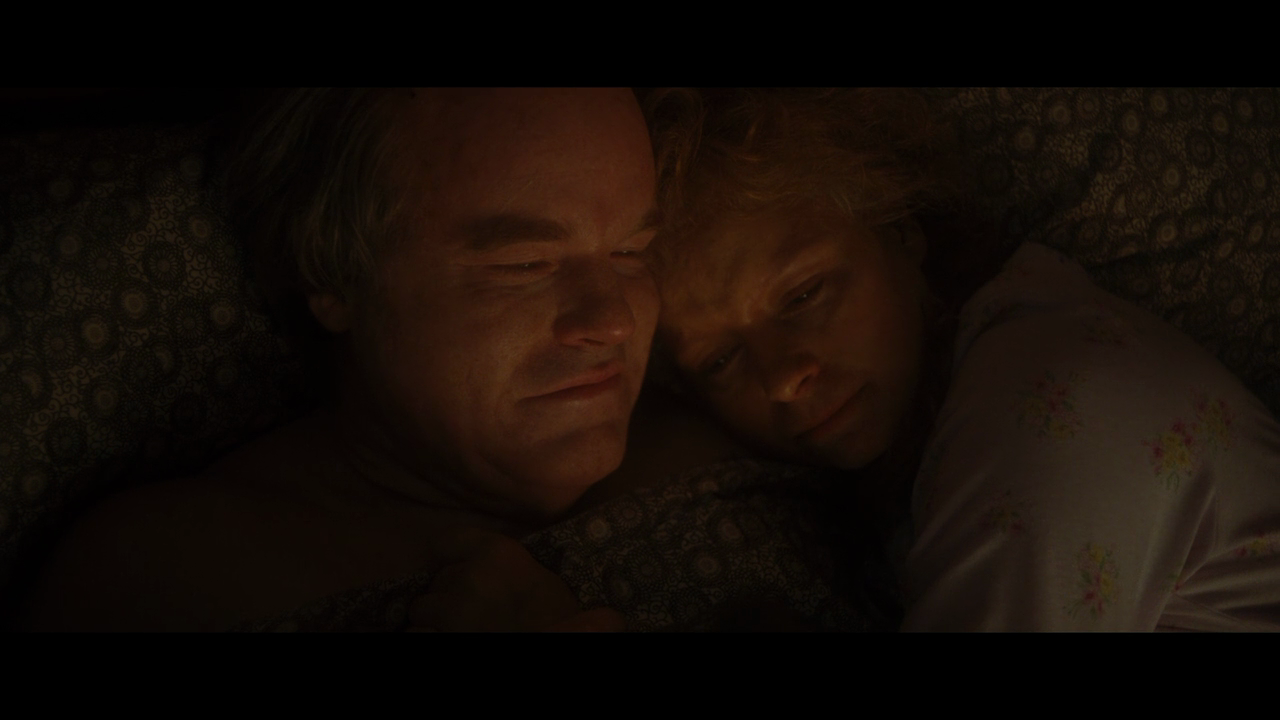
Caden's relationship with Adele exemplifies this failure of connection. Early in the film, they sleep with their backs to each other, symbolizing their emotional distance. When Adele leaves for Berlin with their daughter, she tells Caden, "I've been dreaming about escaping my whole life." This revelation shocks Caden, who believed he understood his wife but missed her most fundamental desire. Their marriage fails because Caden never truly sees Adele—he sees only his projection of her.
Hazel represents Caden's most genuine opportunity for healthy connection. Unlike his other relationships, which are marked by power imbalances (director/actress, father/daughter), his relationship with Hazel contains moments of genuine vulnerability and sweetness. When Caden breaks down crying during their attempted sexual encounter, Hazel sees his fragility but cannot bear the weight of his neediness. She needs someone who wants her without questioning it. Their relationship becomes a decades-long dance of missed opportunities and poor timing, culminating in a brief period of true love before Hazel's death from smoke inhalation—a literal manifestation of the slow-burning danger that has surrounded her since she purchased the house on fire.
The warehouse production becomes Caden's attempt to understand these failed connections by recreating and controlling them. He casts actors to play himself and the people in his life, directing them in endless rehearsals of pivotal moments. This approach fails because it treats human relationships as puzzles to be solved rather than experiences to be lived. As Sammy points out before his suicide, "You've never really looked at anyone other than yourself." We’re stuck with ourselves but it is the others we are surrounded by that counts just as much.
Kaufman suggests that authentic connection requires recognizing the fundamental separateness of others while acknowledging our shared humanity. This inherent paradox is expressed in the minister's funeral monologue: "Everyone is everyone." Yet at the same time, “no one wants to hear about my misery because they have their own.” We are simultaneously unique individuals and manifestations of universal human experience. True connection comes not from controlling or fully understanding others but from recognizing our common vulnerability and humanity together. Why are we talking about memes and movies; we should be talking about the joy, the laughter, the terror, the horrific.
By the film's conclusion, when Caden assumes the identity of Ellen the cleaning lady, he finally experiences a form of connection based not on control but on service of others and empathy. In cleaning Adele's apartment, he performs an act of care without expectation of recognition or reward. He’s not thinking about his next Substack essay or theatrical production. This shift from indulgent, demanding director to selfless caretaker and cleaner represents Caden's first step toward real, genuine, sincere connection despite having resisted it for so long.
The Impossibility of Identity & Unbiased Representation
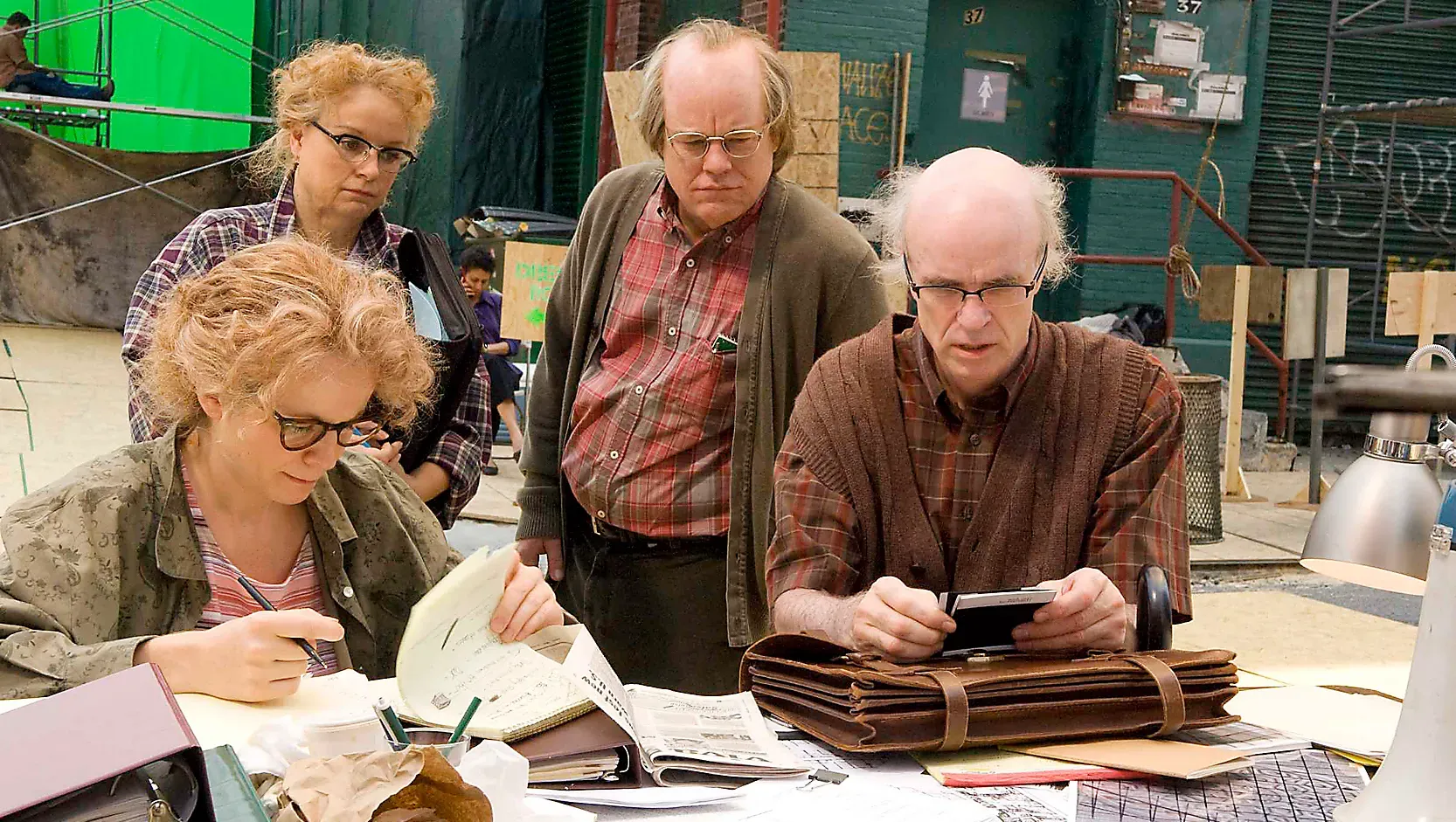
As a theater director, Caden is obsessed with creating art that captures the truth of human experience. His MacArthur "genius grant" project begins with the ambitious goal of creating something "big and true and tough." Yet as the production grows more elaborate, encompassing thousands of actors and a life-sized replica of New York City, it moves further from rather than closer to truth.
This contradiction—that increasing fidelity to detail can lead to decreasing truth—is central to Kaufman's exploration of identity, creativity and representation. Caden's warehouse production becomes an ouroboros, a play within a play that contains further plays within it until it consumes itself. He hires actors to play himself and his cast, then hires more actors to play those actors, creating an infinite regression of representation that never reaches actual lived experience.
The impossibility of definition and representation are symbolized by the miniature paintings Adele creates, which require special glasses to view. These microscopic artworks represent the opposite extreme from Caden's massive production, yet they share a common futility. Whether infinitely large or infinitely small, art cannot fully capture the experience of an actual orgasm or a perfect meal.
Kaufman visualizes this problem through the increasingly blurred boundary between what is staged and mundane reality. Sets within the warehouse begin to mirror locations in the outside world and Caden himself becomes confused about which events occurred in his life and which were staged. This confusion culminates when Caden takes on the role of Ellen, the cleaning lady, effectively becoming a character in his own production. By the end, Caden is Ellen. Ellen is in fact directing Caden. Kaufman is directing them both.
The film suggests that the pursuit of representation is not only impossible but potentially futile. Caden's obsession with his production costs him his marriages, his relationship with his daughter, and ultimately his sense of self. Everybody is everybody. But what does it mean with the minister (played by the same actor that confronts Lancaster Dodd in The Master) says “Fuck everybody?”
What if all it comes down to is that as much as try to care, we’re still stuck in a cycle of pursuing our needs, wants, desires and income. Art that attempts to capture everything ends up capturing nothing, becoming as vast and incomprehensible as life itself. Maybe that’s the horror film Synecdoche New York originally started out as. As hard as you try to create something, you cannot escape yourself in the process even with hundreds of others on set. This is us.
Yet paradoxically, through its very exploration of the impossibility of representation, Synecdoche, New York achieves a kind of beautiful, painful truth. Maybe we’ve been wrong since the beginning of time by saying, “I am a man. I am a woman. I am gay. I am straight. I am I am I am.” Perhaps we are just a mess of molecules thrown together trying to find love either with what we do or who we let into our weird little worlds.
By acknowledging the limitations of art and interpersonal connection, Kaufman creates a transcendent work that speaks honestly about human existence and the many mistakes that come with having to exist day in day out. Each day when we wake up is another chance to make the wrong choice or hopefully, the right one. The film's power comes not from providing spiritual answers but from asking questions that resonate with our own struggles to understand our lives.
This fluidity reaches its logical conclusion in Millicent's final monologue: "Everyone is everyone. So you are Adele, Hazel, Claire, Olive. You are Ellen." This statement can be read as both liberating and terrifying—liberating because it suggests the possibility of transcending the limitations of a single identity, terrifying because it implies the loss of a stable self — the one we hold onto.
Kaufman's exploration of fluid identity connects to broader philosophical questions about the nature of selfhood. If we can become someone else by playing them, was there ever a "true self" to begin with? The film suggests that identity is not something we discover but something we create through our actions, relationships, and the stories, fueled by imperfect memories, that we create about ourselves.
“Synecdoche, New York” is the best film of the decade. It intends no less than to evoke the strategies we use to live our lives. After beginning my first viewing in confusion, I began to glimpse its purpose and by the end was eager to see it again, then once again, and I am not finished. Charlie Kaufman understands how I live my life, and I suppose his own, and I suspect most of us. Faced with the bewildering demands of time, space, emotion, morality, lust, greed, hope, dreams, dreads and faiths, we build compartments in our minds. It is a way of seeming sane” - Roger Ebert
The Meaning in the Mundane or: We’re All A Mess So Try To Love The Mess Instead Of Constantly Trying To Make Sense Of It
Synecdoche, New York ultimately suggests that meaning is found not in grand artistic statements or philosophical epiphanies but in the mundane details of lived experience whatever that may be for the individual. Caden eventually thinks of Hazel as “perfect,” but she says, “I’m a mess. But we fit.” That could be thought about as lovers in love or humans as a whole. Perhaps it is by writing, making a film or play, hearing a podcast conversation, that is just another version of experience. Some argue that you have to travel, experience many cultures, meet lots and lots of people to have lived a full life. I’m not sure if that’s true especially for the introvert.
What if your income doesn’t allow for extensive travel? Well, then go to the library. Then you can read about other people’s lives. Sure it’s not the same as creating a novel yourself or backpacking through Europe on vacation, but you’re still connecting in a way that is accessible and emotionally resonant and fulfilling. After all, that’s what I’ve done since I was seven years old. I can’t just go up and have a conversation with any stranger but I can listen to a podcast, watch a film, read a book or hear a song. Bless this mess called life. It’s up to us how we make sense of lived experience. For that in of itself is an imperfect, messy journey.
Despite Caden's decades-long attempt to create a work of profound significance, the moments of genuine connection in the film occur in simple interactions: a conversation with Hazel outside on a bench, a walk with his daughter, a moment of recognition from a stranger, allowing a book to “get him,” or cleaning his ex’s apartment. Each act may seem mundane but it’s also beautiful and real.
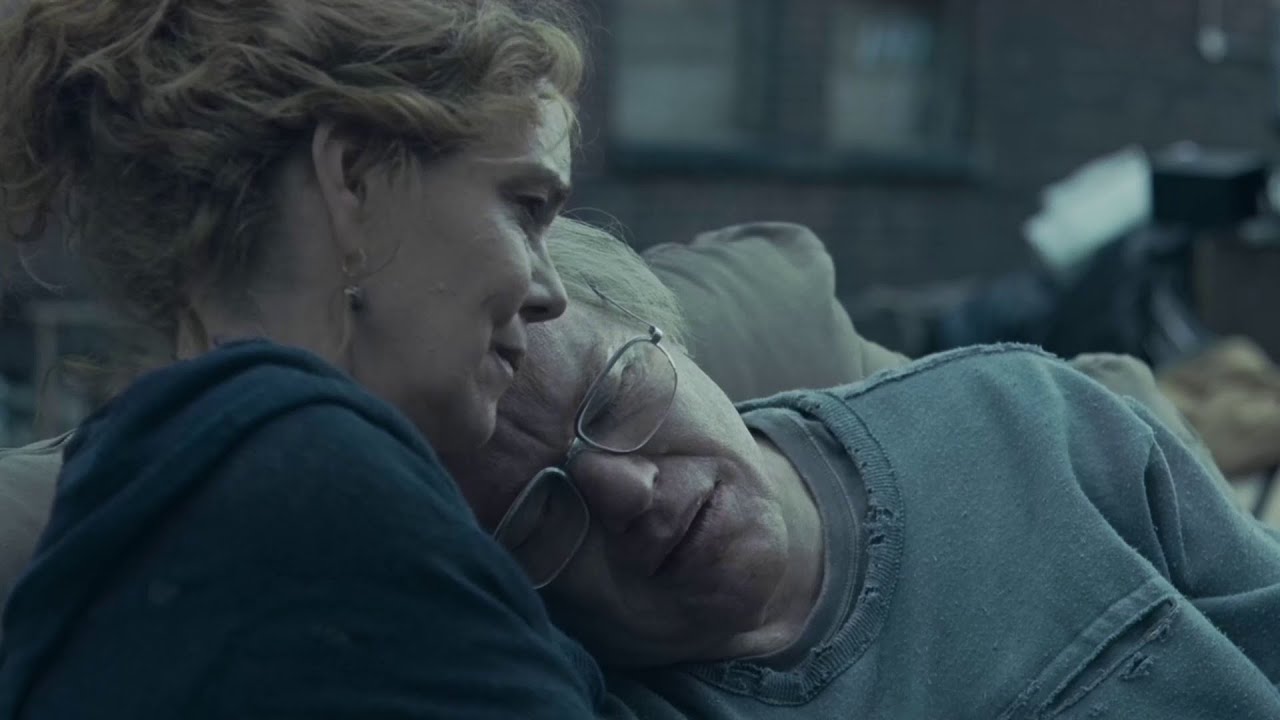
The film's final scene, in which Caden sits on a bench with a woman he barely knows and rests his head on her shoulder, represents this shift from the monumental to the minute. After years of trying to capture the entirety of human experience in his warehouse production, Caden finds comfort in a single moment of human contact. That may be what the film and his play are ultimately about.
This conclusion aligns with the film's title concept: a synecdoche is a figure of speech where a part represents the whole. Kaufman suggests that we need not understand the entirety of existence to find meaning in it. Each moment, each relationship, each small act of kindness or creativity contains within it the essence of what it means to be human. We’re just people after all. We’re only here for a fraction of a fraction of a second.
The tragedy of Caden's life is not that he fails to create a masterpiece or to understand the meaning of existence, but that he misses the meaning present in everyday moments. As Millicent tells him in the final monologue, "The specifics hardly matter." What matters is not the grand narrative of our lives but our presence in each moment of living.
Through Caden's journey, Kaufman suggests that living authentically means accepting the limitations of our understanding, the inevitability of our death, and the imperfection of our connections with others. It means recognizing that we are simultaneously unique individuals and parts of a greater whole—synecdoches of humanity. Death/dread/anxiety comes sooner than expected but love/pleasure/joy is also potentially right around the corner too.
The film's final fade to white, coming after Millicent's instruction to "die," is not merely an ending but a recognition that endings are built into beginnings. In accepting the finite nature of existence, we open ourselves to the possibility of living fully in the time we have. As the minister in Caden's play reminds us, "There are a million little strings attached to every choice you make. You can destroy your life every time you choose. But maybe you won't know for twenty years." The challenge of living is to make those choices with awareness of their consequences but without the paralysis that comes from trying to control them. Let love in. But it’s also okay to be angry about the direction the world is currently headed in. Embrace the emotions instead of labeling them as “wrong.”
A movie like this is a reason I’m grateful to have been born, to experience this manifestation of creative artistic expression, the way I have experienced feeling love and being loved. For that reason alone, Charlie Kaufman will always be my favorite writer. I wouldn’t have sat down to write these words today if it weren’t for him. On one hand, I identify with his neurosis to a fault but on the other, he makes me feel less alone. In a complex, challenging, and ultimately deeply human exploration of existence, Synecdoche, New York stands as one of cinema's most life-affirming meditations on what it means to fear, live, die, and love in a world where comprehension is always partial and time is always running out.