
Thoughts on my favorite director, last night's Academy Awards
Listen to this episode on:
“There will always be some doubt in your heart that you deserve it, but there is no question of the pleasure of having it for myself.”
After enduring one snub after another across 11 previous nominations, my favorite director Paul Thomas Anderson finally claimed the Oscar glory that has eluded him for decades. His counter-culture comedy thriller One Battle After Another, didn't just win; it dominated, sweeping six categories including the coveted Best Picture, Best Director, and Best Adapted Screenplay awards. Not to mention the fact that one of my favorite writers, Thomas Pynchon got a nod of thanks during Paul’s speech. Pynchon's writing not only served as source material for the Best Picture winner but it’s clear that over the years, the novels of Pynchon have influenced Anderson for quite some time, rightfully so. Anytime I read them, I feel inspired (though sometimes befuddled, in a good way).
Anderson's career kicked off with the kinetic energy of Boogie Nights (my mom's favorite) through the personal operatic grandeur of Magnolia and the oil-soaked examination of capitalism in There Will Be Blood, this victory feels less like a surprise and more like an overdue correction to one of the Academy's most glaring oversights. I'm personally more of a fan of when Anderson gets weird, comedic and offkey with something like Inherent Vice, but I do feel he should’ve won for There Will Be Blood, even if it’s not my personal favorite. That was a true cinematic triumph of monumental proportions but it was also up against one of the Coen Brothers' best works as well that same year.
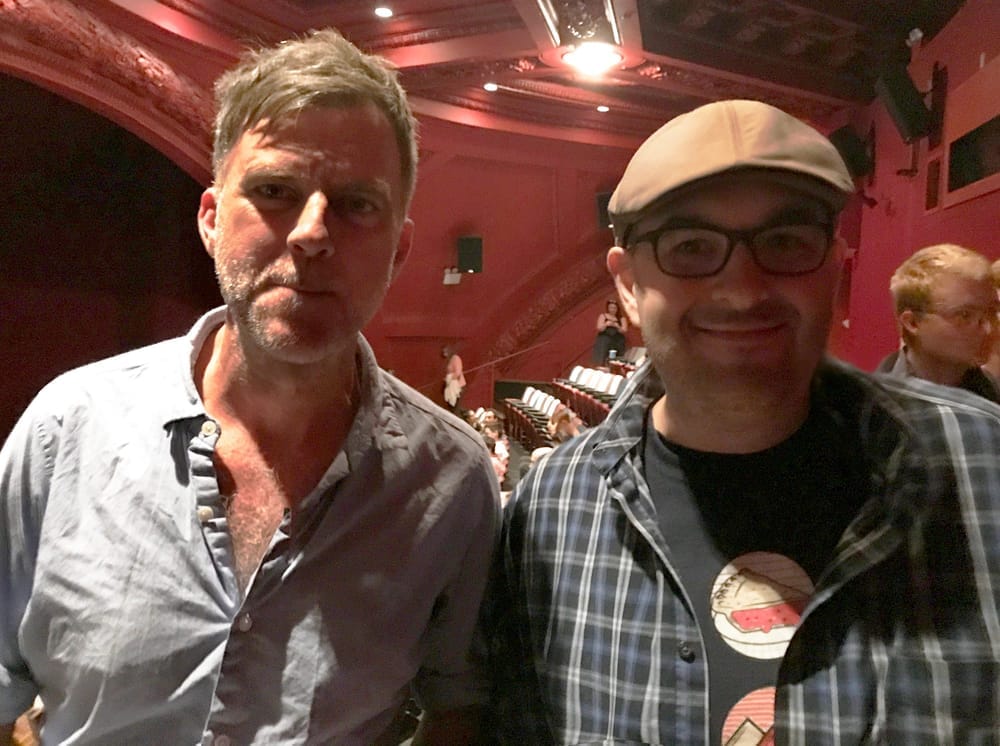
As most of you know, seeing Magnolia in 1999 was a pivotal turning point for me becoming a cinephile. Yes, 1990 was when I first saw a movie that impacted me on an emotional level and then 1997 also had a lot of reasons why my love of movies grew stronger but 1999 was when I became obsessive thanks to what came out. Meeting Paul briefly in NYC, I told him that Magnolia helped me deal with the most painful loss of my life. Back in 1999 and especially a couple years later, I felt like I found a direct conduit to my complicated mental state through someone 12 years older than me. Last night, at the age of 55, the nerdy bespectacled, grey-haired auteur has finally been welcomed into the fold, not with a consolation prize but with a resounding affirmation of his artistic vision. Of course I teared up.
What makes Anderson's triumph particularly meaningful is that One Battle After Another represents his most ambitious and politically engaged work to date. Set against the backdrop of a proto-fascist California, the nearly three-hour epic tells the story of leftist activists navigating an increasingly authoritarian landscape—a narrative that resonates powerfully with modern America during Donald Trump's second term. Though it’s also a complicated character study with specific issues that haven’t sat well with everyone as you can hear in the audio clip below.
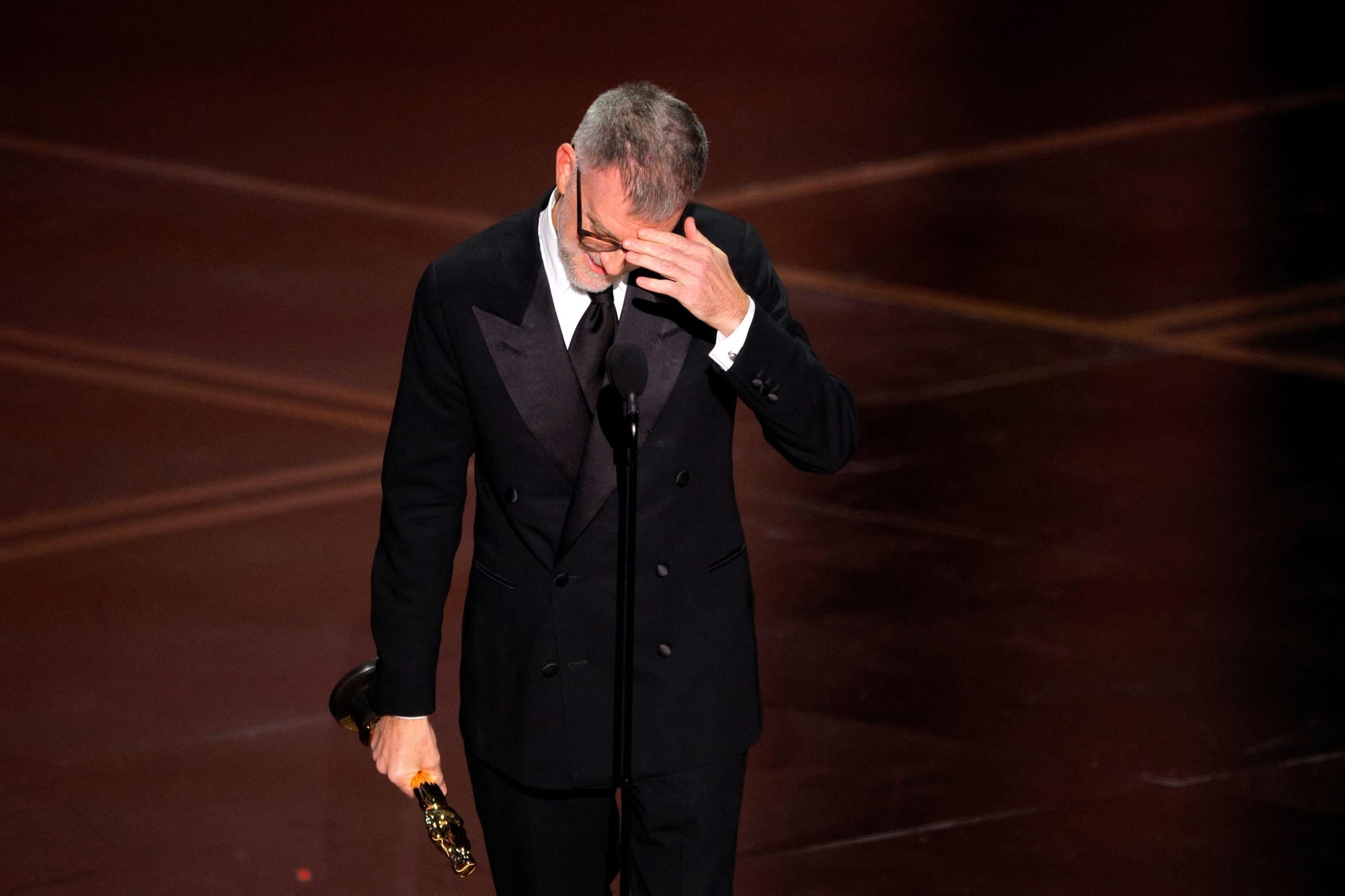
The film's political urgency didn't alienate Academy voters; it galvanized them. In a year when Americans are grappling with fundamental questions about democracy, freedom, and resistance, One Battle After Another offered both a mirror and a roadmap of possibility for future generations. Anderson himself framed the work as a generational apology and call to action, explaining in his acceptance speech: "I wrote this movie for my kids to say sorry for the housekeeping mess we left in this world we're handing off to them. But also with the encouragement that they will hopefully be the generation that brings us some common sense and decency."
Another movie from last year that I didn’t love nearly as much as most, Sinners, looked strongest at the opening with its historic nomination count and appeared to rally near the end of the season. But Anderson's film maintained a more robust, consistent course, ultimately finishing with six Oscars to Sinners' four. In the end, voters chose the more overtly political, ambitious, and rousing of the two contenders—a choice that speaks well of the Academy's evolving sensibilities. I still wonder what it would’ve been like to choose Paul for director and Sinners for Picture as a way to honor them both despite my preference for one over another.
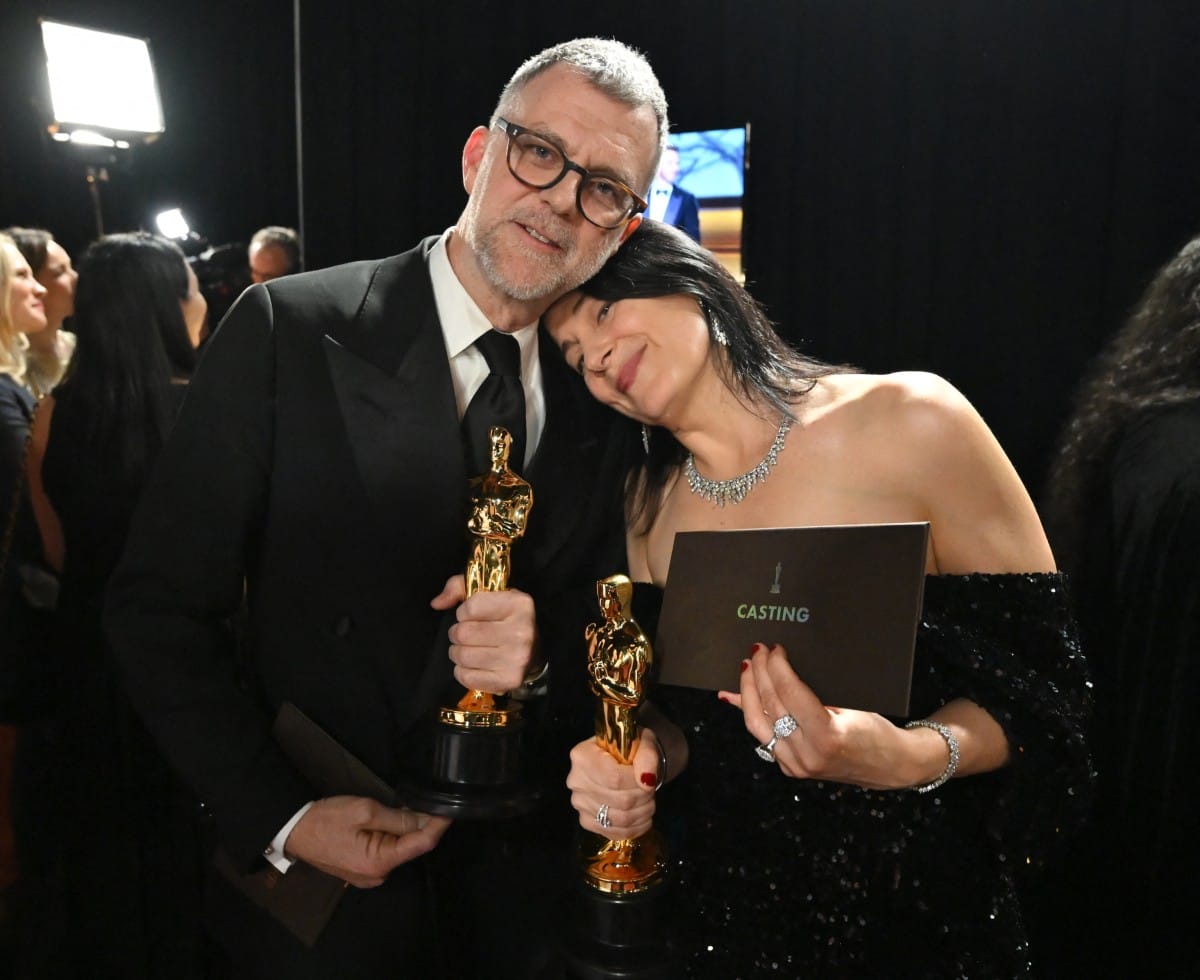
Anderson's personal triple crown—Best Picture (shared with producers Sara Murphy and the late Adam Somner), Best Director, and Best Adapted Screenplay—was complemented by wins in three additional categories. The absent Sean Penn took home Best Supporting Actor for his turn as the bumptious, despicable Colonel Lockjaw, while the film also claimed prizes for Best Editing and the newly inaugurated Best Casting category. Side note regarding Penn's win: This is also a nice tie-in to the fact that my first recorded commentary track alongside Bill Ackerman was for an early Penn role with the 4K release of At Close Range. Not to mention that Jessie Buckley has been another favorite of mine since seeing her work with my favorite writer, Charlie Kaufman.
Since 1997, Anderson has been creating remarkably original films that push boundaries, challenge conventions, and refuse to conform to narrative formulas. His work has been too jagged, too uncompromising and downright weird for mainstream Oscar tastes—until now. But if I were the Academy, again, Anderson would’ve won for any of the following: There Will Be Blood, The Master, Phantom Thread. Despite my love of his other work, I never expected the Academy to honor my love of Inherent Vice, Punch-Drunk Love, Magnolia.
Now, in middle age, Anderson has achieved what seemed increasingly unlikely: complete vindication. The Academy hasn't just given him a consolation prize or a lifetime achievement award; they've recognized what many consider his most ambitious and politically engaged work. This isn't the Academy honoring Anderson's past; it's celebrating his present and future. My hope is that he does age like Scorsese so that we have 25 more years of work from him.
While Anderson's triumph dominated the narrative, the evening delivered several other meaningful moments that enhanced the overall sense of this being a special, historic ceremony. Michael B. Jordan's Best Actor win for Sinners marked his first Oscar after years of acclaimed performances across multiple genres. Jordan's victory is particularly notable because he won for a genre film—a vampire horror-drama—which rarely receives such recognition from the Academy. I’m truly happy for Jordan because he’s an incredible talent that provided one of the most memorable performances of 2025 as twins in Sinners. Reservations with the film aside, there’s no denying he deserved it over Timothée Chalamet.
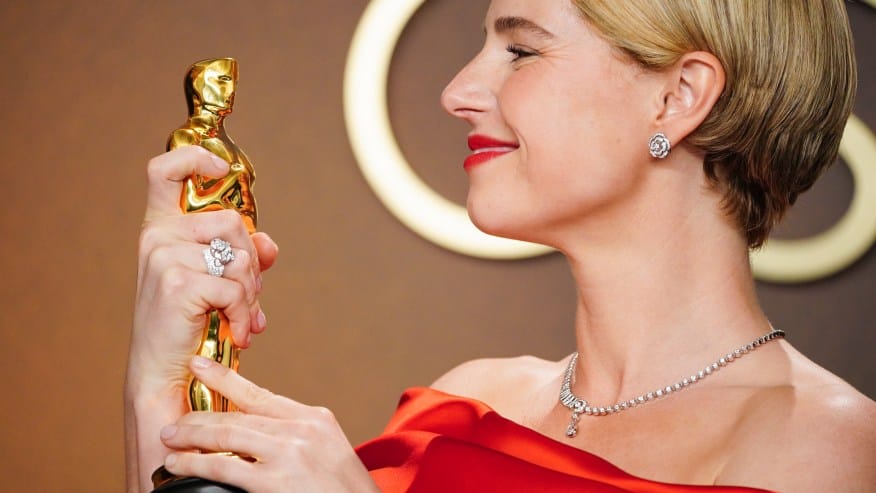
The lovely Jessie Buckley's Best Actress win for Hamnet was the evening's most predictable outcome, but no less deserving for its inevitability. Her portrayal of a bereaved mother in Chloé Zhao's adaptation showcased the kind of raw, emotionally devastating performance that defines great screen acting especially in the final wordless moments that destroyed me. I’ve adored her for the past several years but that celebrity crush isn’t as strong due to what she said about cats, which has caused a backlash among many to fully support her (half-joking of course).
A delightful surprise came in the Supporting Actress category, where 75-year-old Amy Madigan emerged from the fringes—a full 40 years after her last nomination—to win for her role as the child-catching witch in Zach Cregger's terrifying story of a small town that sees a whole classroom full of its children disappear with the mostly successful Weapons. Madigan's performance is deeply unsettling, entirely singular, and represents the kind of weird, funny, scary work that rarely receives Academy recognition. Whereas Cage failed for me with a similar villainous role in Longlegs, Madigan brought a lot more nuance. Her victory demonstrates the Academy's expanding definition of what constitutes award-worthy acting.
The cinematography category saw Autumn Durald Arkapaw become the first woman to win the award for her work on Sinners. She was only the fourth woman, and the first woman of color, to be nominated in the category. Her victory for the sumptuously, beautifully shot Sinners represents an overdue breakthrough in a category that has been dominated by men through Oscar history.
Hosting duties fell to the legend that is Conan O'Brien, who brought his distinctive comedic style to the Oscar stage with the wit and timing that has made him a beloved late-night television figure. O'Brien's approach balanced reverence for the ceremony's prestigious nature with the wacky humor needed to keep the broadcast entertaining throughout its lengthy runtime. His bits were very funny and overall, he seemed more relaxed and comfortable to where I hope they invite him back.
The success of One Battle After Another sends a powerful message: there is still an appetite for ambitious, challenging, politically engaged cinema made for adults. In other words, there’s hope, much like the way Anderson’s film ends. I've only seen it a couple of times (the first being a preview screening with a different ending, incomplete score and no Tom Petty drop) but I remember feeling overwhelmed knowing it was going to be my favorite film of 2025. The film's six Oscar wins, combined with Sinners’ four victories, demonstrate that Warner Bros.' investment in these projects paid off not just artistically but in terms of industry recognition and cultural impact. Last night demonstrates that audiences and voters alike are hungry for cinema that grapples with real issues and refuses to offer easy answers.
Perhaps what makes Anderson's Oscar win most meaningful is how it represents a generational statement about the role of art in troubled times. His acceptance speech, dedicating the film to his children as both apology and encouragement, captures the dual nature of political art: it must acknowledge failures while inspiring hope for change. Plus what he said about the nominees back in 1975 are true: there is no “best” and art shouldn’t be a competition. I’d like to think of the Oscars as a celebration rather than who is the most deserving winner. Perhaps that’s why I keep going back to watch despite waning enthusiasm.
Though PTA’s latest sits firmly in the middle of my Anderson ranking, One Battle After Another doesn't offer simple solutions to complex problems and that reflects the times we live in. It doesn't pretend that resistance is easy or that victory is guaranteed. What it does offer is a vision of people fighting for what they believe in, refusing to surrender to authoritarianism, and maintaining their humanity in dehumanizing circumstances. Anything can change at any time. We must adapt to whatever comes our way. Be prepared for what’s to come.
Even just sitting there at an Oscar gathering hosted by dear friends, the weather outside itself was changing from warm stormy weather to bitter, windy cold snow. Whenever this happens, there’s a physical response that requires me to endure a headache while also trying my best to get through the day whether at work or at home. The way things are in the world feels like I’m at war with my body, my brain and just the conflicting energies we experience simply by watching the news or dealing with the general public.
The film's success also validates Anderson's decision to remain true to his artistic vision despite years of Oscar disappointments. He could have made more conventional, Oscar-friendly films. He could have softened his edges, simplified his narratives, or pursued projects designed primarily to win awards. Instead, he kept making the films he wanted to make, trusting that eventually, the Academy would catch up to him. That trust has been rewarded.
In a time when hope feels increasingly absent due to who is in charge of this country, Anderson's Oscar triumph in the world of cinema offers inspiration. For Paul Thomas Anderson, for cinema, and for audiences who believe in the power of challenging, politically engaged art, this was a night to cherish. Yes, the telecast is always flawed, overlong, messy and full of comedic beats that don’t hit, but let’s focus on the positive: my favorite filmmaker finally was celebrated as the best of the best.
Though yes, it’s not a competition, let me sit with joy and gratitude for the recognition of an artist that has meant a lot to me for the past 30 years. Congrats to Paul, who has deserved this for a long time now, going all the way back to when I fell in love with movies even more strongly as a result of seeing a three-hour artistic achievement back in 1999 in which frogs fell from the sky. I applauded in a theater in suburban Indiana back then. I applauded last night inside my friend's living room while lightning was striking outside, 26 years later.
Related posts


Written by