
New Reviews (August 2026)
A new film by a favorite director, a new record by a favorite songwriter come out on the same day!
Phoebe Bridgers - Lost Weekend
“I’m supposed to be married but I called it off.”
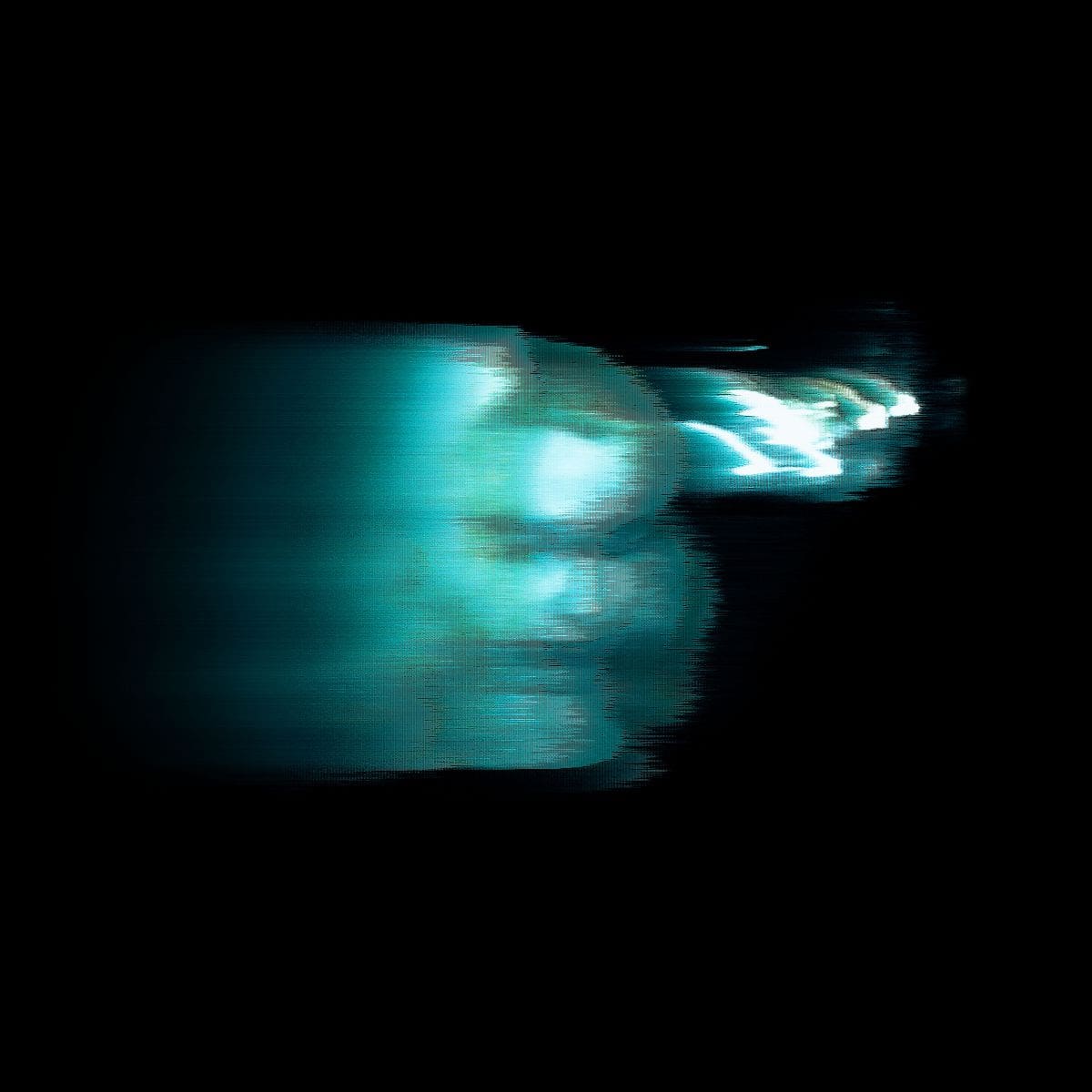
I remember a couple of decades ago when I tried a robotic vocoder on my voice for a song and my partner at the time said, “no, that sounds terrible.” She actively disliked too many effects on vocals especially when they ended up sounding like the robot from Flight of the Navigator. I decided against using what I thought was a cool sound of dissociation with my natural voice, so I imagine my surprise when I put on the new Phoebe Bridgers record to hear her voice doused in the exact same sound my ex couldn’t stomach whatsoever. My first experience with Lost Weekend commenced with fond remembrance and a smile even if the unexpected choice didn’t last for the duration of the first track (though it shows up briefly during the intro of track two).
The disorienting introduction immediately signals this won't be 'Punisher Part Two.' Bridgers' voice is processed through said vocoder as she sings "Crying in a suit and tie / But you should see the other guy" – a robotic register that captures the feeling of dissociating at her father's funeral before transitioning to the surreal experience of performing onstage. It's an unsettling start, one that catches you off-guard with its patient, feather-soft approach and strange sonic choices.
From there, things unfold like a mosaic of grief, love, and renewal. Lead single "Lost Boys" is perhaps the most immediately accessible track here, probably why it is the single of choice, a glorious rush of communal feeling that harks back to the 'Punisher' sound while refusing to be entirely tethered to the past. "This machine is killing me," she sings in the pre-chorus, leaving it deliberately vague whether she's talking about the music industry, technology, depression, or all of the above. Either way, the machine keeps running.
The emotional core lies in its exploration of love in all its forms – romantic, familial, death, toxicity, healing. "Kill Me" is a goosebump-inducing feast of guitars, sarangi, upright bass, strings, drums, and mandolin that captures the stomach-drop of falling in love. The most staggering moment comes in the silent pause after she whispers "wait" before landing on the realization "this is gonna kill me" over sinister, distorted sounds. It's the kind of emotional transfer from composer to listener that Bridgers has always excelled at, but here it feels more visceral than ever.
The Bobby trilogy – "Kill Me," "Bobby," and "Liberty Tree" – chronicles her current relationship with Bo Burnham (who also contributes vocals throughout the album). "Bobby" in particular is one of the album's most immediate songs, opening with rolling bagpipes and distinctive indie-rock instrumentation. It's joyful in a way Bridgers rarely allows herself to be, capturing the all-consuming bliss of a love that finally feels stable and comfortable. "It feels so good to have you in my life," she sings, and you can't help but smile. On "Liberty Tree," she delivers some of her sweetest romantic lyrics, conjuring images of an old shopping mall and kisses captured inside a photo booth. Her songwriting is definitely growing with age.
'Lost Weekend' doesn't shy away from the darker underbelly of love either. "The Governor's Waltz" is devastating, with Bridgers acknowledging the similarity between herself and her ex's new partner with a deprecating slight: "And she can pretend to be me / Since she took my place in my bed on that stage / I have not lost any sleep / Being myself wasn't easy, do it for me." It's a subtle dig at Paul Mescal's current relationship with Gracie Abrams, and it stings precisely because of how resigned she sounds.
The title track serves as both the album's mid-point and (via its reprise) its finale, and it's where everything coalesces. Opening with fractal, hushed tones, it grows into a glitch-pop orchestra of demonic sound. Here, Bridgers finally addresses her called-off engagement: "I'm supposed to be married, but I called it off." The reprise that closes the album shifts the perspective beautifully – from "I loved you, and you couldn't forgive me for that" to "You love me, and I won't ever let you forget." It's a bookend that shows how far she's traveled emotionally over the course of these songs.
The most poignant moments come when Bridgers confronts her father's death head-on. "Still Standing" wrestles with the paradox of experiencing grief and trauma simultaneously, while "Never Going Back!" sounds like an anthem of self-empowerment until his voicemail appears at the end, hitting like a blow to the head. The album's final track, "Lost Weekend (Reprise)," almost places the listener at her father's funeral. As the organ plays, Bridgers sings, "He's not coming back as a bird. He's not coming back." Then: "You love me, and I won't ever let you forget, not yet."
Sonically, this is Bridgers' most adventurous work to date. The production – handled by Tony Berg, Ethan Gruska, Jack Antonoff, and Alex G – is pristine and varied, moving from orchestral Americana to glitch-pop maximalism. Alex G's fingerprints are all over the eerie distortion on tracks like "Panorama" and the hauntingly mysterious "Lost Parade," which sounds like it could soundtrack the Backrooms: familiar yet uncanny, cold yet strangely alluring. "I Can't Wait" carries a nimble 'Harvest'-era Neil Young feel with its pedal steel and harmonica, while "As Above" uses loose, slightly out-of-pitch vocals to create an enduring, eerie mood.
There are multiple assists from those closest to Bridgers: Boygenius bandmates Lucy Dacus and Julien Baker appear on the country hymnal "Haunted," and the album features contributions from Caroline Shaw, Cameron Winter of Geese, and of course, Bo Burnham. But even with the star-studded cast, Bridgers' ability to write winking, candid, gut-punching lines remains the album's main gravitational pull.
The phrase "lost weekend" has historically been shorthand for a self-inflicted, time-bound escape from reality – see the 1945 film or John Lennon's infamous tear across Los Angeles during his separation from Yoko Ono. But Bridgers' 'Lost Weekend' is the opposite of emotional evasion. It's a reckoning with self and the romantic and familial love and loss that have shaped her songs and storytelling. It's a feat that could only be achieved by a songwriter self-assured in their penmanship and musicality, someone who may have started the journey feeling lost but by the end wasn't unmoored at all. Much like her boygenius bandmates, Bridgers continues to find and hold on to the hidden beauty in even the most painful moments that life seems to bring. Check it out here!
Teenage Sex and Death at Camp Miasma (dir. Jane Schoenbrun)
“He's still down there, you know, at the bottom of the lake. He's still hungry.”
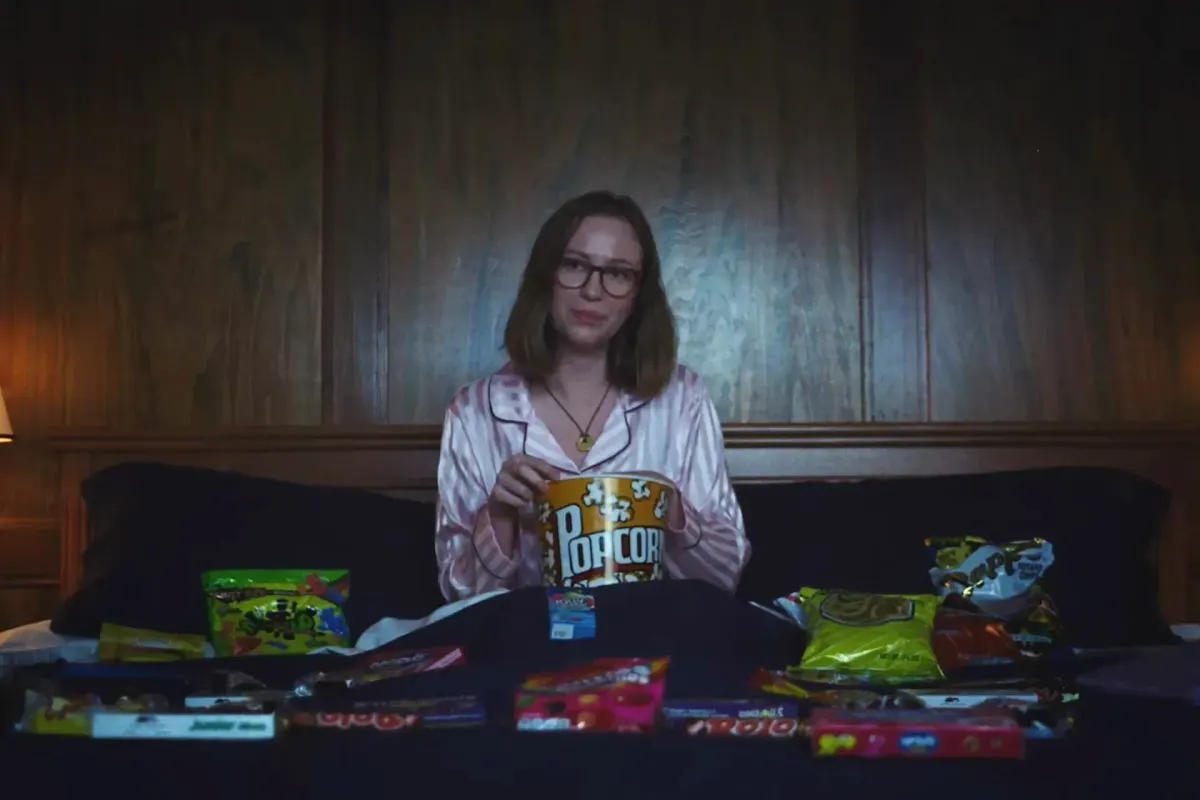
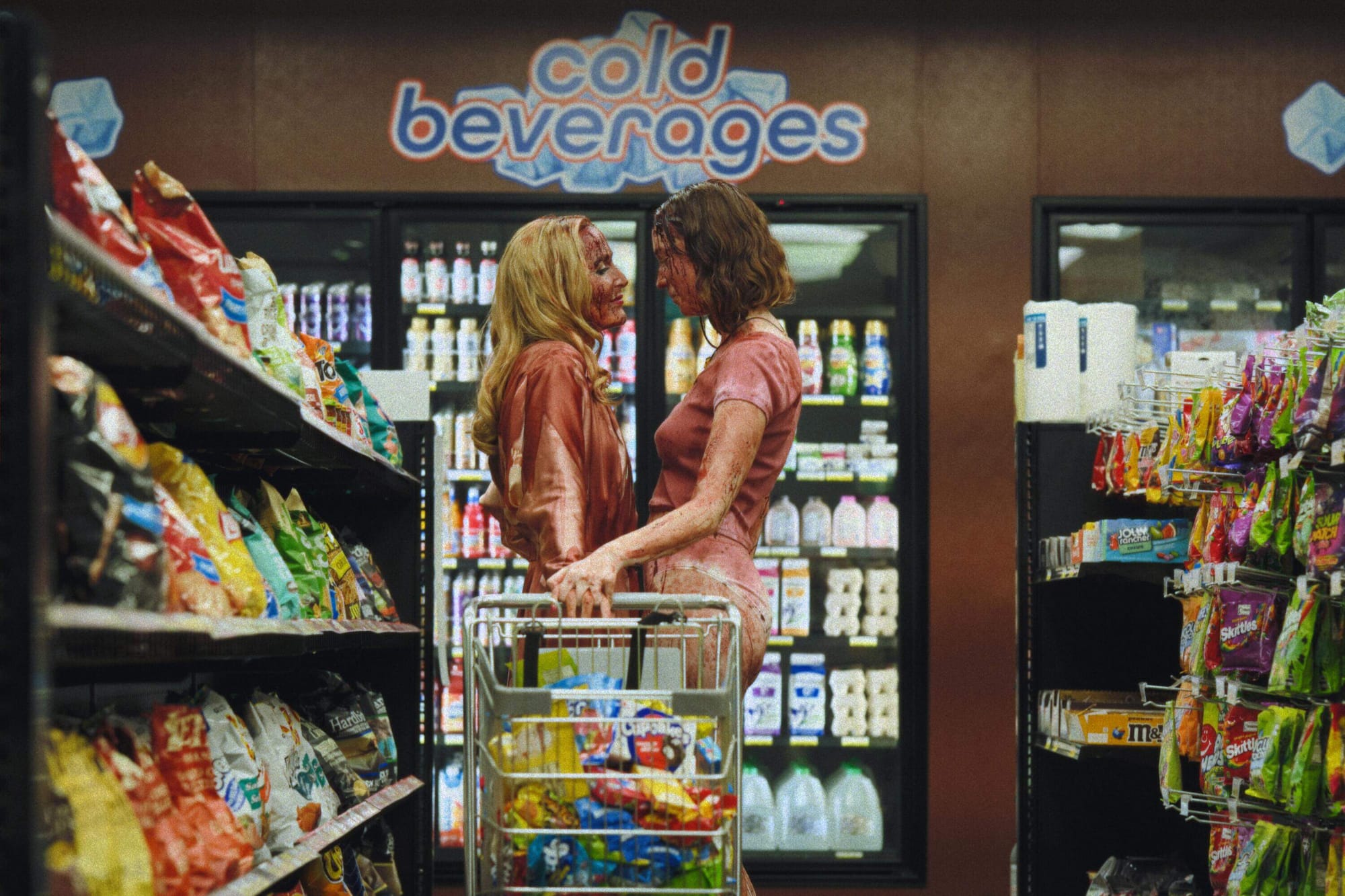
Hunger comes in many forms. We could be longing for desire, connection, or simply just to escape ourselves momentarily through someone’s artistic vision on screen. Visionary writer-director Jane Schoenbrun described their brilliant and beautiful new film at Cannes, where it won the Queer Palm, as being “Portrait of a Lady on Fire if it were set during a Friday the 13th sequel.” For me, it’s everything I could want - the nesting-doll metanarrative of Mulholland Drive fused with the key plot points and bloody kills of Sleepaway Camp.
Jane Schoenbrun has built a career on films that burrow under your skin—works that use the language of genre and pop culture to explore identity, repression, and the strange power that certain movies hold over us. With Teenage Sex and Death at Camp Miasma, the writer-director delivers their most accessible, playful film to date, though "accessible" is relative when discussing a filmmaker whose work thrives on layers of dream logic and surrealism.
The film stars the luminous Hannah Einbinder as Kris, a 29-year-old indie director and Sundance darling who's been tasked with rebooting the fictional Camp Miasma horror franchise—a "zombie IP" with a problematic, transphobic origin story that a desperate studio wants rehabilitated for profit. While developing her pitch, Kris tracks down Billy Presley (the reliably great Gillian Anderson), the reclusive "final girl" from the original 1980s film, who now lives in isolation at the abandoned campsite where the movies were shot.
What follows is part meta-commentary on Hollywood's reboot culture, part psychosexual awakening, and part love letter to the trashy slashers that shaped a generation of queer kids who had no business watching them. Where I Saw the TV Glow explored queer identity and repression as defense mechanism, Teenage Sex and Death focuses on arousal and finding the strength to express desire—specifically, how problematic media can still be formative, even transformative, despite (or perhaps because of) its flaws.
An interesting double feature, though through an entirely different lens and style would be the recent documentary Chasing Chasing Amy, which is also about how someone found their gender identity and queerness through the unexpected - a film that many would say doesn’t hold up. But it examines the complex legacy of Kevin Smith's Chasing Amy on LGBTQ+ people and its life-saving impact on director Sav Rodgers. You never know how art can affect another person. Perhaps it might cause one to feel more feelings than they could’ve ever prepared for especially at an impressionable time.
The chemistry between Einbinder and Anderson is electric and akin to the kind we’ve seen in a film like Bound. Einbinder brings a welcome neurotic energy familiar from Hacks, but this role demands more physical vulnerability and emotional depth, which she delivers beautifully. Anderson, meanwhile, is having an absolute blast as Billy, speaking in a theatrical Southern-meets-Transatlantic accent and swooning around in furs and bejeweled turbans like a horror movie Norma Desmond. The character could have been a one-note Sunset Boulevard pastiche, but Anderson finds the raw humanity beneath the performance, making Billy's connection with Kris genuinely moving. It’s the kind of connection you love watching unfold.
Schoenbrun has created an elaborate mythology for the Camp Miasma franchise, complete with sequels, merchandise, and cultural baggage. The film's perfect opening credits sequence cleverly establishes this history through newspaper clippings, VHS tapes, and posters. We learn about the franchise's rise and fall, its problematic legacy, and recent online discourse reexamining it through a contemporary lens. It's a wickedly funny commentary on how we consume and reconsider pop culture.
The fictional franchise's villain, Little Death (Jack Haven from I Saw The TV Glow), is a deliberately offensive trans stereotype—a murdered nonbinary camper who rises from the lake to slaughter teenagers with a double-bladed spear, wearing a boxy air vent as a mask. But Schoenbrun does something bold and complicated with this character. Rather than simply condemning the transphobic trope, they reclaim it, transforming Little Death into something sensual and empowering. Haven's full-body performance is visceral and surprisingly tender, especially in an extended sequence set to a particular piano ballad that will permanently recontextualize that song for anyone who sees this film.
The film is packed with references—Friday the 13th, Sunset Boulevard, Wes Craven, Psycho—and wears them proudly. Some may find this too clever by half, but Schoenbrun's sincerity cuts through any potential smugness. This is a movie made with genuine love for schlocky slashers, even as it interrogates their politics and reclaims their imagery for queer purposes.
Teenage Sex and Death at Camp Miasma is about the messy reality of how we relate to art and to our bodies. Sometimes the movies that speak to us most deeply are the ones we "shouldn't" like, the ones with problematic elements we can't quite defend. Schoenbrun doesn't offer easy answers about this tension—they embrace it, finding liberation in the friction between intellectual critique and visceral pleasure. Flesh, fluids, feelings can be tapped into by watching something unfold on-screen or with someone laying beside us.
This is Schoenbrun's most ambitious and satisfying work, and it solidifies themes they've been exploring across their filmography: how we find ourselves through the media we consume, how artificial spaces can feel more real than physical reality, how genre can be a vehicle for profound personal revelation. But where their previous films were more a bit more tortured and melancholic, Teenage Sex and Death has a healing, celebratory spirit by the end. It invites us to indulge, to take pleasure, to stop watching ourselves and just watch the movie. Or perhaps equate the joyful, communal voyeuristic experience of movie-watching with the cathartic release we feel through sexual expression.
Broader audiences may struggle with the headier themes and meta layers, but fans of queer horror and adventurous cinema will embrace this as an instant cult classic that could end up becoming a midnight movie sensation. It's a film that rewards multiple viewings, revealing new details and resonances each time. Like the best horror movies, it gets under your skin and stays there, reshaping how you think about desire, identity, and the strange power of the movies that we love. It’s the best film of 2026 so far.
Comments ()