
The break didn't last too long since I'm back to writing some more but podcasting is still on hiatus for another six weeks or so. In the meantime, there's not only a new Spielberg movie coming out, there are reviews of a graphic novel and some physical media here too!
Since it's rare for me to dive into let alone review graphic novels, let's start with that and end with Spielberg's latest. In the middle: three physical media releases.
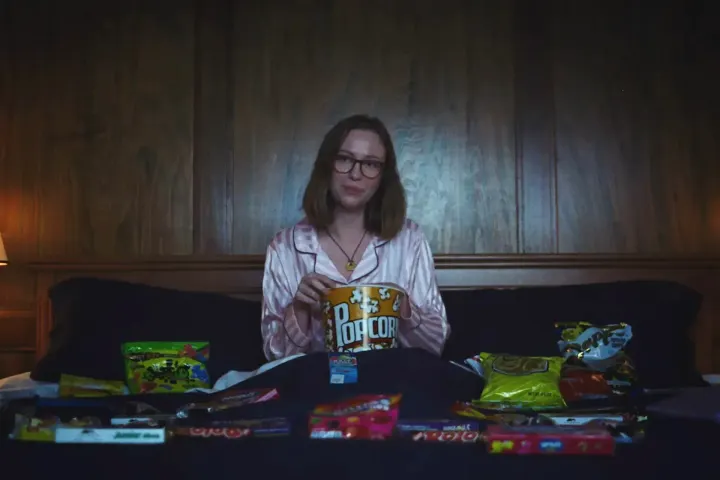
Anxietyland (Gemma Correll)
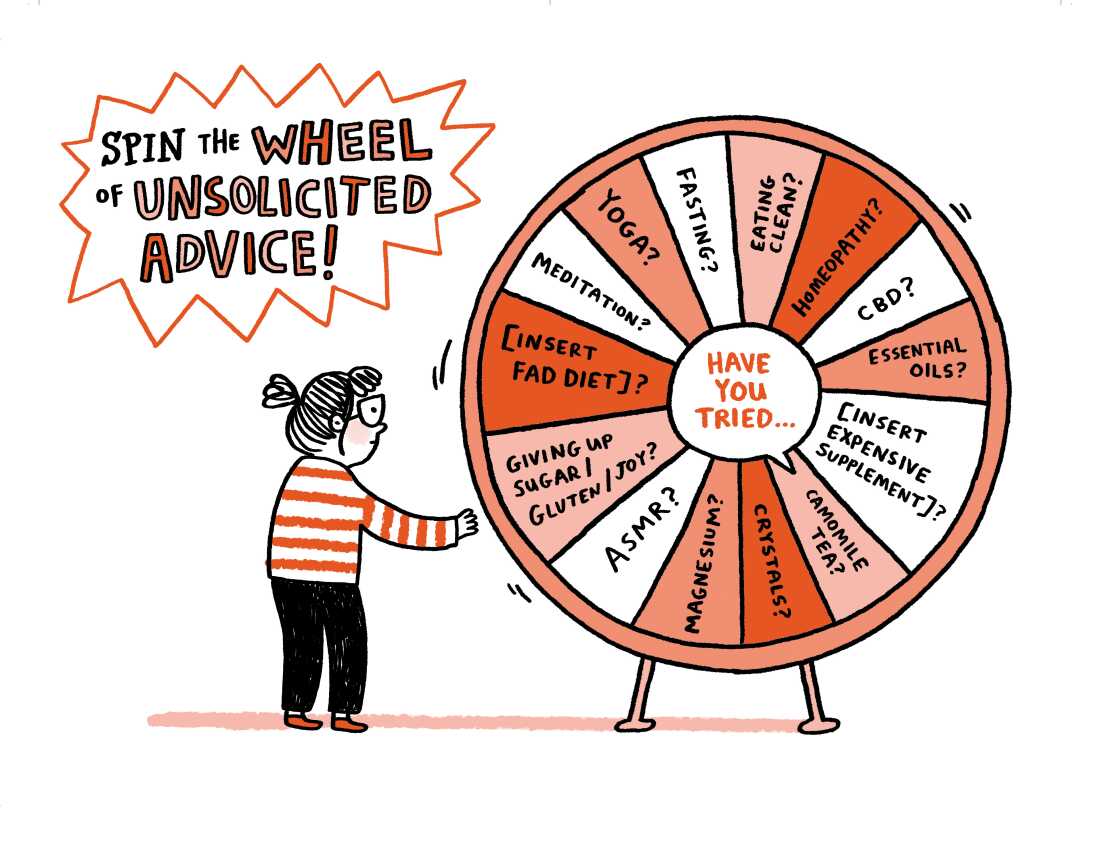
Gemma Correll's Anxietyland is a rare achievement: a graphic memoir that finds genuine humor in despair without ever trivializing the despair itself. It’s also hard not to think of Pixar’s Inside Out throughout this entire experience and I mean that as a very high complement.That film really showcases what it’s like to feel vulnerable and sensitive and how it’s “okay to not be okay.” Anxietyland is one of the most relatable, engaging reads when it comes to experiencing the complicated, layered emotions that come with panic, anticipatory anxiety and addiction.
From the opening pages, Correll's wit and visual confidence immediately draw you in, even as she introduces you to "The Bad Feeling"—the menacing pink creature that has haunted her entire life. It’s a manifestation of fear and intrusive thoughts, while also creating levity at the same time. This is dark comedy at its finest accompanied by unflinching emotional honesty. Correll's portrayal of anxiety felt like my own, including having to worry about how others, especially those you are closest to, will react knowing you have a particular affliction.
The central metaphor is simple: anxiety as a theme park that Correll has been visiting since childhood. Rather than a linear narrative, Correll traces three distinct eras—a childhood navigating the park's confusing attractions, her young adulthood when the rides became increasingly terrifying, and her present-day crisis when the park threatens to consume her relationship and career prospects. This structure allows readers to understand anxiety not as a sudden affliction but as a lifelong companion, evolving and intensifying across decades. The metaphor never feels forced; instead, it becomes a perfect vehicle for exploring how anxiety distorts perception and steals joy.
What's truly remarkable is Correll's artistic execution. Her linework is impeccable, her character design instantly recognizable, and her dialogue crackles with intelligence and humor. There's a striking irony in how polished and confident the visual presentation is—the pages are beautifully designed—while the content explores profound vulnerability and uncertainty. This contrast perfectly embodies the book's central theme: that people suffering internally often appear fine on the surface.
Anxietyland resonates because it validates. Correll doesn't offer easy answers or miraculous recoveries. Instead, she documents her journey toward therapy, medication, and the hard-won realization that managing anxiety isn't about "fixing" yourself—it's about learning to coexist with and manage The Bad Feeling.
Whether you're a devoted graphic novel reader, someone navigating mental health challenges, or simply seeking an honest exploration of resilience and survival, Anxietyland is essential and one of the year’s best. This is both deeply personal and universally resonant—a testament to the power of art to transform pain into connection. This is more than another graphic novel, this is a book that truly matters, now more than ever.
Gilmore Girls: The Complete Series Blu-ray
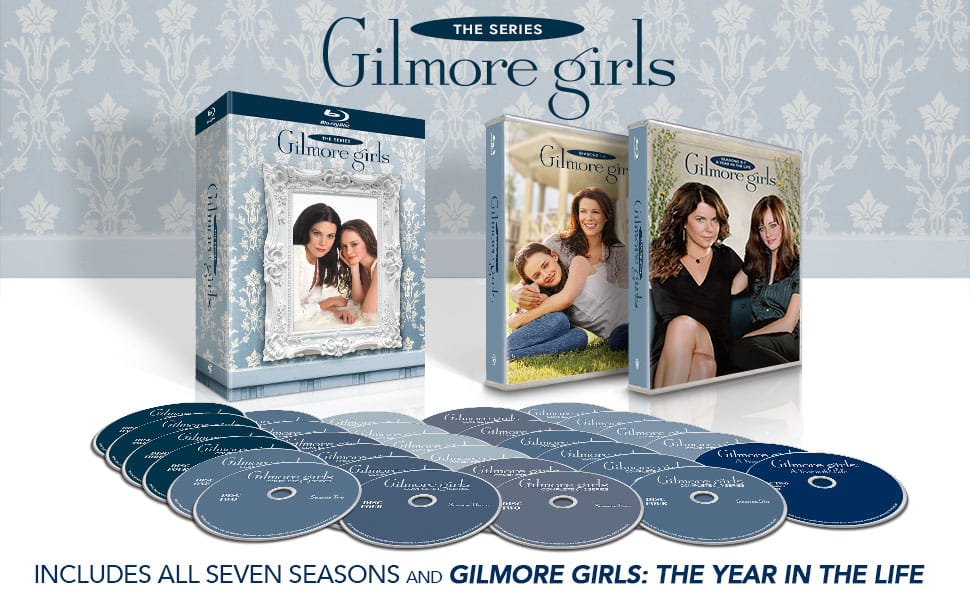
After 115+ hours spent in Stars Hollow across seven seasons and 153 episodes, Gilmore Girls finally makes its Blu-ray debut with Warner Bros. Discovery Home Entertainment's 28-disc Complete Series box set, released May 5, 2026. For a show that has inspired pilgrimages to filming locations, endless rewatches, and a fandom that spans generations, this release feels both overdue and essential.
The high-definition transfer is crisp and colorful with Dolby Digital English 5.1 audio that captures both the show's rapid-fire dialogue and its music—which functions as a character in its own right. Watching these episodes in HD, your first thought will be "my how young everyone looks," but you'll also appreciate the visual upgrade that brings Stars Hollow's New England charm into sharper focus. Though they did crop the original TV 4:3 aspect ratio in favor of a widescreen 1080p format, which most won't notice, but still, the image overall is manipulated in a way that is unfortunate to a small degree.
The set includes all seven seasons plus the 2016 Netflix miniseries A Year in the Life, totaling 6,732 minutes of Lauren Graham and Alexis Bledel's mother-daughter dynamic, Scott Patterson's will-they-won't-they dance with Lorelai, and the entire quirky cast that made the fictional Connecticut town feel like home.
The huge downside? Special features are ported over from previous DVD releases with nothing new added—a missed opportunity for a 25th anniversary celebration. The absence of the witty "Gilmore-isms" booklets from the original DVD sets is particularly disappointing, as the show's pop culture allusions remain one of its defining charms.
Still, for fans who've been waiting for a definitive collection, this sturdy box set delivers where it counts: the show itself, preserved in the best quality it's ever been available. Whether you're a longtime devotee or a newcomer curious about what made this show a cultural phenomenon, this is the way to experience Stars Hollow.
Buy it now from Movie Zyng or wherever you purchase physical media.
The Front (dir. Martin Ritt)
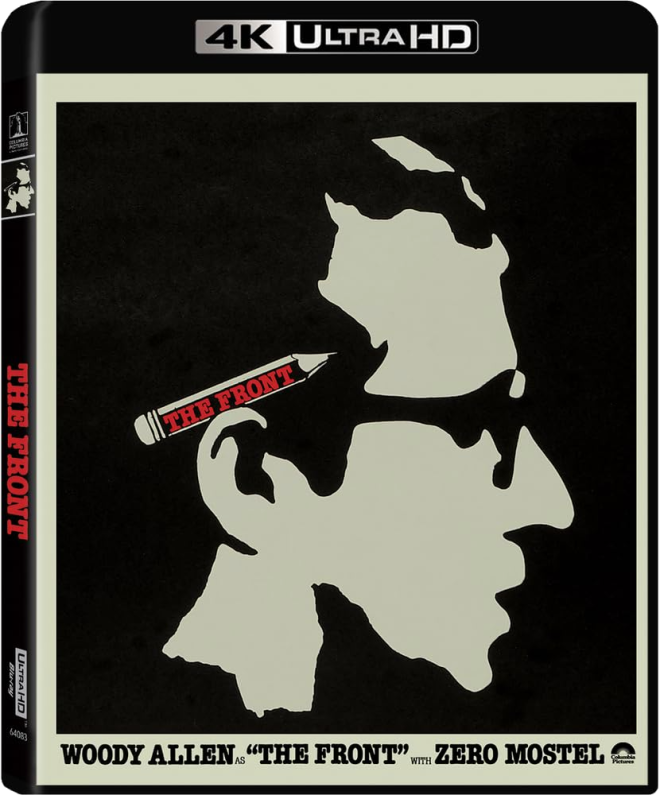
Martin Ritt's acclaimed dark comedy The Front arrives on 4K UHD with a stellar restoration courtesy of Sony Pictures and colorist Grover Crisp, whose work continues to set the standard for preserving film grain and texture. The Dolby Vision transfer breathes new life into Michael Chapman's cinematography and the film really is a historical record of a dark time in Hollywood history.
The story itself remains a fascinating, if tonally uneven, examination of Hollywood blacklisting during the McCarthy era. Woody Allen stars as Howard Prince, a small-time bookie who agrees to "front" for blacklisted writers, lending his name to their scripts for easy money. It's an unusual role for Allen—stripped of much of his typical neurotic charm going mostly dramatic, he plays Howard as deliberately ordinary, morally passive, making this one of his most restrained performances outside his own directorial work.
Zero Mostel delivers the film's most emotionally complex performance as Hecky Brown, a comedian whose career crumbles under the weight of the blacklist. The personal connection runs deep here: Ritt, writer Walter Bernstein, and several cast members including Mostel were themselves blacklisted in the 1950s, lending the film an authenticity that transcends its occasionally awkward tonal shifts between comedy and drama. Michael Murphy also lends his talents in fine form.
The 4K release includes a DTS-HD MA 2.0 mono audio track and carries over an engaging legacy commentary featuring actress Andrea Marcovicci with film historians Nick Redman and Julie Kirgo. Marcovicci's enthusiasm is infectious as she recalls her first film experience, including Allen's joke about only giving her "one lip" during their kissing scene.
While The Front may struggle to balance its comedic and dramatic impulses though remains compelling, it is an important document of a dark chapter in American entertainment history—made all the more powerful by those who lived through it. Buy it from Movie Zyng or wherever you purchase physical media.
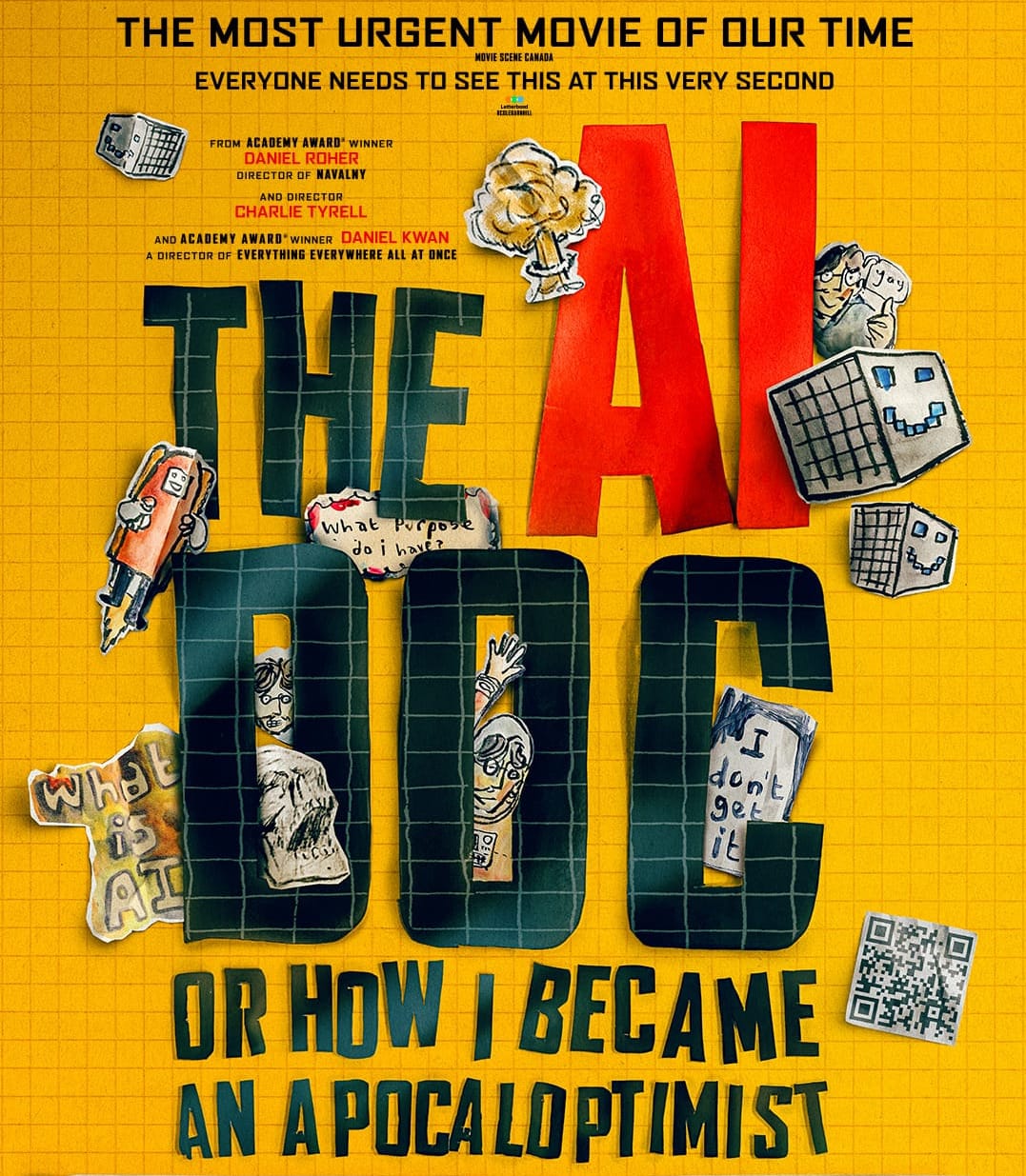
The AI Doc: Or How I Became an Apocaloptimist (dir. Daniel Roher)
The AI Doc: Or How I Became an Apocaloptimist arrives on Blu-ray as a timely, anxiety-inducing exploration of artificial intelligence that manages to feel both urgent and deeply personal. Director Daniel Roher, fresh off his Oscar win for Navalny, turns his lens inward as an expectant father grappling with what kind of world he's bringing his child into.
The documentary's greatest strength lies in its structure and visual approach. Roher interviews an impressive roster of AI leaders—including OpenAI's Sam Altman, Google DeepMind's Demis Hassabis, and Anthropic's Dario and Daniela Amodei—alongside doomsayers and optimists, all shot in stark, direct-to-camera setups that create an intimate, almost confessional atmosphere. The handmade animations and notebook-style illustrations provide a charming, human counterpoint to the cold technological subject matter, particularly in the conversations between Roher and his wife Caroline Lindy.
At under two hours, the film moves with the rhythm of a panic attack—building tension, offering brief respite, then cranking up the anxiety again. The early parts work well mainly cuz they're in line with how I feel about the future of this technology - spoiler-alert, I side with those who see the damage it can cause. It's effective, if exhausting. You want to create AI. Fine. Give us one that’s ethical sourced, environmentally friendly, and designed to ensure that accuracy is paramount over profit. And of course that does come up, but there are positive spins that made my head, well, spin, and my eyes rolled throughout. The film coins the term "apocaloptimist" to describe its ultimate stance: aware of the dangers, but choosing hope and action over paralysis.
Unfortunately, the Blu-ray release is disappointingly bare-bones, with no supplemental features exploring the film's distinctive visual choices or providing updates on this rapidly-evolving topic. For a documentary about cutting-edge technology, the lack of extras feels like a missed opportunity. Regardless, The AI Doc succeeds as an accessible entry point for anyone trying to understand what's happening with AI—and what's at stake if we get it wrong. I wish the director had stepped back a little from the story since it's hard to get invested in his decision to start a family or not, since in all likelihood, he will, but any time there's a person on screen revealing the horrors of what this is doing to the future, I was on board. Buy it over on MovieZyng or wherever you get physical media.
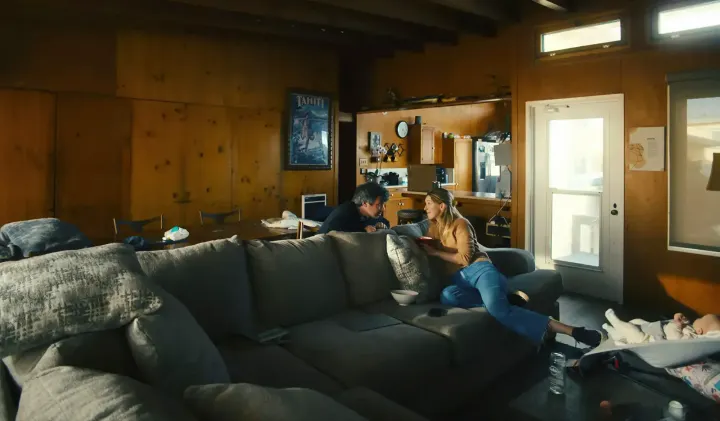
Disclosure Day (dir. Steven Spielberg)
I was beyond excited for another X-Files-esque alien adventure film from a director I've grown to love over time more and more. I of course loved his early films for the most part, but around the time of Amistad, I began to understand why he had detractors and naysayers. (Manipulative, score-raising, etc. etc.) However, I came around immediately when Minority Report and Munich both of which made me rethink my love for him as a modern storyteller. Of course once I did a couple of podcasts about him with two friends and film critics that have always considered him a favorite, I began to agree more than disagree. Not to mention the fact that watching E.T. at a drive-in as an adult, well, let's just say I had to hold back a lot of tears in the car alongside a close friend.
Now Nearly five decades after Close Encounters of the Third Kind, Steven Spielberg returns to the question that has haunted him since childhood: Are we alone in the universe? Disclosure Day is his answer—a bombastic, sincerely heartfelt, and occasionally messy espionage thriller that reminds us why Spielberg remains one of cinema's greatest storytellers. If only the screenplay was as confident and strong as the direction throughout.
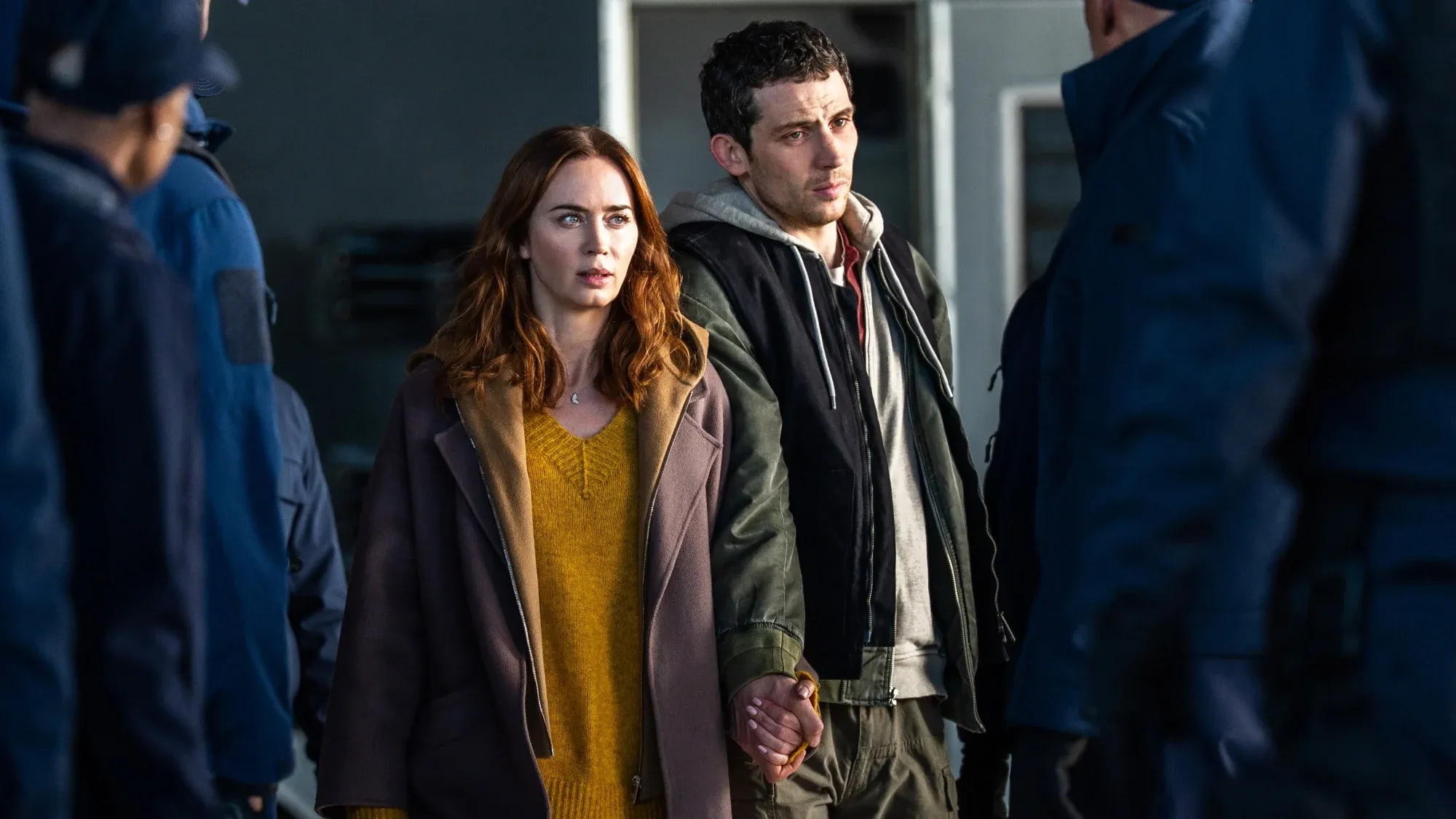
The film opens with an unexpected POV shot: we're getting stomped in the face by a pro-wrestler. It's a surprising, visceral, disorienting way to begin what becomes a relentless chase movie. Josh O'Connor plays Daniel Kellner, a mathematician-turned-whistleblower who's stolen 78 years of classified UFO documentation from the shadowy Wardex corporation. His mission? Release the truth to the world. His obstacle? Wardex head Noah Scanlon (a deliciously villainous Colin Firth), who believes humanity can't handle the truth.
Meanwhile, in Kansas City, weather reporter Margaret Fairchild (Emily Blunt, delivering a career-best multi-faceted performance) suddenly begins speaking alien languages and psychically understanding everyone around her—all because a cardinal flew into her apartment. As Wardex closes in on both Daniel and Margaret, their paths inevitably converge in a race to reveal the truth before it's buried forever.
Spielberg hasn't lost his touch for action, he's still got it. The set pieces are spectacular, particularly a jaw-dropping sequence involving a car hooked onto a speeding train. I held my breath through the entire scene, only releasing it to scream in excitement. Then when Margaret had her panic attack, I completely understood why under those circumstances and felt the same feelings right along with her.
The director brings the polish and personality of '90s blockbuster filmmaking—when big-budget movies had style and swagger—to every frame.The performances elevate the material considerably. The consistently impressive O'Connor brings an everyman quality that grounds the outlandish premise, playing Daniel as sincere yet jaded, determined but clearly out of his element. Blunt is equally compelling, navigating Margaret's transformation with wild-eyed grace and energy. And Colman Domingo, delivers "an avuncular and twinkly personification of truth-telling" as Hugo, a defector whose debate with Firth's Scanlon about transparency versus control crackles with intellectual energy.
At its heart, Disclosure Day is about the battle between fear and empathy. Scanlon argues that people are ruled by fear, that secrets maintain societal peace. But Daniel, Margaret, and their band of rebels believe in empathy over fear. The aliens' first message to humanity? "Don't be afraid of what you don't know." It's a plea that extends beyond extraterrestrial contact to how we treat each other—empathy presented not just as virtue but as "the ultimate evolutionary advantage." If anything, this is a combination of The X-Files and The Day The Earth Stood Still.
The film's biggest hurdle is its optimistic worldview mixed with messages about religious implications that were better utilized in Robert Zemeckis' Contact. In 2026, the idea that revealing classified information will automatically change everything feels, as one might say, out of touch. The fantasy that everyone will accept video evidence of alien life and fundamentally shift their values doesn't hold water in our current moment. Spielberg seems to believe that truth and empathy can solve humanity's problems, but the film doesn't fully engage with how resistant people are to accepting uncomfortable truths. It hurts the pacing a little to hear a lot of pondering though some of what is said, is interesting to initiate conversation.
Disclosure Day also suffers from trying to juggle too many ideas. There are really two movies here—Daniel's chase thriller (Movie A) and Margaret's psychic awakening (Movie B)—and while they eventually converge, the film never quite coalesces into a fully functional whole. There's a sequence where a bunch of faces appear and we're supposed to feel moved but it's kind of hard to in that moment. The spiritual and religious implications are raised but not deeply explored as mentioned, leaving the film's philosophical ambitions somewhat unfocused. It could've gone deeper but there's no denying the impact of the final moments that gave me goosebumps and reminded me why Spielberg is such a confident, assured and a master of escapist entertainment. Despite my reservations that came before it, the film ends damn near perfectly.
The finale hits the brakes so hard the film nearly flies through the windshield, abandoning the breakneck pacing for a conclusion that asks us to believe humanity will choose empathy in a moment of crisis. I wanted to believe it—I wish I could—but my suspension of disbelief rattled because I don't trust that things would play out as optimistically as Spielberg presents. But again, this is a capital-M movie.
Disclosure Day is still very entertaining, thrilling, and made with the craftsmanship of a master filmmaker who still knows how to turn rolling boulders and bobbing buoys into cinematic legend. It's Spielberg doing what he does best: creating spectacle with heart, adventure with meaning. And there's no denying that Emily Blunt will likely be up for awards for juggling so much as a character in this.
Is it his best film in 20 years? No. But it's a reminder of why we go to the movies—to experience wonder, to feel that distinctive thrill of watching someone who truly understands the medium. Disclosure Day made me laugh, gasp, and yes, even cry. More than that, it made me wish our world were like a Spielberg movie, where truth prevails and empathy wins.Even if the story doesn't entirely work, even if the themes feel dated, there's still that old school fairy dust from the storyteller who gave us Raiders of the Lost Ark and E.T. And sometimes, that's all we need.
See you soon with some new music, some old music and covers from yours truly!
Comments ()