
New Reviews (August 2026)
A great new release and a slew of physical media releases to share!


Coyote vs. Acme (dir. Dave Green)
It is long overdue for Coyote vs. Acme to finally come out in theaters in order to be embraced by a mass audience. And it absolutely should be. A film about persistence and resilience in the face of impossible odds, about standing up to corporate giants who'd rather bury you than let you succeed—it's a story that mirrors its own tumultuous journey to the screen. After being shelved by Warner Bros. in 2023 as a tax write-off, rescued by Ketchup Entertainment, and championed by fans who refused to let it disappear, this Looney Tunes live action hybrid has emerged as one of the year's most delightful surprises.
Director Dave Green (Teenage Mutant Ninja Turtles: Out of the Shadows) has crafted something special: a hilarious comedy that honors the anarchic spirit of classic Looney Tunes while delivering genuine emotional depth and intelligence. Based on Ian Frazier's brilliant 1990 New Yorker satirical article and adapted by Samy Burch, the film follows Wile E. Coyote as he finally decides enough is enough. After decades of failed attempts to catch Road Runner using defective ACME products, he's taking the corporation to court—with the help of down-on-his-luck lawyer Kevin Avery (Will Forte).
What could have been a one-note joke—cartoon coyote sues megacorporation—becomes something far richer in Green's hands taking inspiration from the pinnacle of this style with Who Framed Roger Rabbit. The story plays its absurd premise completely straight, which is precisely the right call. There's no winking at the camera, no characters breaking the fourth wall to acknowledge how ridiculous this all is. Everyone treats the situation with appropriate gravity, which makes the comedy land even harder.
Will Forte delivers what might be a career-best performance as Kevin Avery, a lawyer who's given up on ambition and settled for easy settlements from his motel room office (perhaps taking inspiration from Better Call Saul). Forte, known for his manic energy in projects like MacGruber, shows impressive range here, largely playing the straight man while still generating huge laughs through his signature deadpan delivery. What's remarkable is that he's acting opposite a silent, animated character—and yet their relationship feels completely genuine.
The friendship that develops between Kevin and Coyote is the film's beating heart. Coyote maintains his characteristic silence from the classic cartoons, communicating through hand-written signs and expressive glances, yet the bond between these two underdogs feels surprisingly moving. It's a testament to both Forte's committed performance and the seamless integration of animation and live-action that you completely buy into their unlikely partnership.
Green has set a new standard for live-action/animation hybrids. Rather than attempting photorealism, the film embraces the traditional hand-drawn aesthetic of classic Looney Tunes, creating a visual language reminiscent of Who Framed Roger Rabbit. The animated characters don't just exist as flat overlays—they occupy the same three-dimensional space as the live-action actors, with painstaking attention paid to how light interacts with cartoon surfaces and how physical objects move between the two worlds.
This is simply a reality where cartoon characters coexist with humans, and nobody makes a big deal about it. There are no lengthy explanations or heavy-handed exposition—the audience is trusted to accept the premise and move on. It's a smart choice that keeps the focus where it belongs: on the characters and their story.
As you'd anticipate, there are the expected physical gags—anvils, explosives, elaborate contraptions that backfire spectacularly—all executed with the manic energy of the original shorts. But there's sharp verbal wit, clever visual references for longtime Looney Tunes fans (Dr. Lorre!) providing a satirical edge that gives the humor real bite.
What elevates Coyote vs. Acme beyond mere nostalgia trip is its surprisingly pointed anti-corporate message. The parallels between ACME's treatment of Coyote and Warner Bros.' attempted burial of this very film are impossible to ignore—and the filmmakers lean into it. The screenplay by Burch (Oscar-winner for May December) doesn't pull punches in its critique of massive corporations that prioritize profit margins over people, that would rather destroy something than let it exist outside their control.
It's a David vs. Goliath story that resonates both on-screen and off, championing themes of perseverance, resilience, and standing up for what's right regardless of how powerful your opponent might be. These aren't revolutionary ideas, but they're executed with such sincerity and heart that they land with genuine emotional impact.
Without spoiling anything, all involved find a way to honor decades of cartoon history while adding new layers that speak to themes of friendship, community, and the courage required to keep pursuing your goals despite repeated failure. There's poignancy in watching Coyote—a character defined by his endless defeats—finally get his day in court. Especially surprising is how moving the film becomes with the final courtroom scene.
If there's a criticism to be made, it's that the film occasionally plays it safe when it could push further into chaos. While there are spectacular set pieces that blend animation and live-action in mind-bending ways, the overall structure remains fairly conventional. The courtroom drama beats are mostly what you expect, and the story follows a familiar underdog trajectory. You're never really in doubt about where things are headed.
Despite minor quibbles, Coyote vs. Acme is a triumph of comedic storytelling—both as a piece of entertainment and as a symbol of what can happen when people refuse to give up. It's one of the funniest films of the year, packed with visual gags and sharp dialogue that will reward repeat viewings (keep an eye out for Pepé Le Pew and Sylvester for two of the biggest laughs). It also finds genuine emotion in the friendship between a broken lawyer and a determined coyote. The end result is a highly enjoyable love letter to classic animation, a sharp satire of corporate greed, and a touching story about persistence in the face of impossible odds.
In a landscape dominated by cynical reboots and cash-grab IP-driven sequels, Coyote vs. Acme stands out as something special: a film made with genuine affection for its source material while uncovering real things to say about our world. It proves that sometimes, if you keep getting back up no matter how many times you're knocked down, you might just catch (or even befriend) the Road Runner after all.

Cat Cam (dir. Sara Werner)
Well all it takes for this cat fanatic to get excited is the potential of taking the recent Good Boy and applying it to my favorite furry pet. Cat Cam doesn't land on its paws, successfully, but it's still worth a look for fans of the genre. A couple installs cat cameras throughout their new home before leaving for a French vacation, entrusting their beloved feline Nug to the husband's unreliable younger brother, Jay.
What begins as routine pet monitoring quickly turns sinister when the cameras capture unexplained phenomena—faucets turning on by themselves, objects moving, and mysterious "Person Detected" alerts with no one in frame. While Nug's instincts tell her to hide under the bed, Jay struggles to prove he's responsible enough to handle both cat-sitting duties and an increasingly aggressive haunting.
Cat Cam works better as an experiment in found footage stylistics rather than a traditional horror film that gets under your skin. It doesn't entirely adopt the same POV strategy as Good Boy but there are moments where it does attempt that concept successfully. Cronin Cullen brings genuine charm to Jay, a lovable loser desperate to redeem himself in his sister's eyes, and the family dynamics feel authentic thanks to writer Hilary Helding's natural dialogue.
The stationary camera setup effectively mimics Paranormal Activity's surveillance aesthetic, and creamsicle Nug herself is undeniably adorable as you'd expect. However, the scares are minimal—flickering lights and household mischief don't generate much dread until a sucker-punch finale that feels unearned by the benign build-up. All cat lovers will appreciate the feline focus (even if Nug wisely stays hidden for much of the runtime), but horror fans may find themselves wishing the ghost—and the cat—had gotten more time to truly sink their claws in. Blu-Ray is now available through MovieZyng which you can pick up here.

She Rides Shotgun (dir. Jordan Harper)
Nick Rowland's gritty thriller delivers a surprisingly emotional punch beneath its B-movie veneer. Taron Egerton stars as Nathan, a recently released convict forced to protect his young nine-year-old daughter Polly (Ana Sophia Heger) after his family is marked for death by the Aryan Steel gang he crossed in prison. What could have been a standard action vehicle becomes something more compelling thanks to the electric chemistry between Egerton and Heger, who anchor the film with raw, authentic performances that make their fractured father-daughter relationship feel lived-in and earned.
Heger is the real revelation here, holding her own against the entire cast and navigating Polly's journey from shock and grief to reluctant trust with remarkable nuance. Egerton, meanwhile, delivers what may be his best work yet—anxiety-riddled, emotionally explosive, and wholly committed. Rowland's handheld camerawork and voyeuristic direction create a claustrophobic, immersive atmosphere that keeps you on the run alongside the leads, while the film's indie aesthetic works to its advantage, never straining to look like something it's not.
The supporting cast does feel underutilized—John Carroll Lynch's villain never quite registers despite the actor's efforts, and the police subplot drags—and at nearly two hours, the film feels stretched beyond its fairly simple premise. There aren’t a lot of twists or surprises, but every now and then, a film like this simply works as pure entertainment without profundity or originality. Simply because the lead performances are strong and the characters fully dimensional throughout. When it focuses on its central duo, She Rides Shotgun is a powerful, visceral drama that earns its thrills and delivers genuine emotional weight especially as the story goes on. 4K is now available through MovieZyng which you can pick up here.
Random Harvest (dir. Mervyn LeRoy)
There's something almost shocking about how well Random Harvest works. On paper, this 1942 MGM melodrama sounds like the most preposterous story ever committed to celluloid: a shell-shocked soldier loses his memory in World War I, falls in love, gets married, has a child—and then gets hit by a taxi that restores his original memories while erasing everything about his new life. His devoted wife spends years working as his secretary, waiting for him to remember her. It's absurd. It's manipulative. It's one of the most devastating romances Hollywood ever produced.
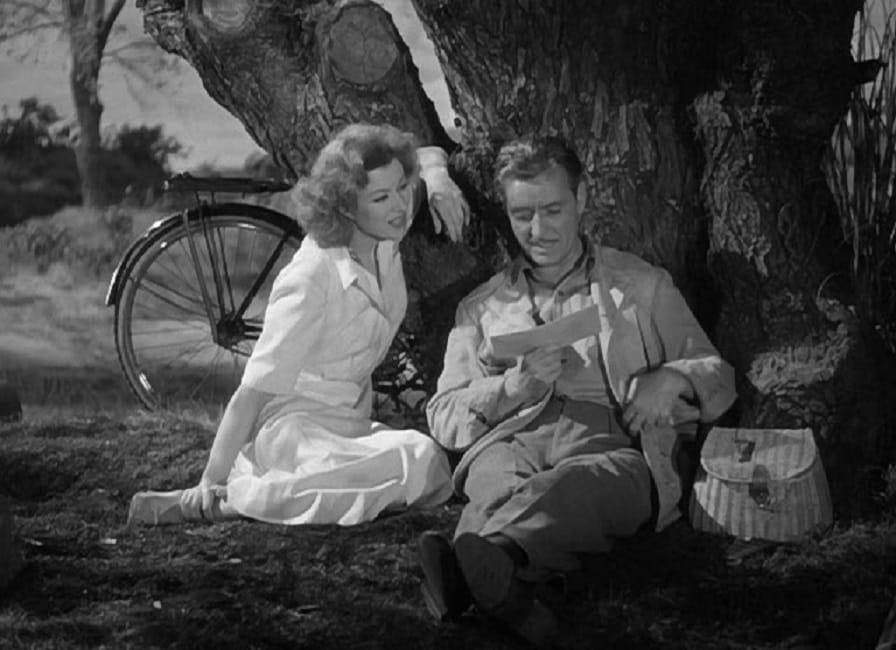
As World War I ends, an amnesiac soldier known only as "John Smith" (Ronald Colman) escapes from the Melbridge County Asylum. He's found by Paula Ridgeway (Greer Garson), a warm-hearted music hall performer who takes pity on this lost, gentle man. She nicknames him "Smithy." They fall in love, marry, move to a country cottage, and have a baby. For three blissful years, Smithy discovers he can write, and they build a life together.
Then comes the taxi accident in Liverpool. The impact restores Smithy's original identity—he's Charles Rainier, heir to an industrial fortune—but completely erases his memory of Paula, their marriage, and their child. He simply returns to his wealthy life, remembering nothing of the woman who saved him.
Paula, devastated but unwilling to force herself on a man whose fragile mind might shatter, makes an extraordinary choice. She tracks him down, takes a position as his private secretary under her formal name Margaret Hanson, and becomes indispensable to him—all without revealing she's the wife he can't remember. She watches him build a political career, watches him nearly marry his young niece Kitty (Susan Peters), and eventually accepts his proposal of a "business marriage"—a platonic arrangement where he promises no emotional attachment. The film spans over twenty years of this exquisite torture, with Paula/Margaret waiting, hoping that something—anything—will unlock the door in Charles's mind.
Let's be honest: if you approach Random Harvest with your logic circuits fully engaged, it falls apart. The double-dose of movie-magic amnesia wouldn't pass muster with any neurologist. The coincidences pile up like a traffic accident. The central premise—that a devoted wife would spend years as her own husband's secretary rather than just telling him the truth—requires superhuman self-sacrifice that borders on masochism.
This movie isn't asking for your logic. It's asking for your heart, and if you give it, which I tend to do first and foremost, the film delivers one of the most purely satisfying emotional experiences in all of classic Hollywood. Director Mervyn LeRoy (who also gave us Little Caesar and produced The Wizard of Oz) understands that this was never a story about plausibility. It's a story about devotion, about loss, about the terror of loving someone who can't love you back in the same way, and about the fragile hope that what's truly buried is never entirely gone.
Ronald Colman's performance is a masterclass in quiet vulnerability. As "Smithy," he plays a man born fresh into the world, hesitant and wounded, feeling his way into life and love like someone learning to walk. His voice—one of the most beautiful in cinema history—carries a hesitant sorrow that makes every line feel like poetry. As Charles Rainier, he's dignified and capable, but haunted by a nagging sense that some essential piece of himself is missing. Colman was nominated for the Academy Award for this role, and it's easy to see why.
Greer Garson truly owns this film. In 1942, she was the most beloved woman in American movies, and Random Harvest showcases exactly why. She gets to be vivacious and playful in the early scenes (including a delightful song-and-dance number, "She's Ma Daisy," where she shows off her legs in possibly the shortest skirt the Hays Code ever allowed). Then she spends the entire second half performing a quiet, aching, almost unbearable act of restraint—loving a man who looks right through her, hiding an ocean of feeling behind a secretary's professional calm.
There's one more piece of context that explains why Random Harvest hit audiences so hard: the calendar. This film opened in December 1942, one year into America's involvement in World War II, at a moment when millions of families had sent loved ones overseas and were living in daily terror of the telegram.
Here was a film explicitly about the wounds of the previous war, about a man broken by combat, about a wife separated from the man she loves by forces beyond anyone's control, and about the fragile, desperate hope that love could survive even total separation. Random Harvest gave a frightened, grieving nation a fantasy of endurance and reunion, a promise that devotion could outlast even the erasure of memory itself. It wasn't just a good weepie—it was the exact story a country in that particular moment desperately needed to believe.
Random Harvest carries all the resources of the richest studio in Hollywood. Joseph Ruttenberg's gorgeous, silvery black-and-white cinematography creates an idealized turn-of-the-century England. Herbert Stothart's swooning, Oscar-nominated musical score guides your tears exactly where the film wants them. The production design is handsome and evocative. It's the full weight of MGM's craftsmanship deployed in service of feeling, and it's ravishing.
Susan Peters is lovely as Kitty, the young woman who realizes Charles's heart belongs elsewhere—a performance that earned her an Oscar nomination at just twenty-one. (Tragically, a hunting accident a few years later left Peters paralyzed, and she died at only thirty-one.) Henry Travers (Clarence from It's a Wonderful Life) appears as a kindly doctor, and the film is populated with MGM's reliable stock company of character actors.
Random Harvest is gloriously, unashamedly impossible. It plays with your emotions in the best way, anchored by two of the most graceful star performances of the era, mounted with all of MGM's considerable craft, and building to an ending that earns every tear it wrings out of you. Sydney Pollack and Anthony Minghella were right to abandon their remake attempts—our cynical age simply can't buy this kind of earnest, big-hearted romanticism anymore. But on its own terms, in its own time, Random Harvest remains one of the great tearjerkers. Blu-Ray is now available through MovieZyng which you can pick up here.


Comments ()