
New Reviews (November 2026)
4 newish releases / capsule reviews to catch up with
Chronovisor (dirs. Jack Auen & Kevin Walker)
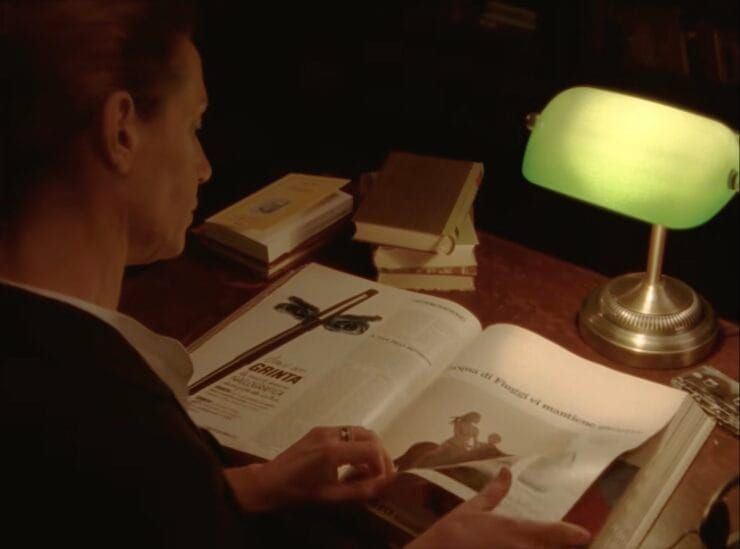
Jack Auen and Kevin Walker's mesmerizing debut transforms empirical, academic research into genuine psychological terror. Anne-Laure Sellier—a real professor playing fictional scholar Béatrice Courte—becomes obsessed with the Chronovisor, a mythical device allegedly capable of viewing the past, including Christ's crucifixion. Sellier is a polyglot scholar who serves as the Cartier-Chaired Professor of Behavioral Sciences at HEC Paris amongst other faculties to study “the area of time perception, creativity, and cognitive biases.” Sign me up! Those are also some of my interests especially when I studied psychology as an undergrad.
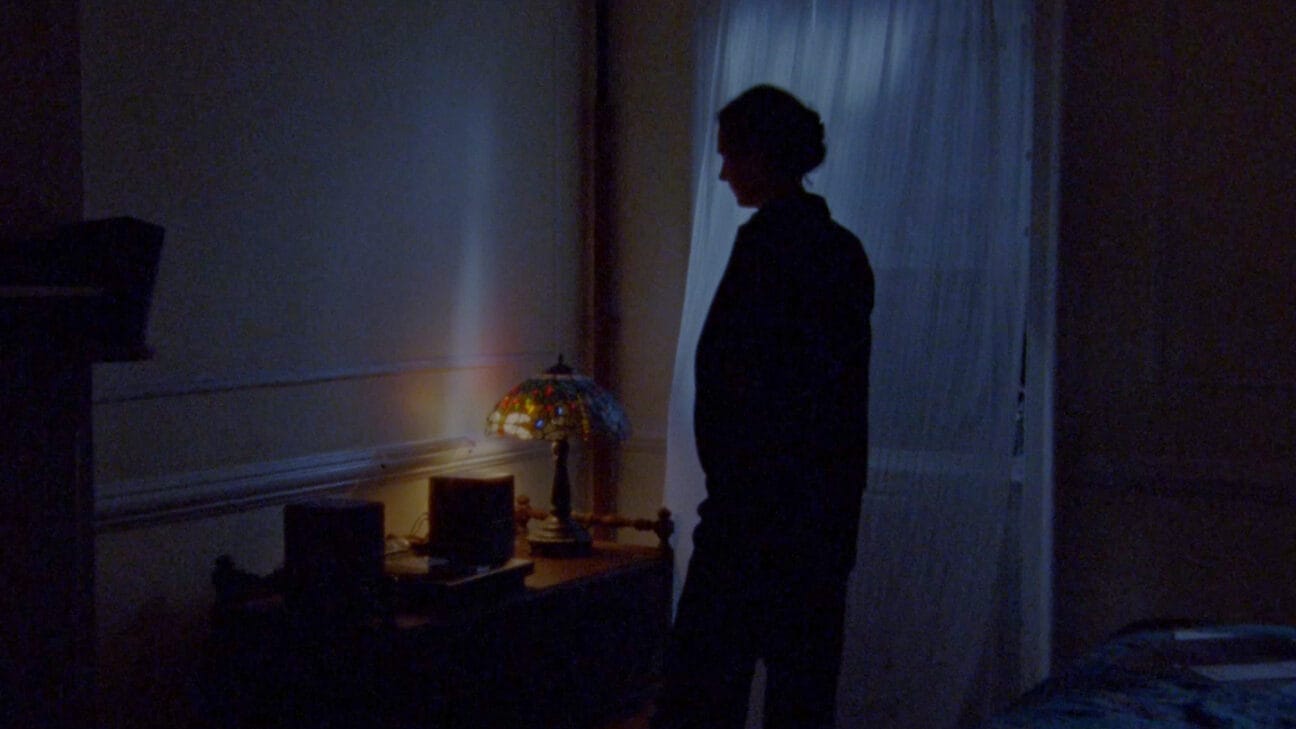
What could have been more akin to reading a book (which we kind of do throughout) while falling down research rabbit holes becomes utterly absorbing: shot on warm 16mm, the film turns libraries into shadowy labyrinths and makes the act of reading feel like suspense and surprise. Text appears onscreen, words illuminated as if revealing secrets, while Gustav Holst's cosmic score underscores the growing sense that Béatrice is handling forces beyond her control. It's all cinematic even if it is often just text on a screen. I couldn’t help but think of this as a mumblecore Da Vinci Code for those who still relish sitting in libraries and hyper focusing on a specific interest.
The filmmakers brilliantly capture how an intellectual pursuit can become indistinguishable from obsession (very much mirroring Fincher’s Zodiac), and in our age of AI and instant access to information, its exploration of the seductive fantasy that knowledge is merely a problem of retrieval feels unnervingly prescient. Every item presented feels tactile, tangible and alluring as many of the mysteries we come across are true blue old-school artifacts and real archives.
Defying easy categorization—part conspiracy thriller, part meditation on academic anxiety, part techno-animist fever dream—Chronovisor proves that the life of the mind can be as terrifying as any haunted home. This is a remarkably distinctive, lo-fi experiment that respects both its audience's intelligence and their capacity to be genuinely enthralled while also unsettled. The final moments really left a mark on my brain in a way few films this year could achieve. Chronovisor is the reason why I still have hope for the future of cinema – something this unique certainly may be an acquired taste and for that, I feel nothing but gratitude for its existence.
Possible Love (dir. Lee Chang-dong)
After an eight-year absence from cinema, Lee Chang-dong (Burning) returns with Possible Love, a sprawling, novelistic drama that confirms his status as one of contemporary cinema's most thoughtful observers of human frailty and uncertainty. Clocking in at nearly three hours, this meditation on class and the fragility of relationships is never less than absorbing, building from documentary-style social realism to an intimate chamber piece that is both moving and thought-provoking.
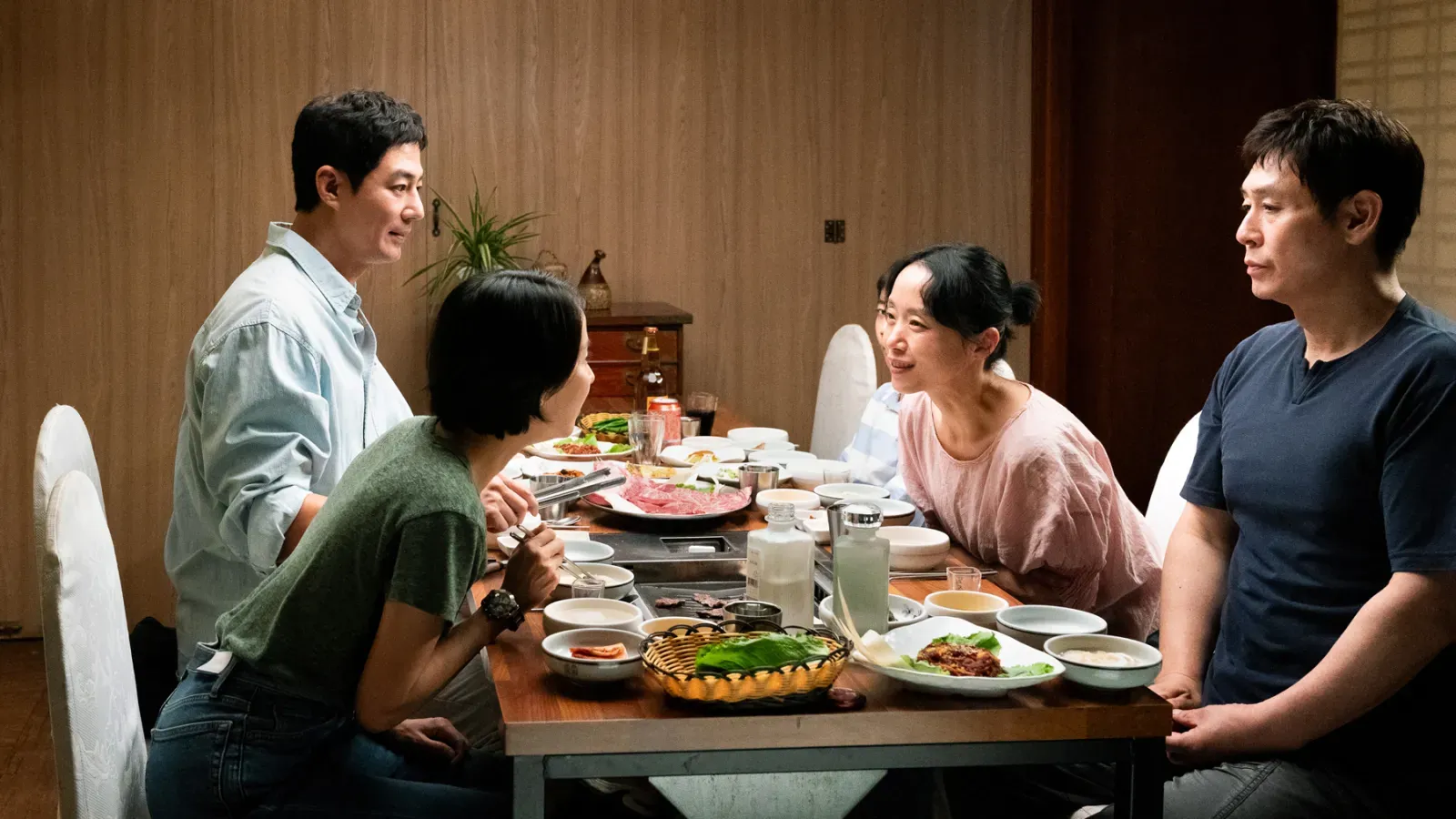
The film follows two couples from vastly different worlds: Ho-seok (Sul Kyung-gu) and Mi-ok (Jeon Do-yeon), a working-class pair struggling after his layoff from a factory, and Ye-ji (Cho Yeo-Jeong) and Sang-woo (Zo In-sung), an affluent filmmaker and investor whose privilege they wear like expensive cologne. When Ye-ji begins documenting the laid-off workers for her film, the couples' lives intersect in ways that expose the yawning chasm between their realities—and the dangerous attractions that can bloom across it. (Oddly enough, this would make an interesting, albeit fictional companion piece to the film of the year so far, You Can See Everything).
Lee's approach is quiet, observational, and deeply humane. He takes his time establishing these characters, allowing Sul and Jeon (reuniting after previous collaborations) to craft a portrait of a marriage tested by economic devastation and wounded pride. The film's first two hours build a foundation of authenticity that makes the final act—set at Sang-woo's beach house—crackle with tension and unspoken desire.
What elevates Possible Love beyond a simple class critique is Lee's willingness to complicate every perspective. By placing a documentarian inside his own film, he interrogates the ethics of representation itself: who has the right to film another's suffering? The answer is never simple, and Ye-ji's journey from observer to participant mirrors our own uncomfortable voyeurism.
Another one of the year’s best, Lee's slow-burn approach won't be for everyone, but those willing to surrender to this distinctive rhythm will find Possible Love deeply rewarding. It's a film that asks its audience to interpret its meanings, and the overall feelings that come with that process lingers long after the credits roll—much like the full moon that bookends this quietly hopeful meditation on what endures when everything else falls away.
Wild Horse Nine (dir. Martin McDonagh)
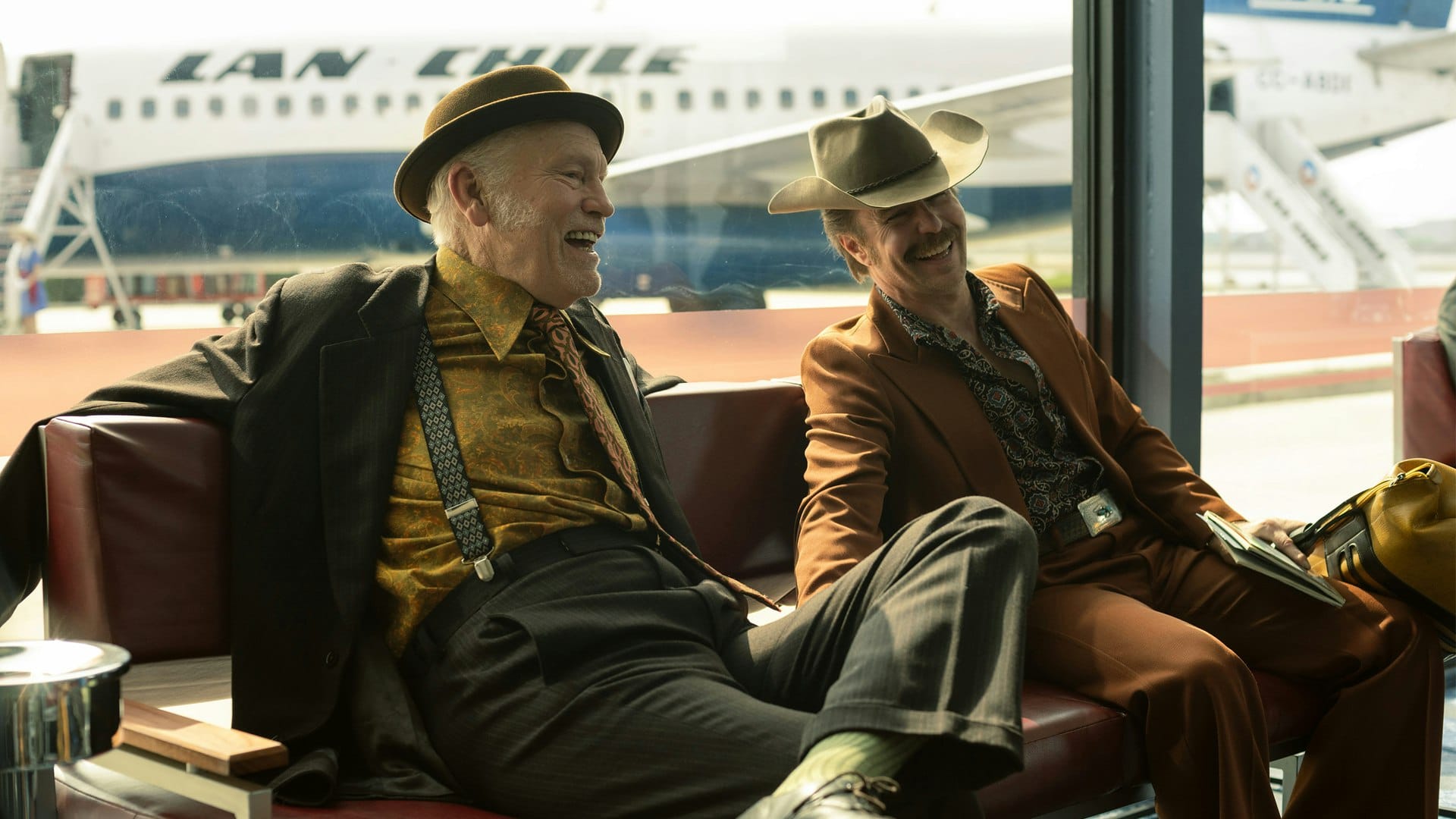
Martin McDonagh's latest film is a darkly funny, poignant exploration of American interventionism wrapped in the guise of a buddy picture that almost plays as a retelling of In Bruges but never as a retread. Set against the backdrop of the 1973 Chilean coup, Wild Horse Nine follows two CIA operatives—Chris (John Malkovich) and Lee (Sam Rockwell)—as they take a fateful trip to Easter Island. A lot of antics and confrontations ensue throughout.
Malkovich delivers what may be his finest performance since Burn After Reading as Chris, a dying agent whose terminal cancer diagnosis has loosened his tongue and awakened his dormant conscience. He's a man who's spent decades destabilizing democracies and now finds himself grappling with the weight of those sins. Rockwell, as his loyal but conflicted partner, provides the perfect counterbalance—exasperated, protective, and ultimately heartbroken.
What sets Wild Horse Nine apart from McDonagh's previous work is its political urgency. Yes, the tense male friendship dynamic is on display as always, but there’s more than meets the eye. While the film maintains the writer-director's signature acerbic wit and profane banter, it's haunted by real historical atrocities. The specter of Pinochet's impending dictatorship looms over every scene, lending genuine stakes to what could have been just another darkly comic character study. In terms of his overall filmography, this one would crack the top three due to what he gets out of his cast in ways that you come to expect while also being fresh and smart.
McDonagh's dialogue crackles and the emphasis on conversation as a dramatic device is where he excels. There are many lines that stay with you and add considerable weight since they’re not there for the purposes of just making you laugh. The performances are uniformly excellent (Mariana di Girolamo is particularly strong as a student activist who befriends Chris), and Carter Burwell's score adds layers of melancholy as always.
Wild Horse Nine is bleak, hilarious, and uncomfortably immediate and relevant—a reminder that the American empire has always been built on the bones of other people's democracies. It's McDonagh at his most politically engaged and continues a streak of excellent work that I’ve thoroughly enjoyed since his debut.
The History of Concrete (dir. John Wilson)
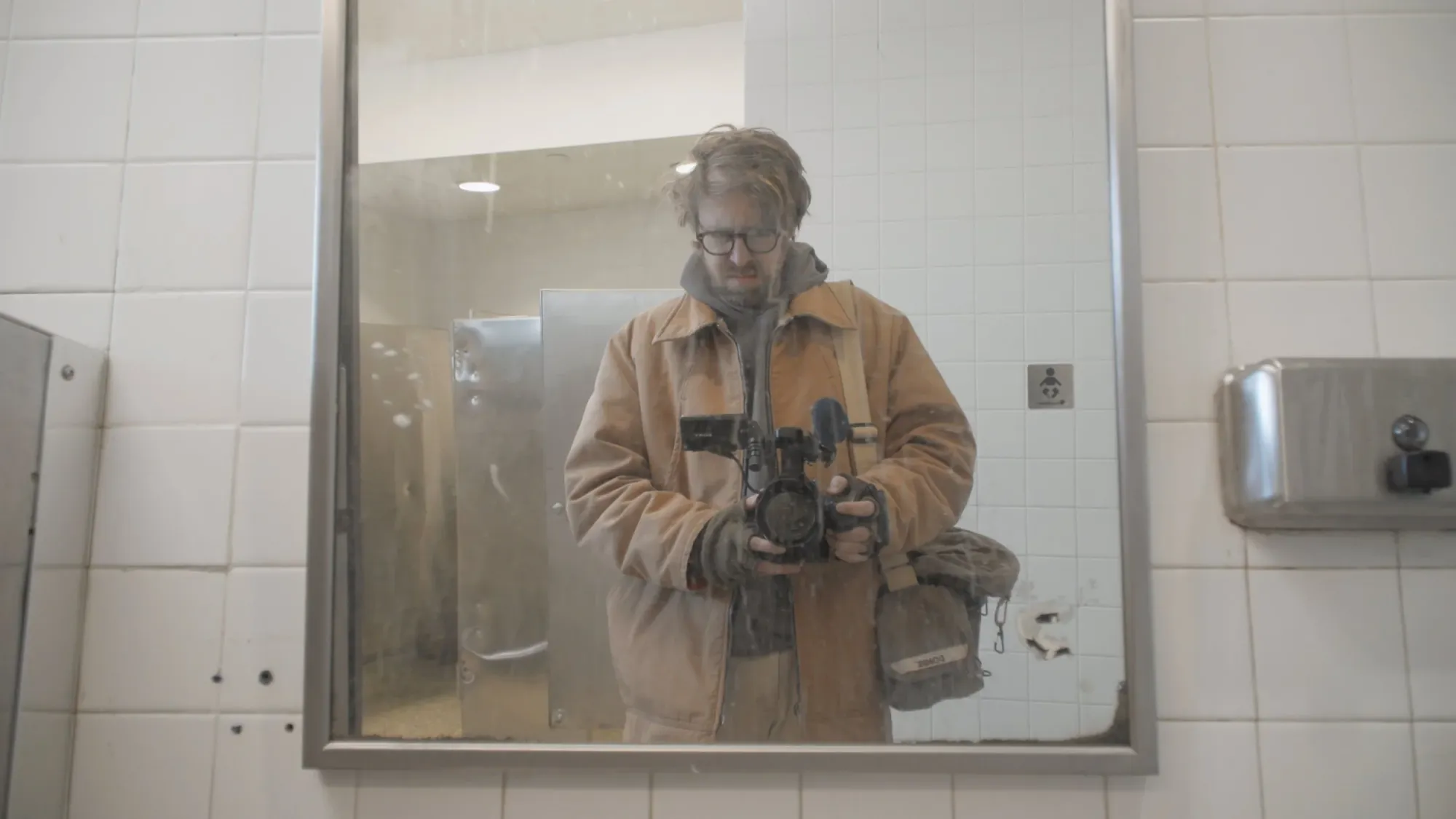
What a year for documentaries. John Wilson's feature debut is exactly what fans of How to with John Wilson would hope for—and fear. At 101 minutes, it's essentially a feature-length episode of his HBO series, complete with his distinctive nasal second-person narration, handheld camera work, and endless tangential detours through New York City. The premise is characteristically absurd: after attending a Hallmark movie writing workshop during the 2023 WGA strike, Wilson decides to apply those formulaic lessons to a documentary about concrete.
Of course, this isn't really just about concrete. Wilson uses the material as a jumping-off point to explore everything from a 3100-mile race around a single Queens block to a liquor store employee's hard rock band, from gum removal specialists to preserved tattoos of the deceased. There's a bungled trip to Rome's Pantheon, celebrity cameos (including a split-second appearance by Tim Robinson), and constant footage of Wilson's own Zoom meetings trying to secure funding.
What could be tedious is instead oddly mesmerizing and very funny throughout. Wilson's gift is finding the profound in the mundane, and his camera captures ordinary New Yorkers with genuine curiosity rather than mockery. The film's deeper themes—impermanence, artistic struggle, the crumbling infrastructure of modern life—emerge organically from seemingly random observations. When Wilson discusses the Buddhist concept that the only guarantee in existence is impermanence, it reframes everything: the sand mandalas destroyed after creation, the concrete slowly crumbling, his own show ending.
The feature-length format does strain at times. Wilson's washed-out HD footage looks better on a small screen than projected theatrically, and the meandering structure occasionally feels aimless. But the film builds to a genuinely surprising conclusion involving an unexpected connection to a prominent musician, revealing a method to Wilson's madness. The History of Concrete is hilarious, weird, and strangely moving—a meditation on change disguised as a documentary about building materials.
Comments ()