
New Reviews (July 2026)
Record, Book, Film (introducing the "in with the old" series)
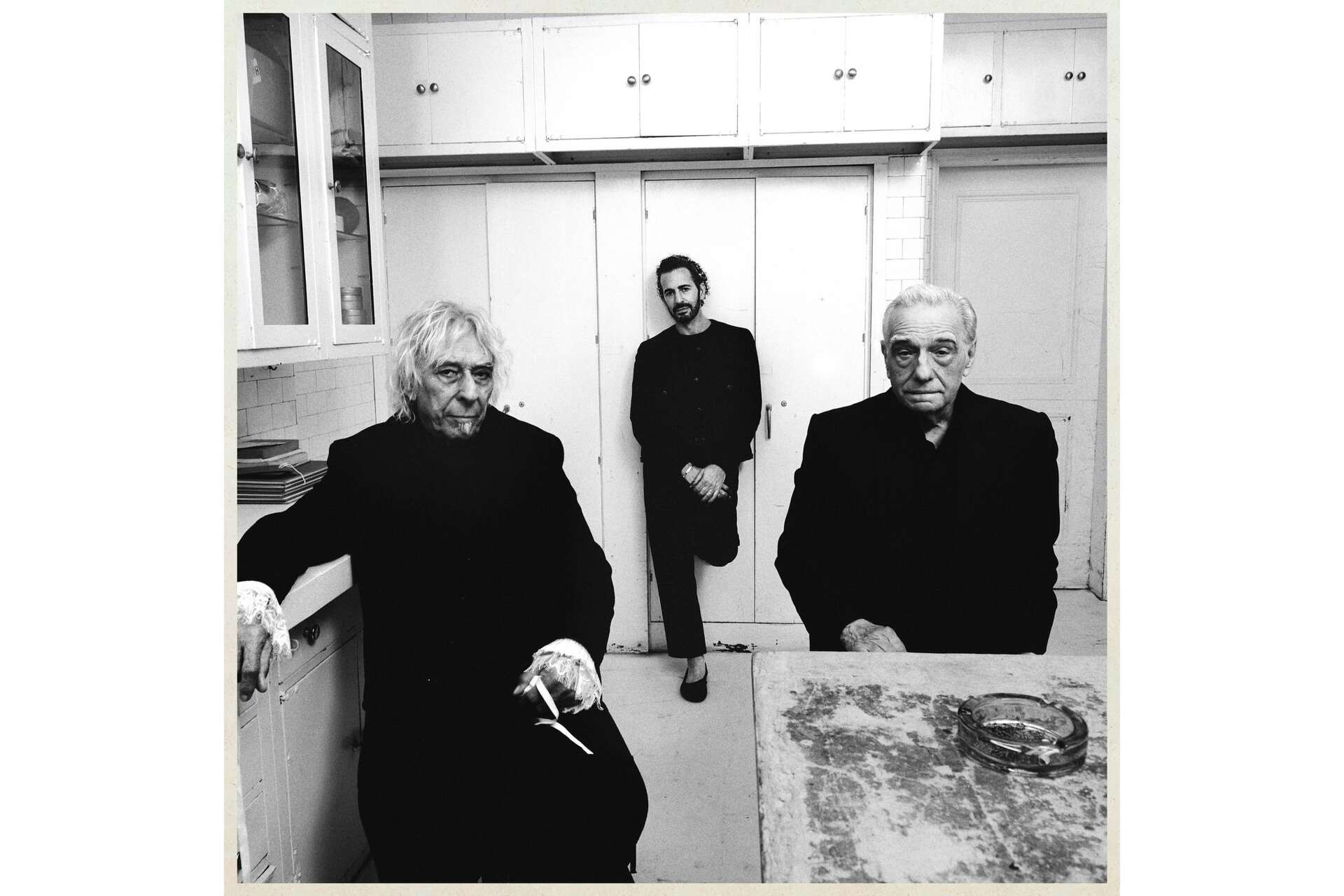
Charli xcx - Music Fashion Film
After the neon-green cultural phenomenon of Brat, Charli xcx could have easily delivered more club-ready anthems. Instead, Music, Fashion, Film is a deliberately confrontational left turn—a contained 30-minute statement that trades euphoria for guitar crunch and diary-page candor. Perhaps an obvious critique is that at 30 minutes, it’s a bit too contained, and you’re left with wanting more. But that’s also not a bad thing. It’s also one of the year’s best records so far.
Working exclusively with longtime collaborators A.G. Cook and Finn Keane, Charli strips away the maximalism, opting for jagged guitars, warped electronics, and drum machine automation. Opening track "Rock Music" immediately dismantles and subverts expectations with its declaration that "the dance floor is dead," while tracks like "Camera" and "I'm Afraid" offer startlingly vulnerable examinations of celebrity, creativity, and self-mythology.
The production remains sharp and meticulous despite a rougher aesthetic—shimmering synth melodies collide with Pixies-esque guitar crunch, creating something that feels simultaneously nostalgic and futuristic. In a way, it’s the best of all worlds - you can still groove to this even if it’s not BRAT: the sequel. Charli's songwriting is both her funniest and most revealing, transforming wide-eyed anxieties into absurdist pop theatre on tracks like "Card Declined" and "Wink Wink."
The album's most memorable moment arrives in its closing track, "No One Lasts Forever," which features a lengthy spoken-word cameo from filmmaker David Cronenberg. Recounting a near-death experience, Cronenberg's raspy voice muses: "As I was lying there on the sidewalk, I did not think about art at all... It can turn out that, yes, some artists have created art that has really survived thousands of years...but experientially, they are dead." His words—"oblivion is freedom"—transform the entire record into a meditation on mortality and impermanence. Talk about the unexpected but never forced. This is a musician at her pinnacle, evolving while never sacrificing her strengths as a terrific contemporary songwriter.
Music Fashion Film is an intimate pivot from an artist at her peak, proving that Charli xcx remains unafraid to challenge both herself and her audience. New music tends to excite me far more than new movies do sometimes, and this is one of the prime examples as to why I do my best to keep up with anything that taps into the zeitgeist. There’s a reason why Charli xcx has become a household name, she deserves the acclaim and recognition and her latest exemplifies why she should be on your radar even if you don’t keep up with the new and latest. She deserves your time and thankfully, there’s a lot to discover on this record and in the past.
BOOK REVIEW
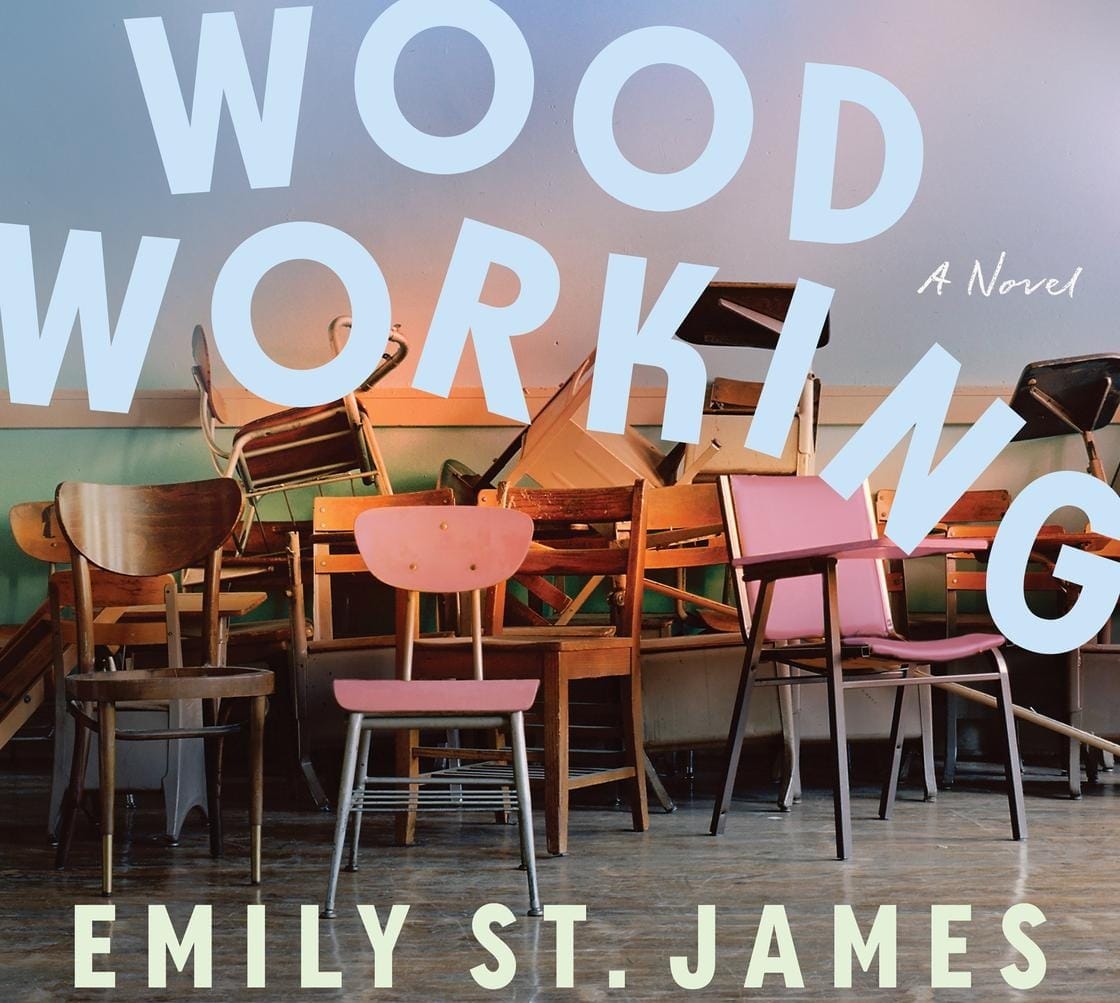
Woodworking by Emily St. James
When I was working for a couple of years as a music teacher at a private school, one of my students was trans. It was my first direct experience with someone using they/them pronouns and a preferred name other than the one assigned at birth. There was a controversy involving the parents not accepting the transition to where for any reports written, they insisted on teachers using their birth name. Nearly every session, you could tell they were struggling at home and often in pain. Thankfully they found solace in music and performing and they were immensely talented. Ever since leaving that school, I realized how closed-minded and unaccepting some people are of anything they don’t understand and the tender, aching, often very funny novel Woodworking captures all of that and more.
Emily St. James's debut is an authentic exploration of transgender life in red-state America. Set in Mitchell, South Dakota during the contentious 2016 election cycle, the novel follows two central characters: Erica Skyberg, a closeted trans high school English teacher and community theater director, and Abigail, her seventeen-year-old student who is openly trans. When Erica tentatively comes out to Abigail during a detention session, an unlikely friendship forms—one that reverses the expected power dynamic, with the confident teenager offering guidance to her uncertain teacher. St. James, herself a trans woman who grew up in conservative America, brings remarkable authenticity to both characters' experiences.
The novel's title refers to "woodworking," a term in the trans community for disappearing completely into a new life where no one knows your history—a fantasy Abigail initially clings to, imagining a future where she can "get my surgeries and change my name and never, ever tell anybody else again." Through Erica's halting, messy transition process and Abigail's journey from wanting to vanish into the woodwork to embracing visibility and community, St. James crafts a narrative that acknowledges both the genuine dangers trans people face and the possibility of hope despite being ostracized or misunderstood (or even worse, deadnamed).
What makes Woodworking particularly powerful is its refusal to offer neat resolutions while still maintaining a sense of promise for its characters. St. James employs innovative narrative techniques—Erica's deadname appears as static or redacted text in the audiobook and print versions, while a third perspective character speaks in second person for reasons that become clear and devastating as the story unfolds. The novel's structure alternates between these voices, with Abigail's chapters feeling especially immediate and conversational, as if she's sitting across from the reader sharing the ugly, the great, and the in-between of her life.
The supporting cast—including Erica's ex-wife Constance, who stars in the production of Our Town that Erica is directing, and members of a trans support group—are rendered with equal care and complexity. St. James doesn't shy away from the real fears her characters face in an overwhelmingly conservative environment where bathroom bills and "culture wars" dominate political discourse, but she also celebrates the fierce bonds of chosen family and the joy of finally living authentically. There’s one chapter in particular that comes 200 pages in or so that floored me. It went from a book I enjoyed to a book I loved. I consider Woodworking to be dispensable reading for a compassionate, empathic character-driven narrative that captures an experience I wasn’t sure I’d be able to relate to as a normie cis-gender white male.
This is both a timely and timeless novel, poignant in its acknowledgment that life for trans people in America has actually become more dangerous since 2016, hopeful in its insistence on the importance of trans visibility and community. It goes to show how difficult it is to be who you really want to be, especially when the outside world is against you (and sadly only has gotten worse with time thanks to the current administration).
St. James writes with caustic humor (Abigail certainly talks like a teenager would) and most importantly, a bruised, open heart about the process of becoming oneself, capturing Erica's revelation that "her body was not a tomb to die in but a foundation to build upon" alongside Abigail's evolution from wanting to disappear to understanding the necessity of trans people recognizing and supporting one another. The novel is funny, heartbreaking, and often surprising—a story about what it means to be seen, to build a life on your own terms, and to find connection in unexpected people and places. For readers seeking authentic trans narratives that balance the challenges of transition with moments of joy and possibility, Woodworking is essential reading. You’ll definitely laugh and by the end, I have no doubt you’ll tear up and wish you could give these characters a hug.
In With the Old (Recent Discovery)
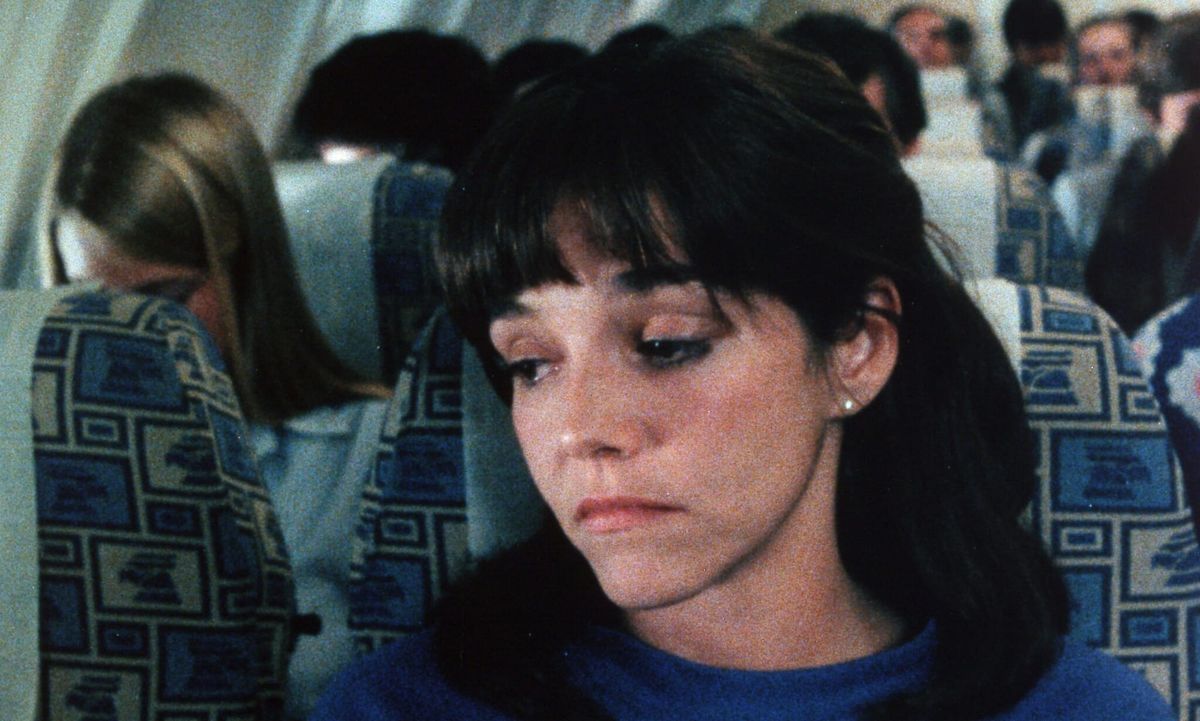
Vengeance is Mine (dir. Michael Roemer) (1984)
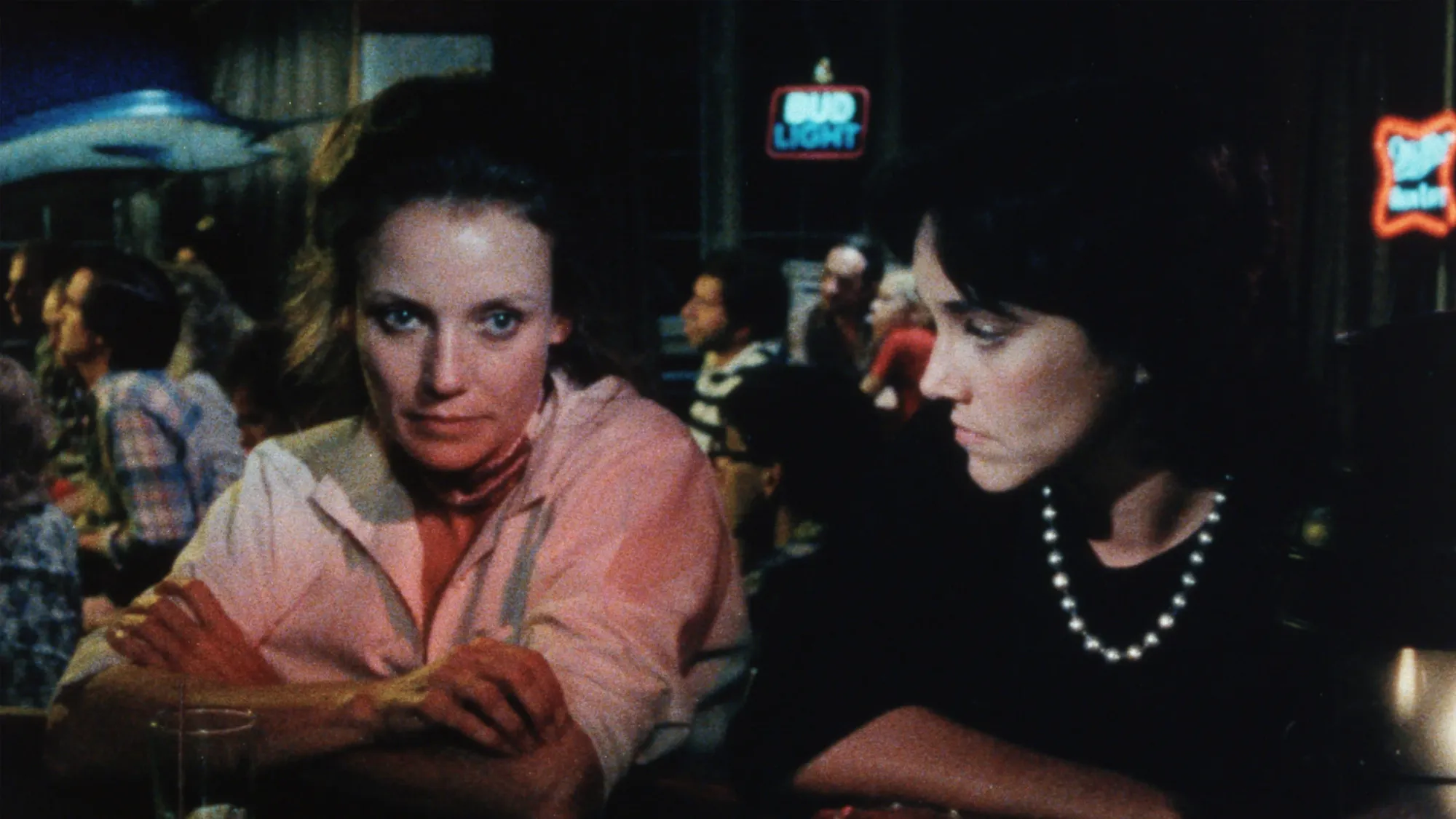
Michael Roemer's remarkable 1984 television film Vengeance Is Mine (originally titled Haunted) stands as one of the most unjustly overlooked works in American cinema and one of the better films I’ve seen about mental illness. Originally premiering as a TV movie to lackluster reception, the film languished in obscurity for decades before The Film Desk restored it in 2022, giving it a proper theatrical release and eventual Blu-ray distribution through Vinegar Syndrome. This resurrection has allowed audiences to finally discover what amounts to a genuine American masterpiece—a film that takes a seemingly familiar family melodrama and infuses it with a level of psychological realism that recalls the work of Fassbinder or Mike Leigh at their most incisive.
We follow Jo (Brooke Adams in a career-defining performance) as she returns to her New England hometown to confront the traumas of her past before relocating to Seattle. Her list of unfinished business includes reconciling with her long-lost biological mother, facing her vitriolic dying adoptive mother, and dealing with her abusive ex-husband Steve. In the midst of this emotional gauntlet, Jo befriends her neighbor Donna (Trish Van Devere), along with Donna's husband Tom and teenage daughter Jackie. What begins as a bond between two women united by their shared neuroses and childhood trauma gradually transforms into something far more volatile and unpredictable.
There’s a sense of uneasiness but also uncertainty since characters say and do things that seem “off” because the film establishes nearly everything as being off. The first half establishes Jo's reluctance and pain from the opening plane shot, introducing her various conflicts while information is relayed sparsely and deliberately. Then, approximately halfway through, it pivots dramatically as Jo finds herself entangled in the neighboring family's unraveling turmoil. The attention shifts from Donna to Jackie, in whom she sees a reflection of her own traumatic upbringing. This shift shatters the camaraderie between the two women, transforming them from allies into antagonists as they frantically compete for the affections of Tom and Jackie.
What makes Vengeance Is Mine so special is how it functions as both an intense psychological pressure cooker and a biting social critique about the troubling, closed-mindedness that many had at the time towards mental health, particularly with women struggling to maintain stability. Roemer crafts a film that could easily have been reduced to a bland PSA about mental illness but instead spins it into a diabolically delightful yet incisive examination of America's prescribed gender roles and the corrosive effects of Catalog orthodoxy on femininity. The film explores how patriarchal ideals constructed by religious concepts of the nuclear family can devastate the feminine psyche, creating cycles of trauma that reverberate across generations. Take a look at how Jo sits back instead of kneeling in prayer at certain points. I have vivid memories of my mom doing the same, while other family members followed along during sermons.
The tension builds masterfully without ever suggesting overt violence. One of the film's most intense sequences involves a soon-to-be-ex Steve using Jo's own scissors to cut her hair in his car—a moment that signals that absolutely anything can happen. This scene finds its horrifying echo later when Donna does the same to Jackie, one of many parallels that bind the two younger and older women together. Jackie literally echoes Jo's words at key moments, creating a spiritual connection that is as maternal as it is desperate. When Jo confesses to Tom that she had a daughter at sixteen who was taken from her, the subtext becomes text: Jackie represents the child Jo lost, and Jo's protective instincts toward the girl are inseparable from her own unresolved grief.
Donna's mental illness—which includes symptoms of borderline personality disorder and dissociative episodes—is handled with remarkable compassion for a 1980s film. Rather than exploiting her condition for shock value, Roemer draws her as a troubled mother struggling with a debilitating illness. In one particularly powerful scene, Donna experiences a dissociative break while sitting in her car, staring blankly as Jackie calls out to her. The film never reduces Donna to a one-note villain; instead, it presents her as a fully realized human being whose cruelty stems from her own profound suffering. Van Devere's performance is unhinged yet deeply nuanced, convincing us simultaneously of her character's humanity and her capacity for terror.
Everything rests on uneasy territory, constantly on the verge of collapse—a reflection of Roemer's belief that to adequately reflect the chaos of our world, a film must embody that same precariousness. As a Jewish filmmaker born in Germany just five years before Hitler's rise, Roemer developed a philosophy that people are beholden to powers beyond their control, subject to forces they cannot fully comprehend or resist. This worldview permeates Vengeance Is Mine, where nobody wants to do what they ultimately do—everybody simply has to do it. The film becomes a meditation on how we are haunted by the ghost stories we inhabit in our daily lives, how the narratives drawn into suburban homes reverberate in misshapen iterations across decades.
Roemer's direction is nothing short of masterful. Despite his professed fear of melodrama, he embraces its validity here, creating a rich tapestry for affect, impulse, and trauma. The film's visual approach is deceptively simple, never showy, but every landscape, refraction, and close-up possesses integrity and purpose. Roemer's eye drifts toward the outer bounds of New England's natural beauty, capturing nature's defiance against the malignancy at the heart of suburbia. The understated blocking feels revelatory, and the film floats with a grace that belies its heavy subject matter.
The performances are uniformly stellar. Brooke Adams is ferocious and heartbreaking simultaneously, hiding her character's biting distress beneath a carefully maintained surface. Her work here is peerless, occupying the film's emotional center with magnetic intensity. Van Devere tackles the more difficult role, standing enormously over her family one moment and cowering to her own cruelty the next. The supporting cast, including the young Ari Meyers as Jackie, grounds the film in believable human behavior even as the situation escalates toward its devastating conclusion.
What's most striking about Vengeance Is Mine is the startling empathy with which every character is rendered imbuing them with humanity and relatability. Both Jo and Donna act in inappropriate and selfish ways, yet Roemer never judges them. Instead, he presents them as victims of their personal histories, powerless against the "spirits" present in the neighborhoods and familial structures that birthed their pain. The film becomes a perverse mix of Bergman's Persona and the extreme behaviors contained in Mommie Dearest—an art film sensibility applied to melodramatic material, creating something that feels both intellectually rigorous and viscerally affecting.
The exploration of perpetual cycles of abuse is particularly potent. Jackie's suffering echoes Jo's own, creating a pattern that threatens to continue indefinitely unless someone intervenes. The question of whether Jo's intervention helps or harms becomes increasingly ambiguous as the film progresses, reflecting Roemer's refusal to provide easy answers. If you removed a few key scenes, the film could almost function as an Éric Rohmer movie—a character study built on conversation and observation—but those key scenes are precisely what give Vengeance Is Mine its devastating power.
The story ends as it begins: with a symphony of emotions playing across Jo's face. There's a melancholic radiance to her in this final moment, something that has played out partly as a ghost story and inevitably as a return. It's a conclusion that offers no simple catharsis, only the recognition that we carry our traumas with us, that the past is never truly past, and that the best we can hope for is to break the cycle before it claims another generation.
This is an experience that deserves to be mentioned alongside the great American independent films of the 80s—a work of genuine artistry that takes the breakdown of one’s psyche seriously and finds profound truths in the stories we tell about damaged women, fractured families, and the haunted landscapes of religious America. It's the kind of film that reminds you why you watch movies in the first place: to be challenged, moved, and fundamentally changed by what you witness on screen.
NEW MOVIES DONT EXCITE ME AS MUCH AS OLD ONES HENCE THE NEW FEATURE "IN WITH THE OLD" THANKS FOR READING EVERYONE! 😄

Comments ()